Is LNG the Perfect Transition Fuel for Shipping Companies?
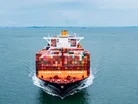
As the shipping industry accelerates its path to decarbonisation, investments in liquefied natural gas (LNG) and dual-fuel technologies are becoming a defining feature of maritime energy strategy.
Global carriers are adopting transitional fuels to modernise fleets and align with international emission reduction goals.
Amid growing pressure from regulators and consumers alike, shipping companies that fail to adapt risk falling behind in a fast-shifting energy landscape.
Many are now turning to decarbonisation initiatives through fleet renewal programmes that prioritise efficiency and cleaner-burning fuels.

The rise of LNG-powered operations
Major carriers including MSC, Evergreen and Hapag-Lloyd are ordering LNG and dual-fuel vessels for delivery through to 2029. These investments represent an operational shift but also an energy one, signalling that LNG remains central to maritime fuel strategies as the industry transitions from heavy fuel oil towards lower-carbon alternatives.
By integrating LNG and methanol propulsion, these companies aim to balance energy security, cost efficiency and sustainability.
Demand for global trade remains strong, and LNG’s appeal lies in its ability to provide reliable energy density while cutting greenhouse gas emissions.
Though LNG is still a fossil fuel, it produces 40% less CO₂ than coal and 30% less than oil, making it a better alternative for companies looking to reduce the size of their carbon footprint.
The process underpinning this transition involves converting natural gas into liquid form by cooling it to -162°C, reducing its volume to 1/600th of its gaseous state for safer and more efficient transport.
Specialised LNG carriers are designed to handle these conditions, ensuring the integrity of fuel supply chains that power the next generation of shipping.
Global momentum towards gas and methanol
Across the Asia-Pacific and European markets, orders for LNG and dual-fuel vessels are on the rise.
COSCO Shipping Holdings, for example, placed orders in January for 18 LNG dual-fuel container ships worth approximately US$2.7bn, spanning capacities from 3,000 to 18,000 TEU with deliveries running between 2028 and 2029.
Evergreen followed with a US$1.47bn order for 23 vessels through Chinese shipyards, while Pacific International Lines (PIL) has signed agreements to build eight dual-fuel ships capable of operating on LNG. Hapag-Lloyd meanwhile is turning to methanol-ready technology, signing contracts for eight 4,500 TEU ships slated for delivery in 2028 and 2029.
"We have ordered eight new dual-fuel methanol vessels of 4,500 TEU, with deliveries scheduled for 2028 and 2029. The ships will be equipped with state-of-the-art dual-fuel methanol engines and will be up to 30 percent more efficient than older vessels of similar size," explains Rolf Habben Jansen, CEO of Hapag-Lloyd AG.
"Saving up to 350,000 metric tons of CO₂e per year when operating on methanol, the new ships will help further decarbonise the Hapag-Lloyd AG fleet, replace older tonnage and reduce our dependence on the charter market. What’s more, operating these state-of-the-art ships will be much more cost-efficient."
MSC’s investment in cleaner energy
The MSC Group continues to advance its multi-year strategy to improve energy performance across its cargo and cruise divisions. Its latest investment includes two new ‘World Class’ LNG vessels ordered in partnership with Chantiers de l’Atlantique, taking total commitments in France to €10.5bn (US$12.5bn).
"These are some of the most energy efficient ships in the world and we continue our commitment to LNG, ensuring we are ready for future renewable fuels," said Pierfrancesco Vago, Executive Chairman, Cruise Division, MSC Group.
"We look forward to continuing with our innovative and successful collaboration with Chantiers de L’Atlantique – our long-term partner for more than 20 years.”
In parallel, MSC Mediterranean Shipping Company has extended its presence in China’s shipbuilding sector, commissioning eight additional 11,500 TEU LNG dual-fuel vessels from Penglai Zhongbai Jinglu Ship Industry Co., Ltd. This brings their partnership to 16 ships, the shipyard’s largest order and first for LNG dual-fuel vessels.
Deliveries are due by 2029, with a total contract value estimated at US$2.24bn.
Across its fleet, MSC now has nearly 130 vessels on order, including more than 30 LNG dual-fuel container ships being built at Chinese yards such as Zhoushan Changhong International.
The scale of investment underscores LNG’s continuing relevance as a transitional energy source, bridging current technologies with a renewable future.
Company portals


Executives
Pierfrancesco Vago
Executive Chairman - Cruise Division
Rolf Habben Jansen
CEO