Applied Materials: Bringing Cleaner Energy to Semiconductors
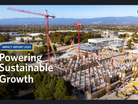
Applied Materials has published its 2024 Impact Report where the semiconductor manufacturer lays out how it is managing the challenge of meeting clean energy targets while building out new facilities to serve a fast-growing tech sector.
Headquartered in California, the company supplies the machinery behind modern electronics, from consumer devices to data centres.
That means it’s not just an energy user – it helps define how energy is consumed in digital systems worldwide.
On the energy front, there is both progress and pressure.
Renewable electricity ramps up but so do emissions
Applied has committed to sourcing 100% of its global electricity from renewable sources by 2030.
So far, the company has reached 73%, with its US operations already running fully on renewables.
These gains are largely thanks to contract changes, off-site purchases and a big push for solar on-site.
In 2024 alone, Applied boosted its total renewable electricity by 11%, including a 48% increase in solar generation at its facilities.
At its Tainan manufacturing site in Taiwan, a 700 kW solar array delivered 228,524 kWh of clean energy in just three months.
Despite the renewable push, Applied’s Scope 1 and 2 emissions—those generated directly and from purchased electricity—are now 4% above its 2019 baseline.
The reason? Construction. New facilities come with short-term carbon costs, from powering up sites to the embedded emissions in materials and equipment.
Still, the company insists it is on the right track.
Writing on LinkedIn, Chris Librie, Chief Sustainability Officer, said: “I’m pleased to share that Applied Materials has published our 2024 Impact Report detailing great progress in reducing our Scope 3 emissions (down 24% since 2022), controlling our scopes 1 and 2 emissions in spite of business growth and continuing to invest in the communities where we operate.
"We are transforming the future of technology innovation while we anchor purpose at the heart of our business strategy.”
Energy consumption inside the factory is also under the spotlight. Applied’s goal is to reduce energy use per wafer pass—essentially, how much power is needed to process each semiconductor—by 30% by 2030.
At present, it’s achieved a 13% improvement from 2019 levels. The company says it’s more than a third of the way to the goal across its full product range.

Energy and the ecosystem: suppliers, products and tools
Energy isn’t just about what Applied uses itself—it’s about how much its tools and its suppliers use too.
The company’s ECO Services product offering now helps customers measure and reduce electricity and utility consumption when using Applied’s machinery. These tools also help monitor CO₂ emissions from equipment, giving manufacturers clearer visibility into their energy footprint.
Supply chain emissions, especially those tied to energy use, are a focus under the company’s SuCCESS2030 programme.
While the supply chain represents about 10% of Applied’s carbon footprint, it plays a much bigger role in shaping energy efficiency across the sector. This is because Applied’s suppliers also support other semiconductor companies, multiplying the impact of any shift to cleaner energy.
The report details how Applied collected data from 183 suppliers in 2024, with 109 providing detailed Scope 1 and 2 emissions data. Nearly 100 suppliers said they now have greenhouse gas reduction targets, and 23 of those are aligned with science-based targets.
Applied is now holding direct conversations with its major suppliers about transitioning to renewables.
The report says: “Applied continues to collaborate with suppliers, using their provided survey data, to help them create emissions-reduction plans. We also engage a third party to help them calculate their emissions data.
"In 2024, we began one-on-one conversations with our major suppliers to discuss our net zero aspirations and review their ability to transition their facility and suppliers to renewable energy.”
- US$3.2bn R&D investment
- US$27.2bn revenue
- 35,700 employees in 207 cities, 24 countries
- More than 20,000 patents
Building cleaner tech in an energy-hungry world
The company’s core business—tools that manufacture chips—puts it right in the path of the most energy-intensive technologies of the decade.
Artificial intelligence and the internet of things are already changing demand for chips, and by extension, the power required to make and use them.
Gary Dickerson, Chief Executive, writes in his foreword to the report: “Tectonic shifts in technology are reshaping our lives and the global economy. Transformative innovations, like artificial intelligence and the internet of things, have near-infinite potential and we’re only beginning to explore what’s possible. Semiconductors are the foundation of these technological megatrends.
“To scale breakthrough innovations, our industry must confront the environmental and social impacts associated with the exponential advancement of these data-intensive applications. In short, we must drive sustainable growth across our entire ecosystem. As the world’s leading semiconductor and display equipment company, Applied is uniquely positioned to accelerate our industry’s roadmap and enable more energy-efficient computing.”