Land, Air & Sea: DSV's Bid to Decarbonise its Logistics Work
Danish company DSV is one of the world's largest transport and logistics firms. Like most firms whose business relies of transportation, DSV is currently looking to reduce the size of its carbon footprint.
To this end, the team has devised a decarbonisation roadmap, detailing how it plans to move its road haulage, cargo ships and air freight onto more sustainable fuels.
As one of the world’s largest logistics providers, DSV has a pivotal role in the energy transition of transport networks, not only because of the fuel it consumes but because of the sheer volume of partners it interacts with.
Its decarbonisation roadmap sets out how the firm plans to work with those partners, customers and industry peers to make net zero logistics a reality by the time 2050 rolls around.

Setting a course for cleaner energy in transport
So, with DSV aiming to achieve net zero by 2050, it must consider the sustainability of its own operations and those from up and down its supply chain.
Its interim goals target a 50% reduction in Scope 1 and 2 emissions and a 30% cut in Scope 3 emissions by 2030, measured from a 2019 baseline.
Validated by the Science Based Targets initiative (SBTi), these goals align with the Paris Agreement’s 1.5°C pathway.
Despite a 21.4% rise in energy demand since 2019, DSV cut Scope 1 and 2 emissions by 9.8% in 2024, which suggests that energy growth no longer has to come at the expense of higher emissions.
The company’s efforts include deploying more renewable energy to power warehouses, fleets and handling equipment, alongside broader improvements in efficiency across its operations.
In the 2024 Annual Report, Jens Lund, CEO of DSV, says: “As we take the next step on our growth journey, we remain committed to reducing our environmental impact.
“We acknowledge this responsibility and remain committed to driving sustainable practices and innovations, ensuring that our growth aligns with our net zero commitment.
“We saw good sustainability progress during 2025, which was in part driven by our internal Carbon Fee Fund, providing financing for sustainability initiatives.
“We are also working closely with our customers on supply chain optimisation and we have integrated a CO₂ footprint on customer invoices in all key systems.”
Scaling renewable fuels in airfreight
Air transport remains one of the hardest sectors to decarbonise, but DSV is using its global scale to push the uptake of cleaner aviation energy.
The company’s Sustainable Aviation Fuel (SAF) programme, launched in 2023, has already delivered substantial reductions in emissions from business travel.
In 2024 alone, SAF usage cut related emissions by 94%, representing the upper limit of current production capacity.
DSV says the programme not only slashes operational emissions, but also stimulates demand signals for producers to expand the SAF market – a critical lever for decarbonising the aviation energy system.
Achim Martinka, who is Vice President of Global Air Product and Head of Sustainability at DSV, will be speaking at Sustainability LIVE: The Net Zero Summit in London. Secure your tickets now.
Leading DSV’s sustainable energy strategy
Achim has helped to oversee this transformation, driving the company’s sustainability strategy, while integrating its emission reduction targets with some carrier management and customer-focused logistics solutions.
The team's work combines data-led market intelligence with strategic partnerships across airlines and top global accounts, supporting clients to decarbonise supply chains while enhancing operational efficiency.
Achim also represents DSV at industry forums and conferences, helping advance cross-sector collaboration around sustainable energy transition in logistics.

His background includes a degree in Economics from France and Germany and a banking diploma from Deutsche Bank.
Before joining DSV in 2024, he spent eight years with DECATHLON as a Regional Director and later held several leadership roles at Lufthansa Cargo, including VP Americas, VP Europe/Africa and VP Home Markets.
DSV’s continued investment in clean energy and renewable fuels underscores its central role in steering transport towards a sustainable, low-carbon future.
Company portals

Executives
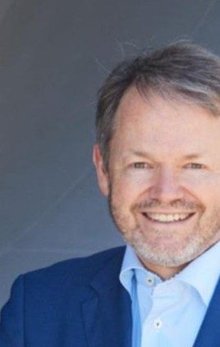
Achim Martinka
Vice President Global Air Product - Head of Sustainability
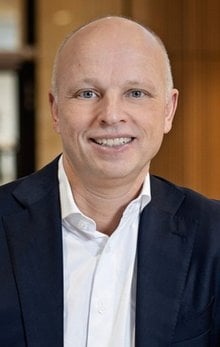
Jens Lund
Group Chief Executive Officer