
Inside the World's First Commercial Ethanol to SAF Plant

LanzaJet has been developing sustainable aviation fuel (SAF) production methods for more than a decade.
After 15 years of research and development, the firm has now achieved a major breakthrough in its mission to decarbonise the aviation sector.
LanzaJet has announced the successful production of its inaugural batch of jet fuel created from ethanol at its Freedom Pines Fuels facility in Soperton, Georgia.
This development is the transition of LanzaJet's alcohol-to-jet (ATJ) technology from laboratory conditions to commercial-scale operations for the first time.

The jet fuel manufactured at the Georgia facility is compatible with current aircraft technology, allowing it to serve as a direct substitute for conventional carbon-intensive jet fuels.
This compatibility could contribute to reducing the carbon emissions of airline operations.
This is the first instance of a non-oil-based renewable solution of this type reaching commercial production capacity, as most sustainable aviation fuels are typically produced using bio-oil derivatives.
Addressing feedstock limitations
Industry experts have indicated that sustainable aviation fuel produced through Hydroprocessed Esters and Fatty Acids (HEFA) is nearing a plateau regarding available feedstock supplies.
LanzaJet's alcohol-based approach offers a viable alternative to this challenge.
The company's proprietary technology addresses this constraint by utilising readily available ethanol feedstocks, such as agricultural residues and municipal solid waste.
Through this focus on ethanol, the technology creates opportunities for waste materials and recycled carbon to enter the aviation energy supply chain.
Flyn van Ewijk, Regional Director for APAC at LanzaJet, says: "Overnight we shared news that LanzaJet had made history: producing jet fuel from ethanol at the world's first commercial scale plant.
"This moment is not only hugely significant for the LanzaJet family – the culmination of 15 years of research and development, collaboration, investment and scale-up – but also for our industry as it marks the next wave of SAF technology to reach commercial readiness in nearly a decade."
Scaling and technology integration
LanzaJet characterises its Soperton operation as a first-of-its-kind integrated solution.
The facility combines Technip Energies' Hummingbird Ethanol-to-Ethylene solution with oligomerisation technology that was jointly developed by LanzaTech and the US Department of Energy.
Jimmy Samartzis, CEO of LanzaJet, says: “Today proves what happens when you bring together innovation, resilience, ingenuity and teamwork to think big and develop a new industry, overcome challenges and enable global growth.
“We’re now in a unique position with technology and operational know-how to shape this global industry in the decade ahead.”
The effective integration and troubleshooting of these technologies provides a framework for future implementations.
Global deployment and energy security
LanzaJet is presently delivering this technology across multiple regions, including the UK, European Union, Japan and Australia.
The transition to ethanol-based fuel provides countries with opportunities to strengthen domestic energy security whilst supporting agricultural sector expansion.
"Mostly, I'm proud of our team for what they have achieved, and grateful for Jimmy Samartzis's leadership and to Louay Masarweh for his many sleepless nights and unwavering dedication to the mission," Flyn says.
The facility's construction required investment of more than US$300m.
The resulting fuel produces substantially lower lifecycle greenhouse gas emissions when compared to conventional kerosene.
When blended with standard Jet A-1, the product can be used without requiring modifications to aircraft engines or airport infrastructure.
Company portals

Executives
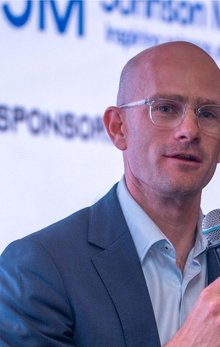
Flyn van Ewijk
Regional Director for APAC
Jimmy Samartzis
CEO
