The Role of Renewable Energy in L'Oreal's Global Operations
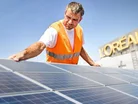
When L’Oréal launched its L’Oréal for the Future strategy back in 2020, it marked a renewed commitment to climate action that had already spanned nearly two decades.
The ten-year plan was designed to accelerate the company’s sustainability progress across four pillars: tackling climate change, protecting nature, promoting circularity and empowering communities.
In the five years since, the group – home to Maybelline, Garnier and countless others – has maintained strong momentum even as its commercial performance reached record heights.
In 2024, the Paris-headquartered company officially became the global number one in cosmetics, overtaking competitors such as Unilever and Estée Lauder.
Despite rising revenues and a corresponding expansion in its climate footprint, L’Oréal has sustained its mission to cut emissions across every link in its value chain, from factories and warehouses to logistics and retail partnerships.

L’Oreal’s progress on its climate goals
According to its latest results, L’Oréal has successfully cut emissions from its industrial sites – including production facilities and storage hubs – by 74% compared with 2019 levels, even as output increased by 12%.
By the end of 2024, all European operations were running entirely on renewable energy, which played a pivotal role in driving this reduction. Beyond Europe, 97% of its global footprint now benefits from renewable sourcing.
L’Oréal’s climate targets have received verification from the SBTi after committing to a 25% absolute emissions cut by 2030, paving the way to reach net zero by 2050.
Nevertheless, the company’s total footprint today is larger than it was in 2019, largely due to recent acquisitions. To counter this upward pressure, L’Oréal launched the Solstice Fund, a dedicated supply chain programme aimed at accelerating emissions reductions beyond its direct operations.
The packaging puzzle
Much like other consumer brands, packaging presents a formidable sustainability challenge for L’Oréal. The company had pledged that all plastic packaging would be refillable, reusable, recyclable or compostable by 2025, but it has fallen short. To date, only 49% meets that benchmark.
Similarly, just 37% of all materials used in its packaging are recycled or biobased — well below the interim 50% target it aimed to hit by next year.
Despite the gap, L’Oréal continues to invest heavily in innovation. Around US$84m has been channelled into start-ups specialising in sustainable materials, with a further US$58m allocated to its Circular Innovation Fund. Progress, however, has been slowed by technical hurdles and the complexity of global supply chains.
Notable developments include prototype bottles crafted from captured CO₂, recyclable plastic pumps, and cardboard-based tubes introduced for La Roche-Posay and Garnier lines.
"[There are] lots of challenges ahead but I am more determined than ever to drive positive change," says Iñigo Larraya Tejero, L’Oréal’s Chief Sustainability Officer for Europe.
Beyond carbon and plastic
The French company’s conception of sustainability goes beyond carbon and plastic.
The group’s Fund for Nature Regeneration initiative has funnelled around US$29m into 16 global projects, while its Fund for Women has supported 4.8 million vulnerable women and girls since 2020.
L’Oreal has also helped more than 71,000 people from disadvantaged communities gain employment.
The group’s ESG efforts saw it recognised with a Platinum Medal from EcoVadis for the third year running, as well as being named among the world’s most ethical companies for the fifteenth time.
L'Oreal's future in sustainability
L’Oréal’s ongoing journey reflects both the ambition and difficulty of managing sustainable transformation at scale. Its achievements on renewable energy adoption and production decarbonisation are impressive, but its packaging setbacks underline the wider struggles faced by consumer goods manufacturers.
With five years remaining on its L’Oréal for the Future roadmap, the organisation faces the challenge of aligning growth with resource efficiency across its supply chain. The outcome remains uncertain, but the company’s leadership shows no sign of slowing down.
As Ezgi Barcenas, L’Oréal’s Chief Corporate Responsibility Officer, observes: “We're on a constant cycle of learning, unlearning and relearning.”
Company portals

Executives
Ezgi Barcenas
Chief Corporate Responsibility Officer
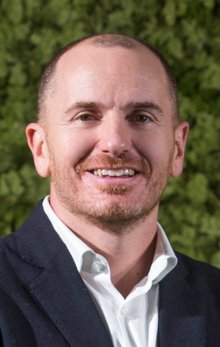
Iñigo Larraya Tejero
Chief Sustainability Officer for Europe