
OpenAI Backs Grid Stability With 3.2GW AI Campus in Georgia
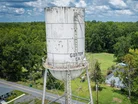
OpenAI has structured Project Camellia, a proposed 3.2GW AI data centre campus in Effingham County, Georgia, around a set of commitments on electricity supply, water use and grid stability.
The campus is designed to receive power in phases between 2028 and 2032 and the arrangement with local utility Georgia Power could offer a model for how large AI infrastructure connects to the grid without shifting costs onto households.
The scale of the project places energy planning at the centre of its design. According to OpenAI, the campus is expected to support next-generation AI computing while creating thousands of construction and permanent jobs in southeast Georgia.

Who pays for grid connection
The 3.2GW of electricity required by Project Camellia raises the question of who bears the infrastructure cost. OpenAI says Georgia households will not shoulder that burden.
Under Georgia Public Service Commission rules, the company will pay the full infrastructure and electrical service costs needed to connect the campus. This could prevent those costs from being passed on to existing customers.
Aaron Mitchell, Senior Vice President of Strategic Growth for Georgia Power, frames the arrangement as part of a wider approach to managing large energy users.
He says: "At Georgia Power, we are working every day to help ensure that growth from data centers and other large-energy users brings value for our customers through higher reliability and lower prices."
Aaron adds: "Companies like OpenAI are making real commitments when it comes to responsible operation and development and demonstrating the benefits that these facilities can bring to Georgia communities."
Flexible demand response explained
Beyond cost allocation, the agreement includes up to 1,000MW of flexible demand response, a mechanism that could help balance grid load during periods of strain.
During periods of peak demand, Georgia Power will be able to reduce electricity delivered to the facility. This is intended to help maintain grid stability while reducing the need for additional generation capacity.
Georgia Power describes the 25-year arrangement as one of the largest single-facility demand response commitments in the US. The size of the commitment suggests utilities may increasingly seek similarly structured, long-term flexibility arrangements when negotiating with operators of large-scale AI data centres.
Aaron says: "We appreciate the leadership and thoughtfulness of the OpenAI team as they prepare to bring significant investment and cutting-edge technology to Georgia." He adds: "We're excited to work with OpenAI, Effingham County and local partners on this significant project."
Water use tied to cooling
Water consumption sits alongside electricity as one of the most closely watched aspects of hyperscale AI infrastructure, given its link to cooling energy demands.
Project Camellia will use a closed-loop cooling system that recirculates water instead of continuously withdrawing fresh supplies. This design choice could reduce the ongoing resource burden typically associated with data centre cooling.
According to OpenAI, ongoing water demand will primarily support workplace facilities such as kitchens, restrooms, sanitation and maintenance rather than large-scale operational consumption. This distinction separates domestic water use from the cooling-related consumption that has drawn scrutiny elsewhere in the sector.
The campus will occupy a site within the Savannah Gateway Industrial Hub, an existing industrially zoned development.
- US$80m in community benefits over the project's lifetime
- US$71m in Codex credits for college and technical school students
OpenAI says the project is expected to generate less traffic than a warehouse development on the same site while using less water and creating stronger long-term tax revenue.
Financial commitments to community
Alongside its energy and water arrangements, OpenAI has pledged US$80m in community benefits over the lifetime of the project. This funding is intended to support schools, workforce training, healthcare, housing, public safety, utilities, veterans' services and small businesses.
The company also plans to make up to US$71m in Codex credits available to eligible Georgia college and technical school students, giving them access to OpenAI's coding tool through ChatGPT.
Susan Kraut, President and CEO of the Effingham County Chamber of Commerce, says: "Project Camellia is exactly the kind of investment our community needs."
Susan adds: "Its development can create real opportunities for local contractors, suppliers, workers and small businesses, helping more of the project's economic benefits stay right here in Effingham County." She continues: "Over the long term, it can also help diversify our county's revenue base, support essential services and infrastructure and reduce pressure on homeowners and businesses as our community continues to grow. That is why I believe this project is such an important opportunity for Effingham County."
Accountability and local oversight
OpenAI plans to publish annual independent audits and develop a Georgia Community Compact shaped through consultation with residents and local organisations. This process is intended to give local stakeholders continued input as the energy and infrastructure build-out proceeds.
Brandt Herndon, CEO of the Effingham County Industrial Development Authority (ECIDA), points to the economic reasoning behind the project. He says: "Economic development is about attracting companies that create lasting value for the community."
Brandt adds: "We support the County's efforts to roll back taxes for residents and we believe the revenue generated by this project can help advance that goal." He continues: "Based on our focused analysis and close collaboration with the Effingham County School District and the Effingham County Board of Commissioners during initial feasibility discussions, we are confident this company will be an engaged community partner, a responsible steward of its investment and an important contributor to Effingham County's continued prosperity."
OpenAI says it has already begun meeting with state and local officials and organisations, with public consultations set to shape how the project develops. Work remains on infrastructure, financing, design and project phasing before power begins to come online between 2028 and 2032.
Company portals



Executives

Aaron Mitchell
SVP, Strategic Growth

Brandt Herndon, EDFP
CEO

Susan Kraut, IOM, GCCE
Chief Executive Officer