
Orano & Capgemini: Could Robots Run Nuclear Power Plants?
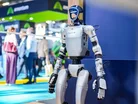
Orano and Capgemini have introduced what the companies describe as the nuclear sector's first intelligent humanoid robot at the Orano Melox Ecole des Métiers, located in France's Gard region.
Named Hoxo, the robot represents a combination of embedded AI, sophisticated sensor technology and autonomous navigation systems purpose-built for nuclear facilities.
The technology will enter a comprehensive four-month testing programme, during which innovation teams from Orano Melox intend to assess the robot's performance across areas including mobility, precision and AI-powered operations.

Operational scope and technical features
The robot incorporates real-time perception capabilities and can perform technical gestures while working in coordination with human personnel.
Hoxo's configuration allows it to mirror human movements, a characteristic that Capgemini and Orano say could offer benefits in demanding intervention scenarios within nuclear installations.
"This project, led by our AI Robotics & Experiences Lab, embodies the convergence of robotics, artificial intelligence, computer vision and digital twins," says Pascal Brier, Chief Innovation Officer at Capgemini and member of the Group Executive Committee.
"It redefines human-machine interaction in sensitive environments and pushes the boundaries of industrial automation. Through this initiative, we harness the potential of physical AI to address Orano’s most demanding industrial challenges."
Industrial deployment and sector impact
Capgemini and Orano present Hoxo as an adaptable and scalable robotic system aimed at improving industrial performance and potentially offering robotic support to facility operators.
"This is more than just a technical achievement, it’s a bold step forward for an industry that has always embraced progress and pioneered change," says Dr Cara Antoine, EVP and Chief Product, Innovation & Portfolio Officer at Capgemini.
"This project brings together robotics, AI, computer vision and digital twins in a way that truly redefines how humans and machines collaborate in sensitive environments," she adds.
"It’s pushing boundaries and imagining what’s possible for the future of industrial automation. It’s inspiring to witness how innovation and partnership are shaping the next chapter of nuclear operations."
Nuclear sector automation context
The nuclear industry has maintained a longstanding commitment to automation technologies, although the deployment of humanoid robotics featuring embedded AI is a departure from conventional industrial robotic systems.
The Melox testing programme will establish whether Hoxo's integration of mobility and AI-based decision-making offers tangible benefits within nuclear facility environments.
The initiative arrives as the nuclear sector experiences mounting pressure to enhance operational efficiency while upholding rigorous safety protocols, especially as multiple nations reassess nuclear power's contribution to decarbonisation objectives.
Whether humanoid robotic systems demonstrate greater effectiveness compared to current automation technologies in nuclear settings will be established during the forthcoming testing phase.
Arnaud Capdepon, Director of Orano Melox, believes the new robot could be transformative for the industry at large.
"Hoxo opens new perspectives for our operations by combining an intelligent and ergonomic robotic solution with the expertise of our on-site teams," he says.
"It’s an innovation we aim to evolve to meet our industrial needs, contributing to both safety and competitiveness as we tackle the challenges of today and tomorrow."


Executives
Arnaud Capdepon
Directeur d'Usine
Dr. Cara Antoine
Executive Vice President and Chief Technology, Innovation & Portfolio Officer
Pascal Brier
Group Chief Innovation Officer