
Rivian & Redwood: Using Old EV Batteries as Grid Solutions
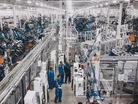
Rivian and Redwood Materials are reshaping on-site power management with a large-scale battery energy storage system at Rivian’s Illinois manufacturing facility.
Using more than 100 of Rivian’s second-life battery packs, the installation will deliver 10MWh of dispatchable energy directly to the site.
It represents the largest repurposed EV-based storage system deployed by a US automaker.
As manufacturers and technology firms seek reliable energy amid rising consumption from AI and automation, this initiative highlights a growing pivot among EV battery producers towards dedicated grid and industrial power support.

How EV batteries can become assets for the grid
Rivian, a leading electric vehicle producer, is supplying battery packs to Redwood’s energy platform, managed through the proprietary Redwood Pack Manager.
This system allows the batteries’ stored power to be used by the plant in Normal, Illinois, reducing dependence on external grid supply during peak periods.
The deployment provides rapid and flexible expansion of local energy capacity, offering a model for industrial sites seeking resilience against grid strain. As Rivian Founder and CEO RJ Scaringe explains: “EVs represent a massive, distributed and highly competitive energy resource.
“As energy needs grow, our grid needs to be flexible, secure and affordable. Our partnership with Redwood enables us to utilise our vehicle’s batteries beyond the life of a vehicle and contribute to grid health and American competitiveness."
Tackling the energy demand of industry
By 2030, the IEA estimates more than 1,500GW of energy storage will be required globally.
This urgency is a huge part of what is driving the rise of batteries in industries like manufacturing.
"Electricity demand is accelerating faster than the grid can expand, posing a constraint on industrial growth," says JB Straubel, Founder and CEO of Redwood Materials.
"At the same time, the massive amount of domestic battery assets already in the US market represents a strategic energy resource."
Both Redwood and Rivian hope that their partnership can usher in a new era of manufacturing.
“Our partnership with Rivian shows how EV battery packs can be turned into dispatchable energy resources, bringing new capacity online quickly, supporting critical manufacturing and reducing strain on the grid without waiting years for new infrastructure," adds JB.
"This is a scalable model for how we add meaningful energy capacity in the near term."
During periods of high demand, such as heat waves, Rivian can deploy energy stored in second-life batteries to alleviate grid pressure and avoid costly electricity purchases.
By using these batteries as static power units before recycling, Rivian and Redwood extend asset life and strengthen domestic energy supply chains.
A new era of battery storage
Across the US, the battery storage sector has grown rapidly.
According to the Solar Energy Industries Association, lithium-ion manufacturing capacity for stationary energy storage surpassed 21GWh in 2025. That would be enough energy to power Houston from sunset to sunrise.
Today, American manufacturing sites can produce 69.4GWh of battery storage systems. Many battery makers diverted operations from EV production in 2025 to meet surging demand for industrial storage solutions, a trend accelerated by AI-driven technologies.
The Financial Times notes that enough capacity for two million EVs was retooled across ten US plants to build dedicated energy storage batteries instead.
In addition to its collaboration with Rivian, Redwood maintains a strategic partnership with General Motors.
A 2025 memorandum of understanding between the two companies supports the accelerated rollout of new grid-scale energy storage systems combining GM’s US-manufactured cells and second-life EV packs.