
Rolls-Royce: Is Nuclear Energy the Key to SAF Production?
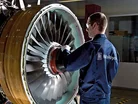
Aviation is widely considered one of the more intractable sectors of the global economy when it comes to decarbonisation, not for lack of willing or effort, but because of the current scarcity of sustainable aviation fuel (SAF).
As a result, aeroplanes are still heavily reliant on fossil fuels.
SAF is a biofuel that is generally made using organic waste from farms, landfills or sewage facilities. This waste is what is known as a feedstock.
Right now, the biggest barrier standing in the way of large-scale SAF production is the relative dearth – and thus high price – of these feedstocks.
In an effort to speed up the production of SAF, Rolls-Royce and Equilibrion – a UK-based technical consultancy – have started exploring how nuclear-generated heat and electricity could play a part in the process.
The two companies have signed a Memorandum of Understanding to complete a technical and economic study, widening opportunities to produce SAF at industrial scale using small modular reactor (SMR) technology – a field into which Rolls-Royce is currently expanding.

Rolls-Royce's work in nuclear energy
The International Atomic Energy Agency notes that nuclear accounts for “25% of all low-carbon electricity” globally, which makes it a natural complement to the aviation decarbonisation challenge.
With Rolls-Royce currently working on three nuclear power plants in north Wales, the company has decided to explore how its new nuclear capacity could be used upon completion.
The company says that its flexible, factory-built reactors can deliver constant power, which is ideal for processes such as hydrogen electrolysis or synthetic fuel production that rely on the steady, consistent flow of energy.
“We expect to see a lot of innovation and energy directed at creating sustainable fuel over the next 10 to 20 years and we are here to support this growth in any way we can,” said Dr Dave Smith when he was Director of Central Technology at Rolls-Royce, now National Technology Advisor for the UK Government.
Despite challenges of scale and cost, the company remains confident that SAF is the most practical route toward decarbonising long-haul aviation.
Given Rolls-Royce's prolific work in producing engines for aeroplanes, blending its new nuclear capacity with the production of SAF is a natural next step.
Equilibrion's role in the project
Equilibrion’s focus lies in adapting nuclear energy for commercial decarbonisation.
Its proprietary Eq.flight system uses a power‑to‑liquids (PtL) method that transforms electricity and heat into synthetic SAF.
Designed for modular deployment, the system is capable of delivering e-fuels with lower lifecycle emissions than most existing technologies.
By pairing Eq.flight with constant SMR power, the company aims to produce SAF more efficiently while contributing to the UK’s Sustainable Aviation Fuel Mandate and stimulating local economic development.
“Aviation will only meet its climate commitments if SAF becomes available in large, dependable volumes,” says Caroline Longman, Director at Equilibrion.
“Nuclear‑derived fuel production offers the reliability, scalability and low carbon intensity needed to deliver that future.
"Delivering nuclear‑enabled SAF also creates long‑term, high‑quality employment, each Eq.flight facility has the potential to generate around 10,000 skilled local jobs over its lifetime.”
Supported by the Department for Transport’s Advanced Fuels Fund, Equilibrion is progressing towards a demonstration of Eq.flight by 2030.
The trial will confirm both the engineering and the business case for large‑scale, nuclear‑enabled SAF output.
How to scale SAF
Together, Equilibrion’s production system and Rolls‑Royce SMR plants could produce around 160 million litres of SAF annually per reactor – representing roughly one‑third of the UK’s 2040 PtL target.
Aviation currently accounts for one of the fastest‑rising sources of global CO₂ emissions, yet available SAF meets less than one percent of demand.
The UK aims for at least 22% of aviation fuel to be sustainably sourced by 2040.
“Our SMR technology is designed to provide clean, affordable and dependable low‑carbon energy, exactly the qualities required to unlock large‑scale Sustainable Aviation Fuel production,” says Alan Woods, Director of Strategy and Business Development for Rolls‑Royce SMR.
The partnership between the two firms will deepen understanding of how modular nuclear energy can drive SAF production at scale.
Their shared goal is to reinforce both energy security and net zero progress, positioning the UK as a global hub for nuclear‑enabled fuel innovation for the years ahead.
Company portals


Executives
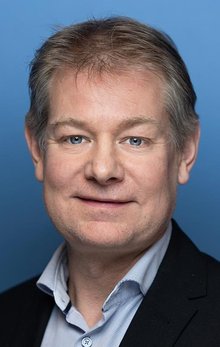
Alan Woods
Director of Strategy and Business Development

Caroline Longman
Director
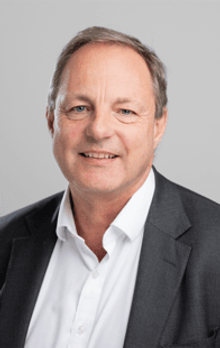
Dave Smith
National Technology Advisor