
What do Scania’s New Powertrains Mean for Bus Operators?
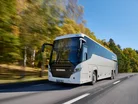
Scania has introduced two innovative powertrain solutions aimed at addressing both current and future operational needs.
These latest offerings include the Scania Super, a next-generation internal combustion engine (ICE), and a plug-in hybrid electric vehicle (PHEV) alternative.
These powertrains provide a versatile platform, enabling operators to navigate zero emission zones, minimise full operating expenses and boost vehicle longevity and reliability.
Both powertrains are offered on a single platform, allowing transport operators to customise their vehicle choices based on route requirements, infrastructure accessibility or emissions objectives.
Carl-Johan Lööf, Head of Product Management for People Transport Solutions at Scania, says: "Our new combustion and plug-in hybrid powertrains are shining examples of Scania’s twin commitment to sustainability and profitability for bus and coach customers."
Exploring the Scania Super powertrain
For numerous global long-distance routes, combustion-powered transport remains the preferred option, largely due to route length and refuelling infrastructure constraints.
The Scania Super powertrain is designed to excel here, equipped with an advanced 13 litre engine that promises greater efficiency than its predecessor.
It can offer fuel savings up to 8% over its previous leading ICE models.
This achievement is attributed to the harmonious pairing of the new engine with the Scania Opticruise gearbox, an automated system that enhances shift performance and fuel economy.

The powertrain adheres to the Euro 7 emissions standard, a stringent regulation focused on minimising harmful emissions like NOx and particulate matter, thanks to an entirely revamped aftertreatment system that curtails emissions without sacrificing engine efficacy.
The engine is built to endure up to two million kilometres, reducing total ownership costs by mitigating the need for frequent engine replacements and minimising downtime.
Enhancements in maintenance access are realised by relocating all engine filters to the cooler side of the unit, facilitating faster filter changes away from the turbocharger.
The new engine boasts improved auxiliary braking systems, enhancing vehicle control during descents or emergency braking.
Plug-in hybrid slashes emissions
The PHEV alternative caters to operators needing to comply with low and zero emission zones while maintaining route flexibility.
Equipped with an integrated e-machine and a six-speed powershift gearbox, the PHEV operates across four modes: electric, hybrid, charge sustain and forced charging.
Fully charged, the PHEV can operate solely on electricity for up to 80 kilometres, enabling entry or exit from zero emission zones without resorting to diesel.
With an electric power capacity of 290 kilowatts, the PHEV delivers robust performance in electric mode while retaining the ability to transition to its conventional engine for longer routes.
Scania Zone, a geofencing solution, allows automated mode transitions, facilitating seamless compliance with urban air quality regulations by switching from hybrid to electric within predefined zones like city centres.
Scania estimates that combined electric and hybrid usage in typical coach traffic reduces fuel consumption and CO₂ emissions by up to 40%, contingent on route and traffic conditions.
The dual system empowers operators to reduce environmental impact without compromising performance or passenger comfort.