Steel River: Google Breaks Ground on US's Largest Solar Farm
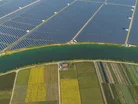
Construction has officially begun on what will become the largest solar facility in the US.
The Steel River Energy Center, located in Mississippi County, Arkansas, is being developed by Cypress Creek Energy with Google acting as both the anchor investor and offtaker, meaning that the tech giant has committed to buying the power the project will generate.
When the project is completed in 2029, Google expects it will be capable of generating 2.5GW at peak performance, while it will also add 2.9GWh of new energy storage capacity.
Michael Terrell, Google's Global Head of Advanced Energy, views this as a significant moment for the company.
“Today we reached a milestone in Google's global clean energy portfolio: we're purchasing power from our largest solar and storage facility to date,” he says.
“Steel River Energy Center, which broke ground today in Arkansas, will also be the largest solar project in the US once fully operational.”
Built on American steel
Perhaps what distinguishes Steel River most from other solar projects is its supply chain.
Mississippi County is the largest steel producing county in the country and the project will be built entirely from structural steel made in the state.
The steel is being sourced from US Steel's Big River facility nearby, while it will also be manufactured at PACO Steel's plant about 20 miles downstream of the Mississippi River.
Amanda Peterson Corio, Google's Global Head of Data Centre Energy, says that this choice of location was deliberate.
"Mississippi County is a leader in American steel production,” she explains.
She also spoke about the impact the project will have on the local community, creating “700 local jobs and generating US$300m in tax revenue” over its lifetime.
The numbers behind Steel River
The first two phases of Steel River will add 1.6GWdc of solar generation and 1.9GWh of battery storage to the regional grid.
GWdc refers to a solar array's direct current capacity, the standard measure used before that power is converted to alternating current for use on the grid, so figures quoted in GWdc typically translate to a somewhat lower alternating current output in practice.
Once all three phases are complete the facility will deliver 2.5GWdc of solar generation alongside 2.9GWh of battery storage, enough, according to Google, to power more than 315,000 Arkansas homes each year.
- GWdc, or gigawatts of direct current, is not to be confused with GW. While both metrics measure power capacity, GWdc is specific to solar energy.
- The output of solar panels can vary depending on cloud coverage, the time of year, wind, temperature or the quality and age of the equipment, but GWdc measures the capacity of photovoltaic arrays working at maximum efficiency.
- It can help to think of GWdc as a car driving at its top speed. Solar panels will only be able to generate that much capacity if all the conditions are right.
Kate Brandt, Google’s Chief Sustainability Officer, highlights the importance of combining both generation and storage at Steel River.
“By pairing massive solar arrays with battery storage, the project can store the sun's peak daytime output and feed it back into the grid exactly when it's needed most,” she says.
“This creates a more reliable, resilient grid that can meet rising electricity demand while keeping power affordable for everyone.”
Power demand and public trust
So, why is Google investing such a large sum of money in this project?
The precedent for the firm’s involvement in the Steel River Energy Center is its own appetite for electricity, which has skyrocketed in recent years thanks largely to its expansion of data centres, many of which are being built to support the rollout of AI.
In fact, Google’s annual energy consumption is so high that it uses more power than half of the world’s countries, individually, not collectively.
This kind of reputation has left hyperscale technology companies like Google, Amazon and Microsoft facing criticism for straining local grids and pushing up electricity bills for ordinary households.
Google has pushed back on that narrative, however, arguing that large loads like its own can in some cases help lower costs by underwriting new infrastructure that would otherwise be paid for by residential customers.
Alongside Steel River, Google has committed US$5m to energy affordability initiatives in Arkansas, including community solar subscriptions for low-income customers in West Memphis, retrofitting for homes and efficiency upgrades for local schools.
Adam Elman, Google's Head of Sustainability for EMEA, says that large infrastructure projects like this can benefit local communities.
“By pairing massive solar arrays with advanced battery storage, we are not just decarbonising the grid; we are proving that large-scale infrastructure can simultaneously drive domestic manufacturing and long-term economic prosperity for local communities,” he suggests.
Amanda, meanwhile, says that Steel River will help to make energy more accessible and more affordable in the area.

“Our responsibility goes far beyond these clean electrons flowing into the grid," she explains.
"We know that many families are focused on simply making ends meet right now.
"That’s why Google is also funding additional energy affordability initiatives to support Arkansas families, including community solar subscriptions, home improvements and energy efficiency projects in schools."
Company portals


Executives
Adam Elman
Director of Sustainability for EMEA
Amanda Peterson Corio
Global Head of Data Center Energy
Kate Brandt
Member Board of Trustees
Michael Terrell
Head of Advanced Energy