Trump Postpones Iran Ultimatum after 'Productive' Diplomacy
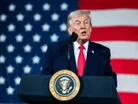
US President Donald Trump has stepped back from the brink of striking Iranian energy infrastructure, announcing a five-day postponement of any airstrikes after what he described as "very good and productive" talks between Washington and Tehran.
The climbdown comes hours before Trump's own 48-hour deadline was set to expire.
On Saturday, Trump had threatened to "obliterate" Iran's power plants unless it agreed to reopen the Strait of Hormuz – the vital waterway through which roughly 20% of the world's oil and gas ordinarily flows.
That deadline was due to expire shortly before midnight today.
In a Truth Social post, Trump said he had instructed the defence department to stand down on all planned strikes against Iranian power plants and energy infrastructure for a five-day window, conditional on the "success" of ongoing "meetings and discussions".
He said the two sides had held "very good and productive conversations regarding a complete and total resolution of our hostilities in the Middle East".
Is there a path to a lasting resolution?
The announcement has been met with relief in financial markets, though analysts are cautioning that a durable resolution remains elusive.
It is far from clear how Washington and Tehran might arrive at the "complete and total resolution" Trump described.
Throughout the conflict – which has never had clearly stated objectives – Trump's goals have appeared to shift repeatedly.
He previously called for regime change and urged "the Iranian people to take back their country", yet the Iranian government remains in power despite the assassination of several senior leaders, including former Supreme Leader Ali Khamenei, whose son Mojtaba now leads the country.
Analysts say Trump has no obvious route back to international equilibrium, with Iran demonstrating its ability to retain control over the Strait of Hormuz.
How we got here
It has been nearly one month since the Strait of Hormuz was closed following joint US-Israeli airstrikes on Iran. In the weeks since, global energy markets have descended into chaos, with prices of both oil and gas skyrocketing.
Trump's weekend ultimatum dramatically raised the stakes.
Tehran responded with threats to retaliate by striking essential infrastructure across the Middle East – including vital water systems – if the US followed through.
Iran also warned it would strike power plants supplying electricity to American military bases, as well as "economic, industrial and energy infrastructures in which Americans have shares".
Parliament Speaker Mohammad Baqer Qalibaf had warned that any strike on Iranian facilities could see "critical infrastructure and energy facilities in the Middle East irreversibly destroyed", keeping oil prices elevated "for a long while."
Elsewhere, the Islamic Revolutionary Guard Corps vowed symmetrical retaliation.
"If you strike electricity, we will strike electricity," the group said.
Markets reel as the energy squeeze sets in
News of the postponement may offer some relief to rattled markets, though the underlying energy crisis is far from resolved.
In the past few days, the price of Brent crude has hovered around US$113 a barrel, with US benchmarks trading near the US$100 mark – up more than 50% since the first US-Israeli strikes on Iran in late February.
Asian equity markets had borne the brunt of the earlier escalation, with Japan's Nikkei 225 sliding around 3.5% and South Korea's Kospi falling nearly 5% in Monday trading.
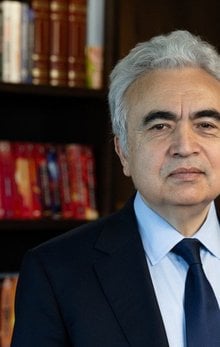
The IEA's Executive Director Fatih Birol, speaking in Canberra, had delivered one of the starkest assessments of the crisis yet, warning that the world has lost around 11 million barrels per day of supply.
He described the situation as "more severe" than the oil shocks of 1973 and 1979 combined, plus the gas crisis triggered by Russia's 2022 invasion of Ukraine.
"This crisis, as it stands," he said recently, "is akin to experiencing two oil crises and one gas crisis all at once."
While the IEA has overseen the coordinated release of hundreds of millions of barrels from strategic reserves, Birol stressed that "stock release will help to comfort the markets, but this is not the solution".
Reopening the Strait of Hormuz, he said, remains "the single most important solution to this problem".
Political pressure remains high around the world
The fuel crisis has been testing governments far beyond the Gulf.
In London, Prime Minister Keir Starmer has convened successive emergency Cobra meetings focused on energy security and supply chain resilience.
Sources say that a late-night call with Trump over the weekend ended with an agreement that reopening the Strait of Hormuz is "essential to ensure stability in the global energy market".
Ministers face growing pressure from unions and business groups to roll out targeted support for energy-intensive sectors and low-income households, amid warnings from farming leaders that higher fertiliser, fuel and heating costs represent "the start of the next cycle of inflation coming through the supply chain".
Countries heavily dependent on Middle Eastern imports, from East Asia to the Philippines, are already feeling the squeeze through higher transport and food costs, with fuel subsidies stretched and households cutting back.
Five days to find a resolution
With the immediate threat of strikes postponed, the world now has a narrow window in which diplomacy might gain traction.
But with no clear framework for talks, a conflict that has defied easy resolution for weeks, and an Iranian leadership that has so far withstood enormous military and economic pressure, that window may prove to be very narrow indeed.

The question now is whether five days is enough time to find the "complete and total resolution" Trump is promising – or whether the world simply finds itself back at the same cliff edge before the week is out.
Company portals


Executives
Fatih Birol
Executive Director