Does the ID.3 Pro S Set a New Standard for EV Battery Life?
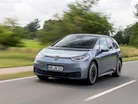
The ADAC's comprehensive endurance review has delivered an impressive verdict for Volkswagen's ID.3 Pro S.
After logging over 160,000 kilometres, the vehicle's battery capacity performance has confirmed expectations set by the engineers at the Test and Technology Centre in Landsberg am Lech, Germany.
Net capacity takeaways:
- ID.3 Pro S retains 91% capacity after four years or 160,000 kilometres
- ID.3 maintains 70% capacity over eight years under similar conditions
“The result shows the impressive quality of our ID. models even after covering many kilometres,” says Martin Sander, member of the Volkswagen Board of Management responsible for Sales, Marketing and After Sales.
“A high battery capacity of over 90% after 160,000 kilometres confirms that our ID. models are also very attractive as used cars and continue to meet the requirements of our customers.”
ADAC's testing process
To efficiently cover 160,000 kilometres, ADAC employed rapid charging stations for more than 40% of charging sessions, a strategy that pushed the boundaries of typical usage patterns.
Additionally, the ID.3 stood charged at 100% between test drives, contradicting standard advice, sometimes waiting several days before being put back to work.
Throughout the evaluation, engineers conducted systematic checks on the vehicle, primarily focusing on battery health.
This ongoing scrutiny marked a milestone as the first such rigorous endurance test applied to a model from the ID. family.
ADAC recommendations for customers
ADAC emphasises the importance of keeping vehicle software up-to-date.
The ID.3 underwent multiple software enhancements, including upgrades to the Electric Vehicle Route Planner, optimising charging stops and increasing charging capacity to up to 170 kW.
Moreover, these updates contributed positively to the ID.3’s range, particularly enhancing power efficiency in short distances and colder temperatures ranging from 0 to 5°C.
Post-testing evaluations by ADAC revealed that the vehicle's body and chassis, along with axles, suspension and steering, showed remarkable resilience to the vehicle's weight after extensive usage.

Why does battery performance matter?
Battery performance is crucial to the acceptance and success of electric vehicles (EVs).
It directly impacts the vehicle's driving range, charging duration, longevity and total cost of ownership.
A robust battery guarantees that users can embark on longer journeys with fewer interruptions for charging, thereby enhancing the practicality and appeal of EVs.
Yet, maintaining excellent battery condition over time remains an ongoing challenge.
Lithium-ion technology inherently suffers from degradation with repeated charge cycles, gradually diminishing both range and capacity.
Conditions like frequent fast charging, exposure to extreme temperatures, and inappropriate charging habits can expedite this degradation.
As battery efficacy declines, so does the vehicle’s market value, especially impacting the secondhand market.
While manufacturers extend warranties to mitigate these concerns, the real-world validation of long-term endurance, exemplified by ADAC's testing of the ID.3, offers reassurance to consumers.
Battery health is also vital for sustainability, as longer-lasting units demand fewer resources for replacement, diminishing the environmental footprint linked to mining, production and disposal.
Independent assessments such as ADAC's provide significant assurance to potential EV buyers, demonstrating how products like the ID.3 can sustain battery performance and capacity under various conditions.
This bolsters consumer trust in electric vehicle durability, resale value, and eco-friendliness.