
What Does the UK's 2025 Autumn Budget Say About Energy?
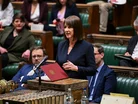
The UK's Chancellor of the Exchequer Rachel Reeves has set out the Labour government’s second Autumn Budget since taking office in 2024, outlining how the UK intends to tax and spend in 2026 and the years that follow.
The statement covered headline issues such as support for electric vehicles, changes to motoring taxation and fresh commitments on energy security and efficiency.
The fiscal package had been trailed as a pivotal moment for Reeves and Prime Minister Keir Starmer, with the administration seeing pressure from both the Greens and Reform as discontent grows across the political spectrum.
With this backdrop, the Chancellor opted for a relatively cautious stance, keeping income tax and national insurance rates unchanged in a bid to avoid provoking either left or right.
“I’ve made my choices: not reckless borrowing, not dangerous cuts, but stability for our economy, security for our public finances and security for family finances too,” she said. “Those are the Labour choices.”
Overall, the Budget contained fewer big-ticket spending pledges than some recent predecessors, though there were notable signals on how the UK will support renewable power, EV charging and energy-efficiency schemes over the next five years.
For many on the left, the sustainability content will likely feel underpowered, especially given the scale of the climate challenge. Reeves also used her speech to caution against what she characterised as overreach in pursuit of net-zero, taking aim at the Green Party in the process.
“The leader of the Green Party is a keen hypnotherapist and he believes he can achieve remarkable things using only the power of his mind,” Reeves said.
“Unfortunately, the only things getting bigger under his approach would be the deficit and the rate of inflation.”
I’ve made my choices: not reckless borrowing, not dangerous cuts, but stability for our economy, security for our public finances and security for family finances too.
A new pay-per-mile tax for EV drivers
One of the most eye-catching measures for the energy and transport sectors is a new mileage-based levy on battery electric and plug-in hybrid vehicles, designed to narrow the gap with traditional internal combustion engine vehicles (ICEVs).
Under the plans, the Electric Vehicle Excise Duty will charge EV owners per mile driven, rather than relying solely on conventional vehicle excise duty bands.
"Because all cars contribute to the wear and tear on our roads,” she said, “I will ensure that drivers are taxed according to how much they drive and not just by the type of car they own by introducing the EV Excise Duty on electric cars.”
The charge is expected to be set at around £0.03 per mile for fully electric models and £0.015 per mile for plug-in hybrids, starting in April 2028 and projected to generate about US$1.8bn by the 2029-2030 fiscal year.
The Office for Budget Responsibility (OBR) has indicated that this will offset roughly a quarter of the 0.6% of GDP that would otherwise be lost from declining fuel duty receipts as the fleet electrifies.
While still only around half of the effective rate faced by petrol and diesel drivers, the move has already prompted debate over its impact on the EV transition.
“Today’s announcement is a clear signal that the UK is serious about an all-electric future,” says Mark Caskey, MD of Projects at Mitie.
“However, introducing a pay-per-mile charge for EVs, on top of existing road taxes, sends a mixed message. Businesses need certainty to invest in cleaner fleets, not policies that could stall momentum and threaten jobs in UK manufacturing.”
Proposed investments in EV infrastructure
Balancing the new tax, the government has also pledged US$256m of additional capital to speed up the deployment of electric vehicle charging infrastructure.
This is intended to support a denser, more reliable public charging network and help address range and convenience concerns for prospective EV buyers.
To improve the economics for infrastructure providers, EV charge points will benefit from 100% business rates relief for the next ten years, effectively cutting operating costs for site hosts.
At the same time, the threshold for the Expensive Car Supplement on electric vehicles will be lifted to US$66,000, which Reeves said would deliver annual savings of around US$581 for more than one million drivers, a move aimed at keeping higher-end EVs attractive in the face of new charges.
Britain's nuclear future
On the power system, the Budget confirms temporary funding for the renewables obligation mechanism, with spending of US$3.8bn pencilled in for the coming year and an average outlay of US$2.6bn in both 2027-28 and 2028-29.
This support is due to be wound down and removed entirely by 2029-30, signalling an eventual transition away from this particular subsidy regime.
"One of the greatest drivers of the rising cost of living is the cost of energy prices," Reeves told the Commons.
"The cause of high energy bills must be tackled at source and so we are investing in energy security in nuclear and renewable energy, and in insulation through our Warm Homes Plan."
As part of this, Reeves highlighted plans to team up with Rolls-Royce to build three small modular reactors in Wales at the Wylfa site, a move intended to anchor a new generation of nuclear capacity in the UK.
The Warm Homes Plan will channel funding towards lower-income households, helping them upgrade insulation and low-carbon heating, including through an expanded Boiler Upgrade Scheme and streamlined planning rules for heat pump installations.
The economic backdrop to the 2025 Budget
These sector-specific policies sit within a broader budget that is on course to push the UK’s overall tax take to a record 38% of GDP by 2030-31, roughly five percentage points higher than before the pandemic.
To reach this, the government expects to raise an additional US$33.3bn in tax by 2029-30, largely through freezing personal allowance thresholds and layering on a series of smaller fiscal measures.
"To break the cycle of austerity we need a fair and a sustainable tax system," Reeves argued.
"One that generates revenues to fund the public services that we all use."
Nevertheless, campaigners and environmental experts warn that the package does not meet the urgency of the climate and nature crises.
“Today’s announcements fall far short of what’s needed,” says Dr Sam Sinclair, Co-Founder and Director of conservation organisation Biodiversify.
“There was no talk of investment in nature innovation, no support for companies championing nature’s recovery, and no drive forward to position the UK as a global nature leader.
“Businesses are already grappling with water stress, biodiversity loss and supply-chain shocks that don’t wait for Budgets.
“Nature underpins productivity, food security and economic stability, yet the Chancellor offered no meaningful signal to help firms invest with confidence.
“Without proper support, the UK risks falling behind while nature-related risks continue to accelerate.”
Company portals



Executives

Dr Sam Sinclair
Co-Founder and Director

Mark Caskey
MD of Projects