
What is Renault's Plan to Recycle its Old EV Batteries?
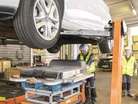
As countries push to electrify transport and clean up energy systems, the industry is up against a mounting challenge – what happens to the millions of used, obsolete EV batteries when they no longer function?
As such, EVs – which are widely regarded as the most sustainable route to reducing transport emissions – will soon have a different kind of sustainability problem on their hands: waste.
According to McKinsey, more than 100 million units are expected to be retired within the next decade. This notion has left automakers searching for answers.
Renault Group’s response to this issue is already taking shape in northern France.
A milestone for end-of-life energy systems
The Future is NEUTRAL, majority-owned by Renault Group, has launched France’s first Individual System (IS) for the recycling and management of electric vehicle batteries.
Established in 2022, the company already handles end-of-life vehicles for 15 car brands and is now expanding into battery lifecycle management.
Yann Velluet, VP Battery Business at The Future is NEUTRAL, says: “This first approval reinforces our belief in the competitiveness of our IS offer for the end-of-life management of electric vehicle batteries."
Tackling energy and environmental risk
EV batteries are more than spent car components – they are complex energy storage systems. The World Resources Institute classifies end-of-life batteries as hazardous waste due to their toxic chemical composition and flammable properties.
When incorrectly disposed of, they can leak pollutants, ignite through thermal runaway and emit harmful fumes, threatening nearby communities and ecosystems.

The policy framework driving energy recovery
Since August 2025, European Extended Producer Responsibility (EPR) regulations have applied to battery recycling.
This shift ensures manufacturers remain accountable for batteries throughout their lifespan – from production and use to end-of-life management.
Similar policies currently exist in India and China, forming part of a global effort to contain waste and secure critical materials like lithium and nickel.
According to McKinsey, the recycling of EV batteries is not just about compliance but energy security – reducing dependence on carbon-intensive mining regions and cutting the emissions footprint of future supply chains.
How Renault plans to turn waste into an opportunity
Under the IS framework, The Future is NEUTRAL works alongside its subsidiary INDRA AUTOMOBILE RECYCLING to process end-of-life vehicles and recover battery materials with support from its shareholder Suez. Together, they feed valuable metals back into the production loop, strengthening the resilience of the European energy supply chain.
The organisation also collaborates with GAIA to repair and recondition low-performance batteries.
With more than 90% of faulty batteries repairable, GAIA has refurbished more than 18,000 units since 2012. When a battery’s remaining capacity is no longer fit for driving, the company prepares it for secondary use – from stationary storage in renewable grids to power for smaller mobility systems.
Circular battery systems for an energy-secure future
The Future is NEUTRAL has secured official approval to operate an Individual System, enabling manufacturers to meet their EPR obligations independently of state-managed collectives.
Yann Velluet, VP Battery Business at The Future is NEUTRAL, says: “This first approval reinforces our belief in the competitiveness of our IS offer for the end-of-life management of electric vehicle batteries.
“Leveraging the complementary expertise of our subsidiaries and partners, we offer our circular economy solutions to all automotive manufacturers.”
EV and energy industry leaders can explore more sustainability trends at Sustainability LIVE: The US Summit, co-located with Procurement & Supply Chain LIVE in Chicago on April 21–22.
Secure your place for The US Summit today.
Company portals


Executives
Yann VELLUET
VP Battery Business and OEM Integration