Carbon Measures: A New Carbon Emissions Framework

A group of prominent companies, including BlackRock's Global Infrastructure Partners, ExxonMobil and Santander, have formed a coalition to establish a new framework for measuring carbon emissions.
The initiative named Carbon Measures aims to stop the double-counting of carbon pollution in corporate reporting and develop standards for measuring the carbon intensity of individual products and supply chains.
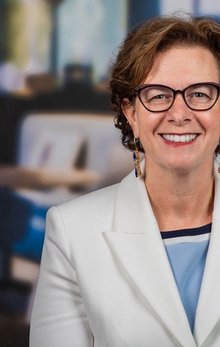
Carbon Measures will be led by Amy Brachio, who is the former Global Vice Chair for Sustainability at EY.
Other backers supporting the initiative include the chemicals company BASF SE, consultancy EY, industrial gas firm Linde Plc and the Japanese conglomerate Mitsui.
The formation of Carbon Measures signals an initiative by some major corporations to change how emissions reporting currently functions.
A challenge to existing carbon accounting
The Carbon Measures group is proposing a departure from the GHG Protocol, which is the current global standard for emissions reporting used by a majority of S&P 500 companies.
Critics of the existing system, like BlackRock and ExxonMobil, argue that the framework, which was developed in the late 1990s, allows for the same carbon dioxide molecules to be counted by multiple entities within a value chain.
However, defenders of the GHG Protocol suggest that this feature is not a flaw. Those responsible for its design have countered that double-counting is one of the framework's "greatest strengths" because it promotes "comprehensive" greenhouse gas management across different companies.
Carbon Measures plans to support the creation of a ledger-based system that operates similarly to financial accounting, tracking emissions as goods move through the supply chain.

Developing a ledger-based emissions framework
The proposed framework would treat carbon emissions as a liability attached to a product.
"If you are buying a tonne of steel, you need to understand how much carbon went into producing that tonne of steel, so that when it's sold, you're not only selling the asset of the steel, but you're selling the liability – so to speak – of the carbon emissions that go along with it," Amy explains.
The development of this new framework is expected to take two years, with a further five to seven years required for it to be adopted at scale.
Amy said the coalition anticipates growing from around 20 backers to approximately 100, with a focus on including companies from high-carbon industries.
The initiative is emerging as companies and investors face increasing pressure from regulations like Europe's carbon border adjustment mechanism to manage their carbon footprints.
Carbon Measures intends to contribute to the design of carbon intensity standards for key industrial products that are responsible for a large portion of global emissions, such as electricity, fuel, steel, concrete and chemicals. Carbon Measures will also advocate for government policies that could support emissions reductions.
If you are buying a tonne of steel, you need to understand how much carbon went into producing that tonne of steel, so that when it's sold you're not only selling the asset of the steel, but you're selling the liability – so to speak – of the carbon emissions that go along with it.
Aligning industry and finance on climate action
Leaders from both heavy industry and the financial sector have voiced support for the initiative's goals.
Ana Botin, the Executive Chair of Santander, says that accurate and transparent calculation of carbon emissions "is the foundation for meaningful climate action."
This sentiment is echoed by industrial players. Francois Jackow, CEO of Air Liquide, another backer, suggests that harmonised product-level carbon intensity standards will enable investors "to reward low-carbon solutions."
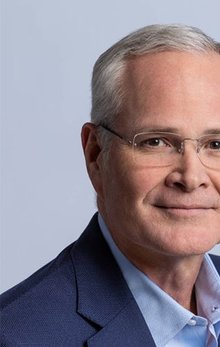
From the perspective of the energy sector, Darren Woods, the CEO of ExxonMobil, believes that "the first step to reducing global emissions is to know where they're coming from".
Darren adds: "Today, we don't have an accurate system to do this". For several years, ExxonMobil has advocated for a global system to measure the carbon intensity of different products. BlackRock's GIP states on its website that it views the clean-energy transition as the "single biggest investment opportunity" and wants to use its influence to help achieve decarbonisation.
For Amy, "precise and comparable data has proven something of a holy grail" when it comes to tracking emissions.
She argues that the current approach "simply won't be sufficient going forward." The debate over double-counting in carbon accounting remains a contentious issue.
The success of Carbon Measures may depend on its ability to reconcile these different views and attract the widespread industry participation it needs to be effective.
Company portals





Executives
Amy Brachio
Chief Executive Officer
Ana Botín
Executive Chair
Darren Woods
CEO
Francois Jackow
CEO