Inside AstraZeneca & Future Biogas' British Biomethane Plant
A year after launching the UK’s first unsubsidised biomethane plant, AstraZeneca and Future Biogas are beginning to show just how effective private investment can be when it comes to the generation of low-carbon energy.
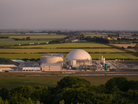
Located at Gonerby Moor in Lincolnshire, Future Biogas’s Moor Bioenergy facility has added nearly 100 gigawatt hours of renewable biomethane to the UK gas network since becoming fully operational in 2025.
This clean energy input has helped avoid around 17,000 tonnes of CO₂e, which is equivalent to AstraZeneca’s entire annual gas demand.
Under a long-term offtake agreement, the plant exclusively supplies AstraZeneca with biomethane for its R&D and manufacturing sites, ensuring a steady supply of low-carbon heat.

Beyond producing renewable gas, Moor Bioenergy also features cutting-edge carbon capture technology, which is capable of separating and capturing biogenic CO₂ during the upgrading process. This captured carbon is then used across commercial sectors, including beverage carbonisation.
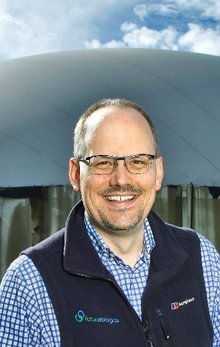
Philipp Lukas, Founder and CEO of Future Biogas, says: “As the UK forges ahead with developing carbon storage facilities such as Endurance and HyNet, the CO₂ from Moor is expected to be directed to geological sequestration, permanently removing it from the atmosphere.
“This is essential to Project Carbon Harvest: the objective of which is to move our biomethane plants beyond just renewable energy to verifiable, permanent carbon dioxide removal, i.e. removing more CO₂ from the atmosphere than the whole process produces effectively providing much-needed energy with net-negative emissions.”
Building resilience and sustainability into the gas grid
The energy model behind Moor Bioenergy hinges on its long-term commercial partnership.
AstraZeneca’s 15-year-long offtake agreement with Future Biogas has been key to the project’s financial stability, providing a dependable revenue base without public subsidy. Feedstock supply contracts and the monetisation of captured CO₂ offer additional resilience, helping de-risk operations and secure future expansion.
By supporting the direct delivery of renewable gas into the UK energy grid, AstraZeneca’s investment goes beyond the use of renewable gas certificates; it enables the creation of new green energy capacity.
This approach allows large energy users to demonstrate tangible decarbonisation progress, linking climate commitments with measurable grid contributions.
What’s needed for wider uptake
Moor Bioenergy represents the first of several planned bioenergy with carbon capture and storage (BECCS) facilities Future Biogas intends to deliver. The company is already working on additional biomethane with BECCS projects and exploring retrofits for existing plants, each capable of capturing thousands of tonnes of biogenic CO₂ annually.
However, Philipp stresses that progress depends on policy clarity: “Realising this vision at scale requires policy certainty.
“While a clear successor mechanism to the Green Gas Support Scheme (GGSS) would be welcome, the industry most needs grid-injected biomethane to be treated as zero-emission under the UK ETS. This, more than anything, would preserve biomethane’s momentum, enabling it to continue scaling towards its potential.”
Future Biogas is now engaging with other major energy users to replicate the success of the Moor partnership, helping corporates decarbonise while ensuring long-term cost stability and increasing the volume of renewable gas feeding into the national grid.
Company portals


Executives
Philipp Lukas
Chief Executive Officer