Legrand's Investments Prove Energy's Value in Data Centres
Legrand, one of Europe's most influential digital infrastructure firms, has this month made two very strategic investments.
The French company first acquired Kratos Industries, a US-based firm that specialises in manufacturing electrical systems. Next, Legrand invested in Accelsius, a company that has made its name off the back of the innovative liquid cooling systems it builds for data centres.
Together, these purchases have significantly improved Legrand's overall offering in the data centre sector.
The moves also see Legrand expanding its footprint across both the grey space (where upstream energy systems manage power distribution) and the white space (which is home to dense rack loads that demand advanced cooling solutions).
As operators look to balance performance gains with responsible energy use, closer integration between these layers is becoming key to efficiency and resilience.

Why energy is a priority for Legrand right now
Kratos Industries, based in Arvada, Colorado, develops low‑ and medium‑voltage switchgear, switchboards and integrated power systems engineered for high‑availability electrical environments.
Through this acquisition, Legrand extends its grey space portfolio – which already includes cable bus and load bank systems – to encompass a broader range of energy‑delivery products that underpin data‑centre reliability.
Its portfolio now aligns more closely with the distributed power infrastructure needed to support AI workloads at scale, complementing white‑space technologies such as rack power distribution units.
“Data centres are facing unprecedented pressure to build out digital infrastructure at scale and with extreme reliability,” says Pedro Mendieta, Data, Power, and Control (DPC) President of Legrand, for North and Central America.
“By welcoming Kratos to Legrand, we are deepening our ability to serve the complete data centre power train, ensuring our customers have a single, trusted partner for their entire power ecosystem.”
With Rowan Koons set to lead the Kratos business unit, the integration is expected to enhance manufacturing agility, enabling faster delivery for large‑scale, energy‑intensive projects.
“By leveraging Legrand's global supply chain and operational infrastructure, we can accelerate growth and better support the massive, complex projects our customers are undertaking,” he says.
Consolidation among power equipment providers could help operators reduce integration risk and optimise energy delivery as they construct multi‑gigawatt campuses.
Liquid cooling and the energy efficiency imperative
In parallel with its power expansion, Legrand has participated in a Series B funding round for Accelsius, a pioneer in two‑phase direct‑to‑chip liquid cooling.
The agreement signals a stronger commitment to cutting the energy intensity of high‑performance computing environments.
Conventional air cooling has reached its limits as AI and HPC systems push rack densities higher.
Accelsius’ technology removes heat directly from processors using phase‑change principles, creating a more efficient thermal loop that reduces the electricity needed for cooling.
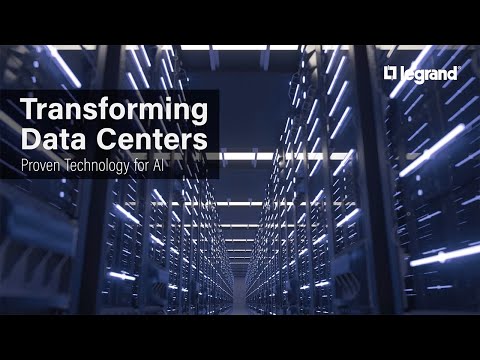
Working together, Legrand and Accelsius will explore integrating liquid cooling into rack‑level infrastructure – a step that aligns power distribution, structural design and coolant management within a unified framework.
As AI clusters become more energy‑hungry, improving cooling performance at the chip level can translate into measurable gains in power efficiency and uptime.
Building a unified energy strategy
Legrand frames the Kratos and Accelsius deals as two pillars of a cohesive energy infrastructure strategy: reinforcing electrical reliability in the grey space while driving thermal innovation in the white space.
Combined, they create a more complete ecosystem – from medium‑voltage switchgear to rack‑level heat removal – designed to meet the efficiency expectations of the AI age.
By integrating engineered‑to‑order energy solutions with advanced cooling technologies, Legrand positions itself as a single‑source partner for the rapidly growing AI data centre sector.
For operators under pressure to deliver capacity faster while curbing energy use, streamlined access to coordinated power and cooling systems could offer a significant advantage.
Company portals

Executives
Pedro Mendieta
President - Data, Power & Controls

Rowan Koons
VP/General Manager of the Kratos Business Unit with Legrand's DPC Division