
Why Methane is Centre Stage at London Climate Action Week
Methane is not always the easiest climate issue to turn into a headline. It lacks the political theatre of coal phase-outs, the scale of huge wind and solar installations and the economic drama of an oil shock.
That said, methane has become one of the most problematic pieces of the climate crisis, so much so that it was top of the agenda as London Climate Action Week began today.
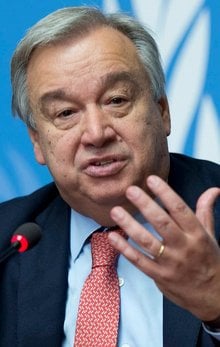
In a speech framed around what he called a “Tale of Two Crises” – climate breakdown and energy insecurity – UN Secretary-General António Guterres used his special address in London to discuss methane and the challenge it poses to the energy transition.
"Methane is responsible for around one-third of global warming," he explained.
"It is some eighty times more powerful than carbon dioxide," he added, "but unlike CO₂, methane breaks down in the atmosphere within a decade or two. That means that aggressive cuts could produce visible temperature relief within a generation."
Why methane has become a priority
During his address, António announced a campaign named Call to Action on Methane, spanning waste, agriculture and fossil fuels.
He acknowledged that slashing fossil fuels is still top priority, but that methane offers one of the fastest opportunities for the sector to cut climate harm without waiting for a full overhaul of the energy system.
He pointed to the International Energy Agency’s assessment that around 70% of oil and gas methane emissions can be eliminated with existing technology – much of it at low or no net cost.

That is a remarkable figure. It does, however, raise a rather uncomfortable question: if the solutions are already available, why are emissions still so high?
António sharpened that point with one of the starkest statistics in the speech.
“In 2025 alone, some 167 billion cubic metres of gas were flared into the sky – as much as Africa consumes in a year," he said.
"UN Environment’s Methane Alert and Response System has issued more than 5,000 alerts across 33 countries. Yet the global response rate stands at just 12%," he added.
That number captures the real issue with methane: the industry has the tools to detect leaks and venting, it has a growing stack of satellite data, field monitoring technologies and policy guidance – what it has not yet shown, however, is a consistent willingness to respond.
The end of voluntary restraint
This line of thinking brought with it one of the most impactful lines in António's address: “Voluntary action is no longer enough.”
For energy executives, this is the clearest signal yet of where the political conversation is heading.
Methane regulation will soon become a hard standard for which companies will be held accountable. To this end, António called on governments to set "a new global standard for the oil and gas sector: near-zero methane emissions across the value chain".
In practice, that could mean tighter regulation of upstream operations, tougher scrutiny of imported gas and LNG and more pressure on national oil companies as well as the global majors.
António used the same speech to attack the continued push for more coal mines, oil fields and gas expansion, arguing that doubling down on fossil fuel supply in the name of security will leave countries with stranded assets and deeper vulnerability.
He also took aim at the windfall profits being booked by major fossil fuel companies amid geopolitical turmoil, noting that the eight largest firms pocketed an extra US$6.5bn in the first quarter of this year alone.
The message was clear enough. If companies want to defend their role in the energy system during a volatile period, they will increasingly be expected to prove they can at least eliminate the most wasteful and avoidable emissions associated with that role.

The world phased out leaded gasoline. We eliminated ozone-depleting chemicals. Methane pollution must be next.
A credibility test for the transition
For years, methane has been discussed as an important but often secondary issue. Now, however, it is taking centre stage.
For governments, action on methane will be a test of whether or not they are willing to regulate fossil fuel pollution more aggressively, even while worrying about affordability and energy security.
For oil and gas companies, it is a test of whether their climate commitments can survive contact with air.
And for a sector increasingly challenged to justify continued investment in hydrocarbons, it is also a test of licence to operate.
If methane can be cut quickly, cheaply and at scale, then continued inaction starts to look less like a technical failure than a political and commercial choice.
"The world phased out leaded gasoline," António concluded. "We eliminated ozone-depleting chemicals.
"Methane pollution must be next."
Company portals


Executives
António Guterres
Secretary General