
Wood Mackenzie: Is 2026 the Year that AEVs Go Mainstream?
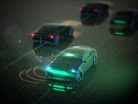
The autonomous electric vehicle sector is poised to transition from experimental testing to mainstream commercial deployment this year, according to Wood Mackenzie's latest outlook.
The Edinburgh-based consultancy expects AEV operations or testing in 39 markets by the end of 2026, marking a significant speeding up in their rollout, despite some extant economic and functional uncertainties around the technology.
In total, Wood Mackenzie outlines four major trends that it believes will come to define the next 12 months in the world of driverless vehicles. In this article, we unpack each of them.
Key developments to AI systems
The shift is set to hinge on new Vision-Language-Action AI models, or VLAs.
These models replace traditional "rule-based" systems and expensive high-definition mapping with camera-and-video perception technology, that is able to make fast decisions in real time.
Thanks to recent improvements in this kind of technology the expected timelines for the city launches of many AV fleets have been shortened considerably.
"New AI technologies are fundamentally transforming the economics of deployment," says David Brown, who is Director of Integrated Energy Research at Wood Mackenzie.
"As launch timelines compress and costs decline, we are seeing the sector move from pilot projects to commercial scale operations across multiple markets simultaneously."
Companies including Tesla, Waymo, Baidu and Xpeng all adopted VLA technology in late 2025 and are now scaling its application.
Crucially, this technology allows AEVs to substitute costly rotational LiDAR sensors with lower-cost solid-state alternatives and high-dynamic-range cameras.
Waymo's international expansion and the rapid rise of Chinese AEV providers
Waymo is leading American expansion with plans to operate in 27 cities by the end of 2026, up from just five currently.
This rollout is supported by a new lower-cost vehicle platform and strategic partnerships with Uber and Avis Budget Group.
China represents the only market comparable to the US in scale.
Apollo Go, Pony.ai and WeRide have announced expansion plans across Beijing, Shanghai, Guangzhou, Wuhan and Shenzhen.
China's 15th Five-Year Plan, expected in 2026, will likely introduce new targets for the AEV supply chain with focus on Level 4 autonomy standards and data centre infrastructure.
Wood Mackenzie expects China to begin exporting its AEV technology globally this year, mirroring its position in solar panels and battery manufacturing.
Chinese firms offer cost-effective technology that is proving attractive to Transport-as-a-Service providers in Europe seeking to launch pilot programmes without significant capital investment.

Pilot programmes in the Middle East and Europe to increase across 2026
London's complex road network will serve as a crucial testing ground for European AEV adoption in 2026.
Waymo, Baidu and Wayve each plan to launch pilot programmes in the city during the year.
Transport-as-a-Service providers in the Netherlands, Germany and France are increasingly turning to Chinese technology for their pilot programmes due to cost-effectiveness.
The UAE is also emerging as an leader in the space, with approximately 130 autonomous vehicles currently being tested across the Emirates.
Baidu and WeRide are targeting fleet expansions to 1,000 vehicles by year-end in the country, aligning with the UAE's Vision 2030 goal of making 25% of all transportation autonomous – one of the most ambitious national targets globally.
The UAE's interest reflects broader economic diversification efforts and favourable regulatory environments that are accelerating deployment timelines.
The position implications for infrastructure
Wood Mackenzie projects global AEV sales will expand tenfold between 2026 and 2030.
In the United States alone, the Transport-as-a-Service fleet will add 100,000 vehicles during this period.
Charging infrastructure will require substantial investment to support commercial operations, as autonomous vehicles in service require high-speed charging to minimise downtime.
Data centre expansion represents another infrastructure challenge, as autonomous systems require continuous training using data from millions of miles of driving.
Power demand from AEV operations remains modest in 2026, but Wood Mackenzie's analysis suggests the sector could have significantly larger impact on commodity markets under high-case scenarios.
The combination of vehicle charging, data centre operations and manufacturing could create notable demand for electricity, copper and other materials essential to electrification.
Company portals





Executives

David Brown
Director of Integrated Energy Research