Toyota's Next-Gen Hydrogen Fuel Cell for Heavy-Duty Use

For more than 30 years, Toyota has been a pioneer in hydrogen fuel technology, showing no signs of deceleration in its quest for greener fuel alternatives.
The automotive behemoth has recently unveiled its latest innovation: a third-generation fuel cell system, which promises the robustness of diesel engines without the environmental detriment of fossil fuels.
This new system not only enhances fuel efficiency by 1.2 times but also boasts a maintenance-free design, which was showcased to much acclaim at the H2 and FC EXPO in Tokyo, Japan.
Enhanced fuel tech
Toyota's latest fuel cell system brings significant improvements over its predecessors.
The durability now parallels that of traditional diesel engines, a leap forward in making hydrogen a viable alternative for road freight.
What makes this new release particularly compelling is its 20% increase in cruising range, accompanied by substantial production cost reductions.
These advancements are a result of Toyota’s innovative approaches to fuel cell design and the manufacturing process.
Its application isn’t limited just to heavy-duty trucks; the new fuel cell system is versatile enough for use in various vehicle types.
From passenger cars and stationary generators to heavier modes of transport like trains and ships, this compact design adapts seamlessly, paving the way for broader uses of hydrogen in the automotive industry and beyond.
Pioneering green mobility
Toyota has been at the forefront of hydrogen fuel cell technology since 1992, with its vehicles participating in significant public demonstrations like the 1996 parade featuring the EVS13, an FCV equipped with a metal hydride hydrogen tank.
Following its early experiments, Toyota continued to refine its technology, culminating in the launch of the Toyota FCHV-4 in 2001, the first licensed fuel cell hybrid vehicle tested on Japan's roads.
In 2014, the Mirai sedan was introduced globally, integrating numerous cutting-edge technologies focused on safety, convenience, and multimedia.
The 2024 iteration of Mirai further embeds its status in offering advanced technological features and aids Toyota's pledge in delivering high-efficiency, ze
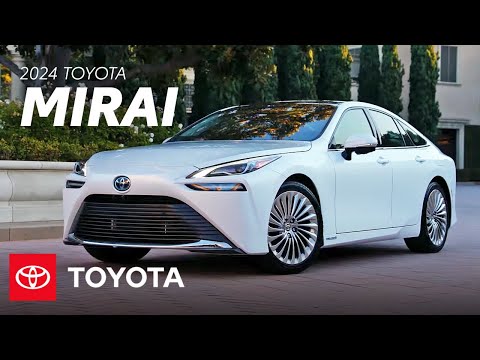
ro-emission vehicles.
A Global Commitment to Hydrogen
As part of its dedication to enhancing hydrogen technology, Toyota laid foundational steps in July 2023 by initiating the Hydrogen Factory, an entity aimed at fast-tracking product development and production with a customer-first approach.
Under the leadership of Mitsumasa Yamagata, this dedicated organisation seeks to synergise development efforts globally.
To emphasise its commitment to hydrogen as a key component of Europe's energy future, Toyota established Hydrogen Factory Europe in December 2023.
“Europe is showing long-term confidence in hydrogen and so do we,” said Thiebault Paquet, Vice President and Head of Fuel Cell Business at Toyota Motor Europe.
“We will continue to develop fuel cell passenger cars and other light duty vehicles while we have broadened our focus towards heavy-duty transport to support the expansion of viable hydrogen infrastructure.
“We aim to further develop and learn through testing in our own network and with partners who share our approach.”
Further solidifying its commitment to hydrogen, in May 2024 Toyota renamed its R&D office in California to the North American Hydrogen Headquarters.
“Toyota has developed hydrogen fuel cell electric solutions for more than three decades, and we will continue to advance this scalable, zero-emission technology as part of our electrified portfolio,” said Ted Ogawa, President and CEO at Toyota Motor North America.
“Renaming this facility as North American Hydrogen Headquarters represents our leadership in fuel cell development creating real-world products to help reduce carbon emissions.”
Explore the latest edition of Energy Digital Magazine and be part of the conversation at our global conference series, Sustainability LIVE.
Discover all our upcoming events and secure your tickets today.
Energy Digital is a BizClik brand