
Vestas, NCC & BCI Push Offshore Wind Developments
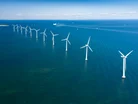
The British Energy Security Strategy delineates bold clean energy goals for the UK.
The strategy aims for an impressive target of providing up to 50GW of offshore wind power by 2030, with 5GW expected to come from cutting-edge floating technology.
With the UK ranking as the world's second-largest offshore wind market, the domestic impact of this sector could reach about £92bn (US$119.9bn) by 2040 according to projections set out in the UK Offshore Wind Industrial Growth Plan.
The expansion of this sector is anticipated to revolutionise offshore wind development, catalyse the clean energy transition and bolster the national manufacturing industry.
UK Prime Minister, Sir Kier Starmer, has been a vocal supporter of this transformative promise.
At the International Investment Summit, which was orchestrated to showcase Britain's openness to business collaborations and attended by key leaders from global manufacturing circles, offshore wind played a starring role.
The Prime Minister used the platform to promote the UK's vast potential in clean energy, aiming to attract significant investments.
This initiative is in line with Labour's broader Industrial Strategy aimed at achieving a clean power landscape by 2030 across different sectors.
The challenges and potential of UK offshore wind
Determined to streamline processes, Kier vriticised the existing bureaucratic 'red tape' in planning and regulatory frameworks that deter investors and delay projects.
“This is an important project for the UK that we need to replicate again and again,” he said at the International Investment Summit.
“However, as an investor, when you see that sort of inertia, you don’t bother – do you?”
He referenced the significant delay in the development of ScottishPower Renewables’ 960MW East Anglia 2 wind farm off East England, obstructed by a required judicial review and the submission of more than 4,000 documents to acquire a Development Consent Order for its 75-turbine array.
However, beyond resolving these regulatory hurdles lies the broader challenge of advancing product and technology development in the sector.
Such advancements are vital not only for sustainability and reducing energy costs but also for expanding manufacturing job opportunities and export potential, thereby maximising the market reach.
Vestas, NCC & BCI: Key collaborations steering future developments
In response to these challenges and as part of broader efforts to enhance offshore wind capabilities, leading firms and research institutions like Vestas, the National Composites Centre (NCC) and Bristol Composites Institute (BCI) are forging strong partnerships.
Vestas, a dominant player in wind turbine blade manufacturing, is preparing for a major offshore wind project in Scotland.
Coupled with the research expertise of NCC and BCI, known for their innovative sustainable manufacturing solutions and composite materials expertise, these entities are poised to enhance UK's capabilities in renewable technologies.
These alliances focus primarily on advancing wind blade technology, thereby affirming the UK's position as a leader in clean energy.
Kasper Roed Jensen, Vice President of New Concepts at Vestas R&D, praises the collaboration: “The National Composites Centre and Bristol Composites Institute bring together excellence in research and collaboration with industry, making them ideal partners for companies like Vestas that depend on the newest composite material and manufacturing knowledge.
"NCC, BCI and Vestas have grown together and Vestas is excited to take the next step through a strategic R&D partnership. We look forward to working together through our UK and Danish R&D teams on the next generation of sustainable energy solutions.”
Richard Oldfield, Chief Executive of the NCC, and Alberto Pirrera, Professor at the Bristol Composites Institute, also expressed their enthusiasm for the partnership.
“We are delighted to be selected as a global technology partner of Vestas," he says.
"The National Composites Centre is leading efforts to advance ‘green industry’ technologies, including for next generation wind applications.
"I look forward to continuing our work with Vestas to accelerate the path to net zero.”
The Bristol Composites Institute (BCI) has collaborated with Vestas since the early 2000s.
The team there also expresses a bold commitment to the future of UK renewables and green manufacturing.
“The Bristol Composites Institute is honoured to have been confirmed as a partner by Vestas and elevated to strategic status," says Alberto Pirrera, Professor, Bristol Composites Institute, University of Bristol.
"We look forward to working closely with Vestas on pioneering research and technological innovations that will advance the wind energy sector and contribute to a more sustainable future.”
Make sure you check out the latest edition of Energy Digital Magazine and also sign up to our global conference series - Sustainability LIVE 2024
Energy Digital is a BizClik brand