ING and Construction's Road to Carbon Neutrality
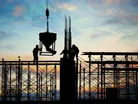
The construction industry stands at the forefront of global carbon emissions, accounting for a significant 37%, as highlighted by the United Nations Environment Programme (UNEP).
To pursue a sustainable future, the sector's lead players are structuring comprehensive strategies aimed at reducing their carbon footprint to reach carbon neutrality by the crucial 2050 benchmark.
ING is one such company turning the tide by setting ambitious sustainability targets, striving to achieve net zero emissions.

Strategic emission reductions in construction
This bold move aligns with global efforts to curb climate impact, as detailed within the framework of the Paris Agreement.
In the grand scheme of environmental impact, direct greenhouse gases (GHG) from the construction sector might appear modest at only 1.7% of the EU's total emissions, largely emanating from on-site vehicles.
Yet, the broader picture reveals a more daunting challenge with more than 90% of emissions traced back to the extended value chain — suppliers and clients involved with the construction processes.
“The urgency of climate change is becoming more evident all the time and ING wants to play a leading role in accelerating the global transition to a low-carbon economy,” says Steven van Rijswijk, CEO of ING.
“We all have a part to play and we can all make the difference for present and future generations if we work together towards the same goals. I am proud to see our climate approach keep on developing every year.”
ING points out that only 70% of large European construction firms have disclosed specific climate targets covering Scope 1, direct emissions, and Scope 2, indirect emissions from electricity purchased.
Scope 3 emissions, which include all other indirect emissions along the value chain, pose a tougher challenge with less than half setting clear goals.
ING itself has rigorously examined sustainability reports from around 2,000 major clients using an innovative online tool devised by the company.
“In the past year, we’ve taken several important steps to sharpen the way we engage with clients on their transition towards net-zero,” Steven says.
“We assessed the sustainability disclosures of around 2,000 of our largest clients with an online tool we’ve developed.
“This gives us the foundation for more data-informed discussions with our clients about their progress and how we can support them in their transition and drive down their emissions.”
Among these, BAM and Skanska stand out with their commitment.
BAM is hoping to reduce Scope 1 and 2 emissions by 90% by 2030 and Scope 3 emissions by 50%, aiming to reach net zero by 2045.
As well as this, Skansa is aiming for a 70% reduction in Scope 1 and 2 emissions and 50% for Scope 3 emissions, hoping to achieve net zero by 2050 globally.
Advancing towards circular construction
The industry's journey towards reduced carbon emissions is not solely fixated on cutting Scope 1 or Scope 2 emissions, as improving these often results in increased energy demands elsewhere.
Instead, ING emphasises a multi-faceted approach involving innovative construction practices and stringent regulatory adherence.
Reducing Scope 2 emissions
- Self-generation of renewable energy: Installing solar panels or other on-site renewable energy sources can reduce reliance on fossil fuels and lower CO₂ emissions
- Renewable energy procurement: Switching to an electricity provider that supplies 100% renewable energy helps cut emissions. Swedish construction firm Skanska already sources 93% of its electricity from renewables
- Energy efficiency: Implementing smart meters and energy management systems optimises energy use and reduces emissions.
Regulations, pricing and incentives
- Corporate initiatives: Companies can set reduction targets, but higher costs may impact competitiveness
- Customer demand: Many government tenders now include sustainability requirements, driving change. However, not all clients prioritise sustainability
- Government regulations: Stricter environmental laws create a level playing field, ensuring all companies reduce emissions
- Carbon pricing: CO₂ taxes or emissions trading schemes, such as ETS, create financial incentives to cut emissions and drive innovation
- Subsidies: Government support accelerates the transition by funding green technologies. However, subsidies can be costly and may not encourage broader efficiency improvements.
Most emissions in construction occur upstream in materials supply and downstream in building use, making Scope 3 the hardest to tackle due to the need for collaboration.
IGN states that the following can help to tackle Scope 3 emissions in construction:
Upstream: Supply chain emissions
- Sustainable materials: Using less energy-intensive materials like timber instead of concrete or steel significantly lowers CO₂ emissions
- Circular construction: Reducing waste by renovating instead of demolishing, recycling materials and separating waste streams minimises environmental impact
- Supplier collaboration: Engaging suppliers in carbon reduction targets and adopting low-carbon alternatives for key materials, like concrete, steel and plastic, can drive industry-wide change.
Downstream: Operational emissions
Buildings must achieve net-zero emissions during their use phase. Strategies include:
- Energy-neutral buildings: Implementing insulation, heat pumps and on-site renewable energy generation ensures minimal energy consumption
- Strategic development: Companies can reconsider what they build, prioritising low-energy structures over high-consumption facilities like wellness centres and data centres.
The approach to sustainability in construction is evolving into a holistic one, integrating progressive designs, advanced materials and effective policy frameworks.
“Our aim is to be the catalyst to enable the industry to decarbonise,” says Stephen Fewster, Global Head of Shipping Finance at ING.
“The foundations are very much there for the industry to successfully manage an energy transition.
“The biggest question is the pace at which the fuel mix of the future will take shape and scale up. I’m confident we’ll arrive at that answer soon enough.”
Explore the latest edition of Energy Digital Magazine and be part of the conversation at our global conference series, Sustainability LIVE.
Discover all our upcoming events and secure your tickets today.
Energy Digital is a BizClik brand