Maersk: Methanol Vessels Pioneer Sustainability Growth & ESG
With the CSRD now in effect, reporting on sustainability has become a bit more complex.
The Corporate Sustainability Reporting Directive (CSRD) is a European regulation that mandates companies to provide more detailed disclosures on their environmental and social impact.
This shift aims to enhance transparency and inform better investment decisions aligned with sustainable practices.
CSRD and Maersk’s sustainability report
Leading the charge, A.P. Moller - Maersk releases its first CSRD-aligned Integrated Annual Report for 2024.
This report comes as a testament to Maersk’s steadfast commitment to environmental stewardship, setting a pivotal goal to achieve net zero emissions by 2040.
By openly sharing its journey, Maersk not only highlights its progressive strategies but also sets a benchmark for sustainability within the industry.
Lene Bjørn Serpa, Director, Head of Corporate Sustainability & ESG at A.P. Moller - Maersk, explains: “Now that the first company reports are coming out, I am sure we will start to see studies that can provide a more solid and comprehensive assessment of the value of the disclosures from the perspective of the users of the reports, and thereby point to relevant opportunities to simplify the standards.”
Maersk’s sustainable practices and technological advancements
As a behemoth in integrated logistics, Maersk operates globally, aiming to streamline and connect intricate supply chains.
The company's extensive operations include more than 100,000 employees, close to nine million square miles of warehouse capacity across 500 sites and a fleet of more than 700 container vessels.
Noteworthy is Maersk's deployment of 53 terminals in 28 countries, inclusive of three pioneering port projects.

In 2024, Maersk diligently integrated environmental, social and governance (ESG) criteria into its core operations and charted substantial progress in its sustainability commitments.
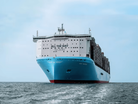
The company introduced seven dual-fuel methanol vessels and launched the Maersk Halifax, the world’s pioneering retrofitted dual-fuel methanol vessel.
Recognising the future demands, Maersk has outlined a fleet renewal plan, with more than 50 vessels set to commence operation from 2026 to 2030.
Aa significant long-term offtake agreement for biomethanol has been secured, ensuring more than half of its dual-fuel methanol fleet requirements by 2027.
Despite enhancing fleet energy efficiency, Maersk confronted a rise in absolute greenhouse gas emissions between 2023 and 2024, predominantly due to the Red Sea situation which necessitated quicker sailing speeds owing to re-routing, capacity shortages and port congestions.
Is climate change impacting logistics?
Maersk’s comprehensive reporting also highlights the exacerbating effects of climate change on global supply chains.
The company documents an upward trend in extreme weather events, with 219 incidents recorded in 2024 alone, leading to severe logistical disruptions.
Notable events included a fierce hurricane season in the US and devastating floods in Spain, emphasising the urgent need for enhanced terminal infrastructures not just for sustainable operations but also for maintaining operational resilience.

As part of the broader discussion, Maersk’s report illuminates the volatile nature of contemporary supply chains, influenced heavily by fluctuating trade routes, sudden demand shifts and environmental considerations.
This year’s unpredictability is poised to become a standard feature, further complicating the dynamics of global trade.
Explore the latest edition of Energy Digital Magazine and be part of the conversation at our global conference series, Sustainability LIVE.
Discover all our upcoming events and secure your tickets today.
Energy Digital is a BizClik brand