The energy industry in the Asia-Pacific (APAC) region is predicted to gain investments totalling US$3.9tn in the next decade.
APAC covers the western Pacific Ocean, including East Asia, Southeast Asia and Oceania and is home to more than half of the world’s population.
The region’s energy industry includes China’s goals to support the clean energy transition and India’s large growth in energy demand.
Ranked by market capitalisation, this list details the largest APAC energy companies.
10. Woodside Energy
CEO: Meg O’Neill
Market cap: US$30.20bn
HQ: Perth, Australia

Woodside established the liquefied natural gas (LNG) industry in Australia 35 years ago and has grown into a global energy company, with projects across Australia, the US and Central America.
Its operations focus on safety, reliability, efficiency and environmental performance.
It is aiming to grow its company through the energy transition to provide low cost and lower carbon energy.
Woodside Energy’s target is to invest US$5bn in new energy products and low carbon services by 2030.
9. Oil & Natural Gas Corporation
CEO: Arun Kumar Singh
Market cap: US$36.23bn
HQ: New Delhi, India
Oil & Natural Gas Corporation (ONGC) is the largest government-owned oil and gas producer in India, accounting for around 70% of the country’s production of crude oil.
In 2024, it aligned itself with India’s goals to restrict carbon emissions by one billion tonnes and reduce carbon intensity by 45% by 2030.
It is involved in the exploration, development and production of oil and gas both in India and internationally through its subsidiary, ONGC Videsh Limited.
8. Chandra Asri Petrochemical
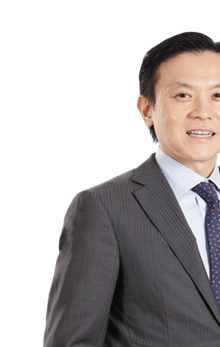
President Director: Erwin Ciputra
Market cap: US$36.67bn
HQ: Jakarta, Indonesia
Chandra Asri Petrochemical manufactures a range of products for the packaging, construction and automotive industries.
It recently announced its plans to build a new plant in Banten, Indonesia, which is expected to generate more than 3,000 jobs.
Erwin Ciputra, President Director at Chandra Asri Group, says: “We believe that through strong collaboration with various stakeholders, Chandra Asri Group can continue to make a positive contribution to Indonesia’s economy and drive more sustainable growth in the national industry.”
7. NTPC
Chairman: Shri Gurdeep Singh
Market cap: US$38.27bn
HQ: New Delhi, India

NTPC is India’s largest energy conglomerate, which has established its presence in the entire value chain of power generation.
Its mission is to provide reliable power and energy transition solutions in an economical, efficient and environmentally friendly manner.
Sustainable power generation is a main goal for NTPC, aiming to achieve 60GW of renewable capacity by 2032.
It plans to optimise its operations and restore ecosystems to create a healthier planet for the future.
6. Doosan Enerbility
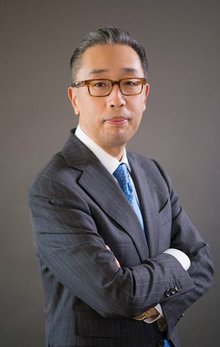
CEO: Geewon Park
Market cap: US$40bn
HQ: Changwon, South Korea
Doosan Enerbility is a leading plant expert in the power and water industry, bringing energy solutions for thermal power, nuclear power and renewable energy.
Geewon Park, CEO and Chairman at Doosan Enerbility, says: “Doosan Enerbility aims to become a global company that focuses on the eco-friendly energy business as its new growth driver, thereby creating greater value for the world.
“We plan to use this energy transition as an opportunity for further growth and will continue with our efforts to become the unrivalled global leader of the energy industry.”
5. LG Energy Solution
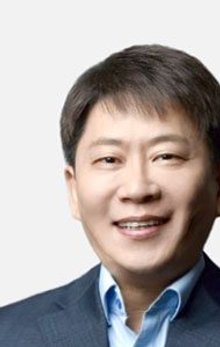
CEO: Kim Dong-Myung
Market cap: US$79bn
HQ: Seoul, South Korea
LG Energy Solution is a world leader in manufacturing lithium ion batteries for the automotive industry.
It supplies batteries for 13 of the top 20 global EV brands and develops batteries for electric ships, drones and battery-powered spacesuits.
The company is the top battery-related patent holder in the world, with more than 80,000 patents.
LG Energy Solution plans to achieve carbon neutrality by 2050 and establish a closed loop of resources by 2025.
4. Sinopec
President: Ma Yongshen
Market cap: US$88.49bn
HQ: Beijing, China

Sinopec (China Petroleum & Chemical) is the largest oil and petrochemical products supplier in China and is the largest refining company and second largest chemical company in the world.
Its principal operations include petroleum and natural gas exploration, storage and sales and the production of petrochemical products.
Sinopec has achieved a global presence, utilising ultra-quiet and zero emission drilling machines to minimise the impact on wildlife in Uganda and planting approximately 15,000 trees in Saudi Arabia.
3. China Shenhua Energy
Chairman: Lv Zhiren
Market cap: US$115.93bn
HQ: Beijing, China
China Shenhua Energy is the largest state-owned coal mining enterprise in mainland China.
Its operations cover:
- Mining, refining and selling coal
- Generating and selling electric power
- Coal mines
- An integrated railway network and seaport to transport its coal
The company’s coal operations have an approved production capacity of 350 million tonnes of coal and its electricity power plants have a total installed capacity of 46.26GW.
Its low-emission coal-fired power projects in Indonesia have become a benchmark for other Chinese companies looking to go global with their operations.
2. CNOOC
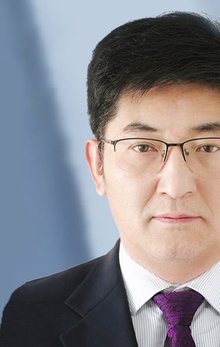
Executive Directors: Mu Xiuping & Yan Hongtao
Market cap: US$125.78bn
HQ: Beijing, China
China National Offshore Oil Corporation (CNOOC) is China’s largest offshore crude oil and natural gas producer and one of the world’s largest independent oil and gas exploration and production companies.
It focuses on building trust with its stakeholders by fostering business practices which are ethical, responsible and safe.
It educates its employees about the importance of integrity and compliance, which aligns with its anti-corruption commitments.
Its most important crude oil area is in Bohai, which is the largest crude oil production site in China.
As of the end of 2024, the net reserves in Bohai reached 2.24 billion barrels of oil equivalent (BOE).
CNOOC completed an onshore power project for Bohai’s oil fields, which helps progress the green and low carbon transformation of oil and gas production.
In the future, Bohai will be one of the main sources of production growth for CNOOC, already producing 653,000 BOE per day.
1. PetroChina
President: Ren Lixin
Market cap: US$229.36bn
HQ: Beijing, China

PetroChina is one of the major oil and gas producers and distributors in China and it operates globally through its subsidiary PetroChina International.
Its core business operations cover the entire value chain, including exploration, production, marketing, sales and transportation of oil and gas.
PetroChina is also working to meet China’s overall goal to achieve carbon neutrality by 2060 by focusing its efforts on developing green technologies.
It has taken steps to promote clean energy production and to build a low carbon energy supply system.
In 2024, it signed on to the Oil & Gas Decarbonisation Charter, which commits to reducing carbon emissions in the industry.
Huang Yongzhang, former President of PetroChina, said: “While providing oil and gas, we are promoting the transformation of PetroChina into an integrated energy company covering oil, gas, thermal energy, electricity and hydrogen.
“We will actively promote green and low-carbon practices, contributing to the wisdom and strength of PetroChina to the global green and low-carbon transition.”
Company portals
Executives
Arun Kumar Singh
Chairman and Chief Executive Officer
erwin ciputra
President Of The Board Of Directors
Geewon Park
Chairman & CEO
Kim Dong-Myung
Director
Ma Yongsheng
President
Meg O'Neill
CEO
Mu Xiuping
Executive Director
Ren Lixin
President
Shri Gurdeep Singh
Chairman and Managing Director
Yan Hongtao
Executive Director
Zhang Yuzuo
Chairman