
Industrial carbon emissions contribute to a large amount of the global total, with manufacturing and construction potentially creating more than 50% of emissions, according to the IEA.
Many global companies are turning to carbon capture investments to help reach their net zero goals.
To help meet these targets, companies specialising in carbon capture technologies provide the necessary infrastructure to collect carbon from the atmosphere.
Energy Digital has ranked 10 of the top carbon capture companies in the world.
10. Svante
Annual carbon capture capacity: Targeting 10 million tonnes
CEO: Claude Letourneau
HQ: British Columbia, Canada

Svante produces filters and machines that capture and remove CO₂ from industrial emissions and the air.
Its solutions are based on environmentally friendly solid sorbent technology, producing CO₂ which is concentrated to pipeline grade security.
The carbon can then be safely transported or stored underground, or be used to make other products.
As well as its technology systems, Svante provides advanced digital analytics which allows its customers to optimise their performance, ensuring that their carbon capture projects are as efficient and sustainable as possible.
9. Carbon Engineering
Annual carbon capture capacity: 1,000 tonnes
CEO: Vicki Hollub
HQ: British Columbia, Canada

For more than a decade, Carbon Engineering has worked on innovating Direct Air Capture (DAC) technology.
DAC technologies work by extracting CO₂ directly from the atmosphere, rather than from sources such as a cement factory or bioenergy plant.
The process involves using filters or liquid solvents to isolate CO₂ which is purified and compressed before being repurposed.
This provides a nearly infinite supply of CO₂ from the atmosphere that can be recycled to produce low carbon intensity products.
8. Climeworks
Annual carbon capture capacity: 1,500 tonnes
CEO: Christoph Gebald & Jan Wurzbacher
HQ: Zürich, Switzerland

Climeworks is a global leader in high quality carbon removal, with the aim of helping companies achieve their net zero goals.
It has worked with business leaders including Schneider Electric, Accenture, H&M Group and Microsoft.
Climeworks says the planet has the potential to store trillions of tons of CO₂.
The company uses natural mechanisms to return CO₂ to the earth’s crust, where it becomes part of the rock cycle.
This is done through its DAC technology, using solid sorbents to make the process more affordable.
7. Charm Industrial
Annual carbon capture capacity: 11,000 tonnes
CEO: Peter Reinhardt
HQ: San Francisco, California, US
Charm Industrial uses plants to capture CO₂ from the atmosphere.
It converts biomass into a carbon rich liquid and pumps it underground, taking CO₂ away from wildfires, soil erosion and land use change.
The company says that permanent carbon removals are the only credible way to achieve net zero, rather than pursuing carbon avoidance.
Peter Reinhardt, CEO at Charm Industrial, said on LinkedIn: “Charm was one of the first in the carbon removal industry to deliver removals and we’ve been uniquely transparent in our carbon accounting.”
6. Carbfix
Annual carbon capture capacity: 52,000 tonnes
CEO: Edda Aradóttir
HQ: Reykjavik, Iceland
In the natural world, large quantities of carbon are stored in rocks.
Carbfix aims to imitate these natural processes by dissolving CO₂ in water and placing it in reactive rock formations to form stable minerals, which provide permanent and safe carbon removals.
Its mission is to contribute to climate recovery through worldwide scaling and further development of underground CO₂ mineral storage.
The company launched in 2006, with ideas of replicating natural CO₂ storage, before carrying out pilot injections in Iceland in 2012.
5. Carbon Recycling International
Annual carbon capture capacity: 310,000 tonnes
CEO: Lotte Rosenberg
HQ: Kópavogur, Iceland

Carbon Recycling International specialises in CO₂ to methanol technology.
This process involves capturing CO₂ emissions and adding hydrogen from electrolysis or by-product offtake, which produces green methanol.
The produced methanol can be used as a sustainable fuel for aviation and marine industries and provides a green building block for chemical derivatives.
Carbon Recycling International’s technologies enable large scale use of carbon dioxide and hydrogen waste streams.
This reduces reliance on fossil fuels, helping companies to become carbon neutral and energy independent.
4. CarbonFree
Annual carbon capture capacity: Targeting 500,000 tonnes
CEO: Martin Keighley
HQ: San Antonio, Texas, US

CarbonFree’s mission is to capture 10% of the world’s industrial CO₂ emissions.
Its SkyCycle technology uses chemistry to capture carbon emissions from hard-to-abate industrial sources and converts them into a carbon neutral version of calcium carbonate.
Calcium carbonate is essential to the creation of paper and plastics, building materials, paint and personal care products.
CarbonFree’s products can help decarbonise global supply chains by enabling manufacturers to reduce Scope 3 emissions, or they can be stored without the need for pipelines or disposal wells.
3. LanzaTech
Annual carbon capture capacity: 500,000 tonnes
CEO: Dr. Jennifer Holmgren
HQ: Skokie, Illinois, US
LanzaTech aims to build a circular carbon economy, where carbon is continuously reused rather than released.
It partners with energy-intensive industries to capture and process carbon-rich gases before they enter the atmosphere and cause harm to the environment.
LanzaTech also partners with suppliers and brands to integrate recycled carbon into their supply chains to make new products and materials.
Dr. Jennifer Holmgren, CEO of LanzaTech, says: “Where our carbon comes from will define our climate future.
“We have enough carbon in circulation to make everything that we need – LanzaTech’s commercial carbon recycling technology can keep waste carbon in use indefinitely and advance our vision for a circular carbon economy.”
2. CarbonCure Technologies
Annual carbon capture capacity: 128,000 tonnes
CEO: Kristal Kaye
HQ: Dartmouth, Canada
The production of cement is responsible for about 8% of global CO₂ emissions, according to research from Chatham House.
CarbonCure helps concrete producers to reduce costs, increase profitability and enhance cement efficiency.
Its technologies inject captured CO₂ into fresh concrete, where it mineralises and becomes permanently embedded.
This process improves the strength of the concrete and optimises the mix, while providing carbon footprint reductions.
It has partnered with many global companies including Amazon, Samsung and Deloitte.
CarbonCure’s technology can be fitted into existing concrete plants, allowing concrete producers to benefit from economic and climate improvements.
Its valve box is connected to the CO₂ tank onsite and automatically injects a precise amount of CO₂ into the concrete during mixing.
This provides a simple and cost effective solution for concrete producers to reduce their environmental impact and work towards net zero.
1. Carbon Clean
Annual carbon capture capacity: 100,000+ tonnes
CEO: Aniruddha Sharma
HQ: London, UK

With more than 15 years experience in carbon capture, Carbon Clean aims to capture one billion tonnes of industrial CO₂ emissions.
Carbon Clean says that urgent action is needed to decarbonise industrial assets including steel and cement plants, due to their long lifetimes.
Additionally, renewable energy is not practical to use for heavy industries that require extremely high temperatures for manufacturing and processing.
Carbon Clean helps to enable a circular carbon economy, with its captured CO₂ being used to produce chemicals, materials, fuels and other products.
It also helps keep companies in line with strict emissions regulations, helping them capture and utilise carbon emissions to avoid penalties or additional costs.
Aniruddha Sharma, CEO of Carbon Clean, said on LinkedIn: “Industrial decarbonisation must accelerate, driven by modular, cost effective solutions for hard-to-abate sectors.
“At Carbon Clean, we are delivering this future now.”
Company portals










Executives

Aniruddha Sharma
CEO

Christoph Gebald
CEO & Co-Founder
Claude Letourneau
President & CEO

Dr. Jennifer Holmgren
CEO
Edda Sif Pind Aradóttir
CEO

Jan Wurzbacher
CEO and Founder

Kristal Kaye
CEO
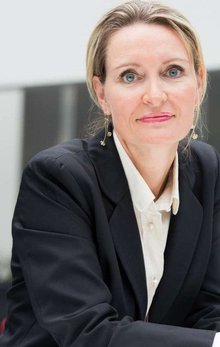
Lotte Rosenberg
CEO

Martin Keighley
CEO

Peter Reinhardt
CEO
Vicki Hollub
President and Chief Executive Officer