The energy transition is undoubtedly one of the most intractable challenges that humanity has ever faced.
Eradicating carbon footprints has always been a daunting task, but the urgency of the problem is one that companies cannot afford to shy away from any longer.
The consequences of non-compliance are profound, not only environmentally but financially.
In highly regulated regions like the EU, for instance, unsustainable companies are heavily penalised through a combination of fines, exclusion from public contracts and, in some cases, the confiscation of revenue.
Without data, it is an equation that no organisation could hope to solve.
The issue is that many businesses are simply unequipped to deal with the complexity of decarbonisation.

As a result, many companies are turning to third-party vendors to whom they can outsource carbon accounting.
In recent years, the rise of these kinds of carbon management platforms has been remarkable.
Dozens of platforms are now in fierce competition to help organisations measure, report and cut their footprints.
In this week’s Top 10, Energy Digital takes a look at some of the platforms that are making waves across the global economy.
10. Coolset
Launched: 2021
CEO: Konstantinos Kouzelis
Based in: Amsterdam, Netherlands
Notable feature: The platform can connect directly to a company's existing accounting software, automating much of the Scope 1-3 data entry process.
Coolset built its name among small and medium-sized businesses rather than multinational giants.
The Amsterdam-based platform plugs into existing accounting and expense tools, pulling through transaction data automatically rather than requiring manual spreadsheet entry.
It has become very popular with European companies racing to meet the EU's Corporate Sustainability Reporting Directive, or CSRD, since its workflows are structured specifically around regulatory requirements.
For smaller energy suppliers and contractors feeling the squeeze of new reporting rules, it offers a relatively low-cost route to compliance.
9. IBM Envizi
Launched: 2008 (acquired by IBM in 2022)
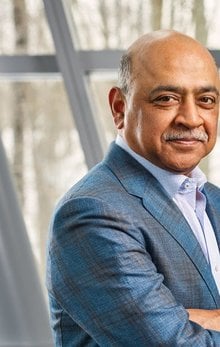
CEO: Arvind Krishna
Based in: Armonk, New York, US
Notable feature: Envizi's Microsoft Excel plug-in lets sustainability teams run Scope 1 and 2 calculations inside a familiar spreadsheet environment.

IBM Envizi began life as an Australian start-up before Big Blue bought it in 2022, folding it into its tech empire.
The platform served the likes of Microsoft, Qantas, CBRE and Uber before the takeover, but IBM’s backing has since helped scale Envizi to new heights.
The platform leans on automation, letting teams calculate Scope 1 and 2 emissions data using an Excel add-in built on the GHG Protocol.
For energy and industrial firms running IBM systems elsewhere, the integration of Envizi makes it a hugely convenient tool.
8. Green Project Technologies
Launched: 2021
CEO: Sam Stark
Based in: New York, New York, US
Notable feature: The platform’s Procurewise module engages suppliers directly to gather emissions data rather than relying on industry averages.
Green Project was built on the premise that most of the friction that comes with carbon accounting friction is a result of chasing data, rather than crunching numbers.
The firm was founded just five years ago by Sam Stark, an alumnus of Goldman Sachs, with the vision of making carbon reporting as seamless as possible.
To this end, Green Project has integrated its platform with around 12,000 utility providers around the world, allowing it to pull energy usage data from the source.
In the summer of 2025, the company acquired Emitwise, another leading light of the carbon management software space, which made its offering even more compelling.
7. Greenly
Launched: 2019
CEO: Alexis Normand
Based in: Paris, France
Notable feature: Integrates with more than 100 everyday business tools, from accounting software to travel platforms, to automate data capture.
Greenly’s approach to carbon management has always been about accessibility, courting companies that would struggle to justify a six-figure accounting contract.
Its platform plugs into more than a hundred everyday business systems, from accounting software to travel tools, pulling through emissions data automatically.
Alexis Normand, the firm’s CEO, says that Greenly is “constantly inventing new ways to structure data more simply”, with the express aim of making carbon accounting easier for organisations.
More than 3,500 companies now use the platform, including the likes of HSBC, Ubisoft and Tripadvisor.
6. Sphera
Launched: 2016
CEO: Paul Marushka
Based in: Chicago, Illinois, US
Notable feature: The platform’s lifecycle assessment tools are widely regarded as an industry benchmark for product-level carbon work.

Sphera carries a great deal of institutional weight, having spun out of IHS Markit's risk management arm rather than starting life as a climate-tech start-up.
Its lifecycle assessment tools – which are recognised as top-tier – are capable of tracing emissions through a product's entire journey.
These days, Sphera is a portfolio company of Blackstone where it serves more than 6,700 customers across the chemicals, manufacturing and energy industries.
For utilities and heavy industry operators looking to get granular with their carbon footprint assessments, Sphera’s depth is tough to match.
5. Plan A
Launched: 2017
CEO: Lubomila Jordanova
Based in: Berlin, Germany
Notable feature: Plan A’s carbon accounting methodology was certified by TÜV Rheinland, a German organisation specialising in technical inspection.
Plan A spent years as one of Europe's best-funded carbon start-ups before its acquisition by Diginex earlier this year for around US$64m.
The firm’s CEO and Co-Founder, Lubomila Jordana, stayed on after the takeover, keeping continuity and relationships with its huge clients, including BMW and Deutsche Bank.
Diginex’s decision to buy Plan A speaks to a wider trend across the climate tech sector, where bigger players are increasingly absorbing specialist start-ups.
Lubomila is enthusiastic about the future with Diginex.
“The industry has been fragmented for too long,” she says. “We are delivering a single, sophisticated architecture that transforms complex data into measurable impact.”
4. Normative
Launched: 2014
CEO: Sebastian Blanc
Based in: Stockholm, Sweden
Notable feature: Normative is the official software partner of the UN-backed SME Climate Hub, helping smaller businesses commit to net zero.
Normative bills itself as the original carbon accounting engine. It predates most rivals by several years, as well as the Paris Agreement which brought emissions data to the top of the corporate agenda.
The story begins with Kristian Rönn who, while working at Oxford University in 2013, was modelling the consequences of climate change.
When the results showed it would cause extreme human suffering, he promptly left academia and dedicated himself to climate tech. Though Kristian stepped back from his role as CEO in 2024, he continues to be an active board member at the company.
Today, Normative’s database tracks more than a hundred million suppliers worldwide, giving it extraordinary deep coverage for Scope 3 emissions.
3. Persefoni
Launched: 2020
CEO: Kentaro Kawamori
Based in: Tempe, Arizona, US
Notable feature: Its audit-ready "carbon ledger" is built to the same standards as financial accounting and is widely used across the finance sector.

Persefoni was built by people who understood Wall Street as well as climate science, and that pedigree shows throughout the platform.
The firm’s CEO and Co-Founder, Kentaro Kawamori, a former Chesapeake Energy executive, set up Persefoni in January 2020 with a simple mission.
“Ultimately, Persefoni wants to make measuring and tracking every organisation’s carbon footprint as ubiquitous as managing their financial performance,” he explains.
The platform's audit-ready ledger has made it a favourite among banks and private equity firms working to PCAF, the standard for financed emissions.
It currently serves four of the world's 10 largest private equity firms and four of the 20 largest banks.
2. Sweep
Launched: 2020
CEO: Rachel Delacour
Based in: Paris, France
Notable feature: Sweep was named a Leader in the 2026 Verdantix Green Quadrant for Enterprise Carbon Management.
Since its founding in 2020, Sweep has been one of Europe’s most exciting and fastest growing climate tech firms, having secured more venture funding than almost any of its rivals across the continent.
Sweep’s CEO and Founder, Rachel Delacour, is a seasoned entrepreneur, having previously sold software firm BIME Analytics to Zendesk.
She is a proponent of the idea that companies must be the progenitors of change when it comes to decarbonisation, rather than making climate action the responsibility of individuals.
“What companies are able to do at scale is much more impactful than individual choices,” she says.
That philosophy has shaped Sweep, a platform built for large enterprises, with collaboration tools letting suppliers and internal teams co-own decarbonisation targets.
Its clients include the likes of L'Oréal and BlackRock, and in 2026 Sweep became the only European pure-play vendor named a Leader in Verdantix's enterprise carbon management rankings.
1. Watershed
Launched: 2019
CEO: Taylor Francis and Christian Anderson (co-CEOs)
Based in: San Francisco, US
Notable feature: Watershed runs a free, publicly available climate database alongside its core enterprise platform, which is widely used across the industry.
Watershed has become the default choice for so many large enterprises looking to manage their carbon emissions, with its star-studded client list including global brands like Airbnb, Spotify, FedEx, Visa and Dr. Martens.
The firm’s Co-Founder Christian Anderson developed Watershed's first version after leaving Stripe's climate initiative in 2019.
In the intervening years, the platform has grown from strength to strength. Its combination of audit-grade carbon measurement and one-click reporting makes it a simple yet thorough offering.
The ambition of Watershed’s goals speak to the power of its product. It hopes to reduce or remove 500 megatonnes of CO₂ equivalent by 2030, which is roughly 1% of annual global emissions.
For an energy sector under pressure to disclose emissions credibly and urgently, Watershed's pedigree makes it an obvious choice for businesses around the world.
Company portals










Executives

Alexis Normand
CEO and Co-Founder
Arvind Krishna
CEO
Christian Anderson
Co-Founder
Kentaro Kawamori
Co-Founder & CEO
Konstantinos Kouzelis
Co-Founder & CEO
Lubomila Jordanova
Founder and CEO
Paul Marushka
CEO & President

Rachel Delacour
CEO

Sam Stark
Founder & CEO (Acquired by ACT Group)
Sebastien Blanc
Chief Executive Officer