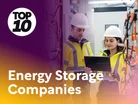
The energy industry has a problem, though it may not be what you expect.
In 2026, the main thing that has energy executives and government officials scratching their heads is not energy generation. Rather, it is energy storage.
With net zero deadlines fast approaching, the world is in a race against time to transition away from fossil fuels. And while renewables have a long way to go until they are able to provide enough energy for the whole planet, the technology is sound and the energy itself is cheap.
In fact, in 2025, renewables overtook coal to become the energy source that provides the most electricity across the world.
The major issue is that the supply of renewables, unlike that of fossil fuels, is intermittent.

Whereas gas, oil and coal can be stored and burned on demand, renewable energy sources like wind and solar are dependent on the climate, which can make it difficult for renewables to cope at times when the demand for electricity is at its highest.
The solution to this problem is energy storage technology like batteries, which can store renewable energy and save it for times when the sun does not shine and the wind does not blow. Creating enough storage capacity to serve the whole world is, however, far easier said than done.
That said, several companies are already proving that necessity is the mother of invention, with their technologies showing a glimpse of what a future defined by energy storage will look like, from residential installations to grid-scale infrastructure.
In this week's Top 10, we take a look at some of the firms that are lighting up the sector.
10. Stem
Founded: 2009
Based in: Houston, Texas, US
CEO: Arun Narayanan
Employees: 569
Stem's offering combines hardware and software in a way that is able to conserve energy to a world class standard. Its advanced batteries are supported by a sophisticated AI system that is able to optimise energy storage and cut energy costs.
Stem operates one of the largest AI-driven storage fleets globally, with roughly 1,000 systems under contract across multiple regions including several US markets, Ontario and Japan.
All the years of high‑frequency operational data give Stem a significant performance edge over the competition.
9. Sonnen
Founded: 2010
Based in: Wildpoldsried, Germany
CEO: Oliver Koch
Employees: 1,600
As a pioneer in the residential storage market, Sonnen has helped to redefine the relationship between households and the energy grid.
Now a wholly-owned subsidiary of Shell, the firm continues to operate with the agility of a tech start-up while leveraging the immense resources of its parent company.
Sonnen's systems allow homeowners to not only store solar power that they have generated themselves, but to trade excess energy with other members of the community, effectively creating a decentralised virtual power plant that helps to stabilise the broader grid.
8. Form Energy
Founded: 2017
Based in: Somerville, Massachusetts
CEO: Mateo Jaramillo
Employees: 500
Form Energy is a real leader in the emerging field of multi-day energy storage. Its model addresses what is known as "dunkelflaute" (German for "dark lull" – the periods in winter when sun is rare and wind is low).
What's more, the way it stores energy is remarkably simple. Its batteries, which are made from iron, store energy in rust.

And while the scarcity of rare earth minerals like lithium has been an anxiety for battery manufacturers for years, Form's iron-based products have the benefit of abundance, with iron accessible and cheap across the world, delivering cost-effective storage of 100 hours or more.
7. Hitachi Energy
Founded: 2020 (Joint Venture formation)
Based in: Zurich, Switzerland
CEO: Andreas Schierenbeck
Employees: 40,000+
Hitachi is a true heavyweight in the energy sector. The Japanese firm is able to combine a century of electrical engineering heritage with cutting-edge digital integration, focusing on the grid-edge technologies that will power large-scale energy systems going forward.
The company's partnership with Powin in North America has helped to significantly amplify its market reach, allowing it to acquire a majority stake in EKS Energy and secure a strong foothold in the power electronics sector.
When it comes to energy storage, Hitachi excels mostly in complete grid resilience solutions rather than standalone products, utilising its massive global footprint to support utility-scale projects that require complex integration with existing high-voltage infrastructure.
6. LG Energy Solution
Founded: 2020 (Spin-off from LG Chem)
Based in: Seoul, South Korea
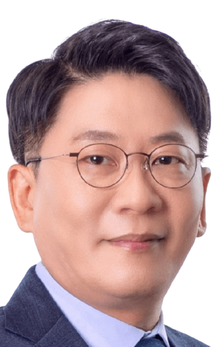
CEO: David Kim (Kim Dong-myung)
Employees: 32,071
LG Energy Solution, a branch of the Korean electronics giant, shifted its strategy in 2025 to challenge Chinese dominance in the battery sector by commencing mass production of Lithium Iron Phosphate (LFP) batteries at its US facilities.
Moving beyond its traditional strength in Nickel-Cobalt-Manganese (NCM) chemistries for EVs, the company has successfully repurposed significant manufacturing capacity in Michigan to serve the stationary storage market.
This adaptability ensures they remain a preferred supplier for Western utilities seeking Inflation Reduction Act (IRA) compliant batteries without compromising on the cost-efficiency typically associated with Chinese competitors.
5. Fluence
Founded: 2018
Based in: Arlington, Virginia
CEO: Julian Nebreda
Employees: 1,670
Fluence continues to set the industry standard for system integration, combining the industrial pedigree of Siemens with the operational expertise of AES.
The company has moved decisively to onshore its supply chain, opening new manufacturing hubs in Utah and Texas to produce its Gridstack Pro systems.
Fluence distinguishes itself through its digital ecosystem, particularly the Mosaic software, which automates bidding into wholesale electricity markets. This focus on total cost of ownership rather than just upfront capital cost has secured them a massive backlog of orders globally.
4. BYD
Founded: 1995
Based in: Shenzhen, China
CEO: Wang Chuanfu
Employees: 968,900
As a vertically integrated powerhouse, BYD controls every aspect of its supply chain, from lithium mining to the final assembly of its battery containers.
This control allows them to offer some of the most competitive pricing in the global market. Their proprietary Blade Battery technology, originally designed for electric vehicles, has been successfully adapted for energy storage, offering exceptional safety and thermal stability.
Despite hitting some trade barriers in Western markets, BYD’s dominance in Asia, South America and Europe remains unchallenged, underpinned by massive manufacturing scale.
3. Sungrow
Founded: 1997
Based in: Hefei, China
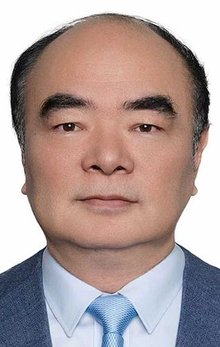
CEO: Cao Renxian
Employees: 17,300

Sungrow has leveraged its decades of expertise in power electronics to become the world’s most bankable inverter and energy storage brand.
Their PowerTitan liquid-cooled system has set the industry benchmark for thermal management, enabling higher density and longer battery life.
In 2025, Sungrow reported a staggering 105% revenue increase in its energy storage division, surpassing 50 GW of shipments in key markets like India. Their ability to seamlessly integrate their own inverters with battery storage has made them a preferred one-stop shop for utility-scale developers worldwide.
2. Tesla
Founded: 2003
Based in: Austin, Texas
CEO: Elon Musk
Employees: 120,000
Tesla Energy has matured into a colossal industrial force, with its energy storage deployments growing by 81% in 2025.
The introduction of the Megapack 3 and the aggregated Megablock system has revolutionised utility-scale installation by reducing on-site complexity and construction time.
With a massive dedicated factory in Lathrop, California, and a new facility ramping up in Shanghai, Tesla provides a standardised, vertically integrated product that utilities trust for its reliability and the robust software ecosystem that underpins it.
1. CATL (Contemporary Amperex Technology Co. Limited)
Founded: 2011
Based in: Ningde, China
CEO: Robin Zeng
Employees: 131,988
CATL remains the undisputed king of the battery world, commanding over 36% of the global market share in 2025.
The company is the primary technology provider for nearly every major integrator, including Tesla, Fluence and Sungrow, while simultaneously deploying its own branded systems like EnerC.
Their relentless pace of R&D has kept them ahead of the curve, delivering LFP cells with higher density and longer cycle lives than any competitor.
With massive economies of scale and a supply chain that spans the globe, CATL is the engine room of the global energy transition.
Company portals

Executives
Andreas Schierenbeck
Chief Executive Officer of Hitachi Energy

Arun Narayanan
CEO
Cao Renxian
CEO
David (Dong-Myung) Kim
CEO
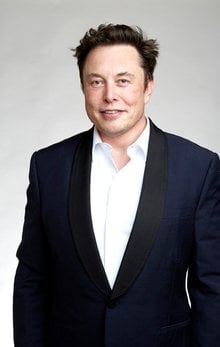
Elon Musk
Tesla CEO
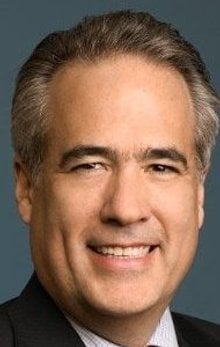
Julian Nebreda
President and CEO

Mateo Jaramillo
CEO
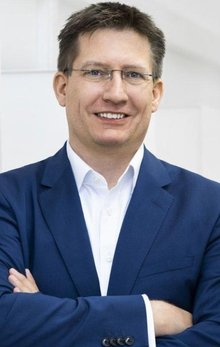
Oliver Koch
CEO
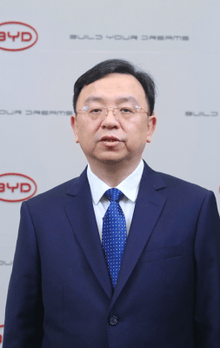
Wang Chuanfu
CEO
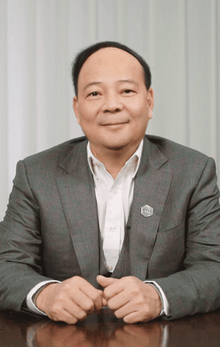
Zeng Yuqun (Robin Zeng)
CEO