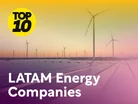
Energy investment in the Latin American region is projected to reach US$160bn in 2025, according to the IEA.
The region is home to some of the world’s best solar, wind and hydro resources and is also a leading developer of biofuels and renewable power.
Despite this, the IEA says some areas in the region are still reliant on fossil fuels, but many companies are working to promote more sustainable energy production practices.
With so much innovation and industry to discover across the continent, Energy Digital has ranked 10 of the top energy companies headquartered in Latin America by 2024 revenue.
10. AXIA Energia
Revenue: US$8.85bn
President: Ivan de Souza Monteiro
HQ: Rio de Janeiro, Brazil

With more than 60 years of investment in research and innovation, AXIA Energia aims to make Brazil’s energy sector one of the most renewable in the world.
It has more than 80 power plants and 74,000 kilometres of installed transmission lines.
All of AXIA Energia’s total installed capacity comes from sources with low greenhouse gas emissions.
Its power plants produce hydroelectric power, wind power and solar energy.
AXIA Energia aims to automate its transmission line inspection process, using solutions based on drones and AI.
9. Enel Américas
Revenue: US$13.9bn
CEO: Giuseppe Turchiarelli
HQ: Santiago, Chile
Enel Américas generates, transports and distributes energy across South America and Central America, operating in Argentina, Brazil, Colombia, Peru, Costa Rica, Guatemala and Panama.
It is Latin America’s largest privately owned energy company, with an installed capacity of 16.116 MW and supplying more than 23.3 million clients.
Since it was founded in 1962, Enel Américas says its goal has been to help people, companies and countries to grow sustainably.
To achieve this, it has worked on new technologies to make its energy more reliable, affordable and sustainable.
8. PDVSA
Revenue: US$17.5bn
President: Héctor Obregón
HQ: Caracas, Venezuela

PDVSA is the Venezuelan state-owned oil and natural gas company, working on the exploration, production, refining and exportation of oil and the exploration and production of natural gas.
Since the nationalisation of the Venezuelan oil industry in 1976, PDVSA has dominated the country’s oil production, becoming the world’s fifth largest oil exporter.
Venezuela also has the world's largest proven oil reserves and PDVSA provides the government with funding resources, becoming a vital source of income for the country.
7. YPF
Revenue: US$19.3bn
CEO: Horacio Daniel Marín
HQ: Buenos Aires, Argentina
Owned primarily by the Argentine government, YPF holds a 56% market share in gasoline and diesel.
The Argentine government holds around 51% of the company, while the remaining 49% is publicly traded with private investors and the general public holding stakes.
It is also the top chemistry provider in Argentina, as 37% of the country’s petrochemical sector exports are produced in YPF’s refineries.
The company’s Real Time Intelligence Centre (RTIC) allows it to monitor all operations and make data-driven decisions to help bring greater efficiency and continuous improvement.
6. Ultrapar Participacoes
Revenue: US$24.1bn
CEO: Rodrigo Pizzinatto
HQ: São Paulo, Brazil

Ultrapar is one of the 10 largest business groups in Brazil, operating in energy and logistics infrastructure.
Its products include biomethane, compressed natural gas, fuels and liquefied petroleum gas (LPG).
The company distributes LPG for household use through its subsidiary Ultragaz, which sold 1.7 million tonnes of fuel in 2024.
This served its 57,000 business customers and supplied 11 million homes with energy.
Ultrapar has also expanded its operations into renewable electricity for businesses and households.
5. Empresas Copec
Revenue: US$28.1bn
CEO: Eduardo Navarro
HQ: Santiago, Chile
With more than 41,000 employees and a history spanning 90 years, Empresas Copec does business in the forestry, energy, fishing and mining industries.
Through its operations, it aims to promote the development of Chile, as well as other countries it operates in across South America and Western Europe.
Eduardo Navarro, CEO of Empresas Copec, says: “In everything we do, we seek to maintain the long term vision that we have sustained throughout our more than 90 year history.”
4. Ecopetrol
Revenue: US$32.1bn
CEO: Ricardo Roa Barragán
HQ: Bogotá, Colombia

Operating in oil and gas, Ecopetrol works in all areas of the hydrocarbon chain, including exploration, production, transportation, refining and commercialisation.
It operates in the centre, south, east and north of Colombia, as well as abroad.
Ecopetrol’s international portfolio includes purchases in Brazil, offshore drilling in Mexico and search and development opportunities in the US, primarily deep water exploration in the Gulf of Mexico.
In total, Ecopetrol has access to 8.79 million hectares of exploration areas across its subsidiaries and various countries where it operates.
3. CFE
Revenue: US$36.8bn
Director General: Emilia Esther Calleja Alor
HQ: Mexico City, Mexico
The Comisión Federal de Electricidad (CFE) is Mexico’s state-owned electric utility company.
Its mission is to consolidate its position as the leading energy company in Mexico, bringing quality electricity service to its customers while contributing to the sustainable development of the country, generating economic value and profitability for the Mexican State.
In October 2025, the company worked to fix damage to electrical infrastructure caused by heavy rain in Mexico.
After visiting some of the affected power plants and substations, Emilia Esther Calleja Alor, Director General of CFE, said: “We are once again a single CFE, which gives us greater versatility in operating.
“We are a strengthened public company, ready to successfully fulfill our mission of restoring electricity service as quickly as possible, for the benefit of the population.”
2. Pemex
Revenue: US$80.2bn
CEO: Dr Victor Rodriguez Padilla
HQ: Mexico City, Mexico

Pemex is the Mexican state-owned petroleum corporation which is managed and operated by the Mexican government.
It offers oil and gas exploration, production, industrial processing and refining, logistics and marketing services.
It is one of the few oil companies in the world that is responsible for the entire supply chain, from exploration to distribution of finished products, including petrochemicals.
The company’s success rate in deep water exploration is 50%, which exceeds the international average.
Pemex was established in 1938 when President Lázaro Cárdenas sided with oil workers who were striking against foreign-owned oil companies.
He claimed that taking the oil resources for national use was a necessary response to the injustice of foreign companies operating on Mexican soil.
Since then, Pemex has grown into one of the largest oil companies in the world.
1. Petrobras
Revenue: US$91.4bn
CEO: Magda Chambriard
HQ: Rio de Janeiro, Brazil

Petrobras’s operations specialise in exploration and production in the oil, natural gas and energy industries.
It has decades of experience with development in the Brazilian basins, especially in deep waters.
The company says it aims to support a fair energy transition by increasing its supply of sustainable products, maintaining its reserves and producing oil at a low cost and with low greenhouse gas emissions.
To support this, Petrobras is investing in research so that Brazil can expand its use of renewable energy while reducing emissions from traditional energy sources.
Petrobras has developed a fuel called R Diesel, which is made by co-processing mineral diesel with raw materials of vegetable or animal origin.
The renewable part of R Diesel reduces greenhouse gas emissions by up to 90% compared to fossil fuel-based diesel.
Petrobras has been working on technologies to create R Diesel and help bring it to market, in order to keep the company up to date with an evolving energy industry.
Company portals





Executives
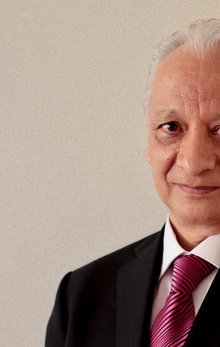
Dr Victor Rodriguez Padilla
CEO
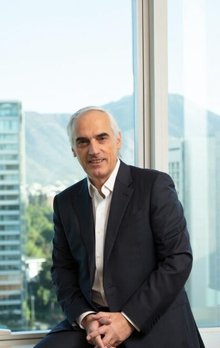
Eduardo Navarro
CEO

Emilia Esther Calleja Alor
Director General

Giuseppe Turchiarelli
Chief Executive Officer

Héctor Obregón
President
Horacio Daniel Marín
President & CEO
Ivan de Souza Monteiro
CEO
Magda Chambriard
CEO
Ricardo Roa Barragán
CEO
Rodrigo Pizzinatto
CEO