National Grid: Why did Heathrow Shut if it Had Enough Power?
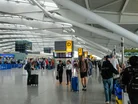
The UK government has ordered an investigation into the shutdown of Heathrow Airport on 21 March, which grounded thousands of flights and caused more than 18 hours of disruption.
Expected to take six weeks, the National Energy System Operator will lead the inquiry.
The shutdown was prompted by a significant fire at a nearby electrical substation which is responsible for the airport's power supply.
The event affected more than 1,300 flights — carrying 200,000 passengers — with cargo operations also significantly impacted.

Heathrow has faced criticism over the way it the shutdown was handled, with questions also raised about the resilience of Britain’s critical infrastructure.
Willie Walsh, Director General of the International Air Transport Association, asked: “How is it that critical infrastructure — of national and global importance — is totally dependent on a single power source without an alternative?
“If that is the case — as it seems — then it is a clear planning failure by the airport.”
However, the airport’s CEO confirmed the shutdown was not due to a lack of power — rather that time was needed to switch from the damaged North Hyde substation in Hayes to two others that could power it in its place.
I can’t remember a transformer failing like this in my more than 30 years in industry
Heathrow was instead closed on safety grounds, while the switch to alternative National Grid supplies was made.
Heathrow had ‘enough power’, says National Grid CEO
Calling the fire that caused the disruption a “unique event”, National Grid CEO John Pettigrew told the Financial Times that two further substations were operational and able to power the airport while the fire raged.
He said: “There was no lack of capacity from the substations. Each substation individually can provide enough power to Heathrow.
“Two substations were always available for the distribution network companies and Heathrow to take power.
“Losing a substation is a unique event — but there were two others available, that is a level of resilience.”
“I can’t remember a transformer failing like this in my more than 30 years in industry.”
A spokeswoman for Heathrow said the substation fire “was an unprecedented incident and that it would not have been possible for Heathrow to operate uninterrupted” off the back of National Grid’s CEO’s comments.
“Hundreds of critical systems across the airport were required to be safely powered down and then safely and systematically rebooted
“Given Heathrow’s size and operational complexity, safely restarting operations after a disruption of this magnitude was a significant challenge.”
What is the extent of the damage after the substation fire?
National Grid’s CEO says all three transformers on the site have been damaged due to the ferocity of the fire.
One of the transformers was a backup for the other two.
Jonathan Smith, the Deputy Commissioner of London Fire Brigade added: “The fire involved a transformer comprising 25,000 litres of its cooling oil fully alight.
“This created a major hazard owing to the still live high-voltage equipment and the nature of an oil-fuelled fire.”
Stuart Mortimore, a Fellow of the Institution of Engineering and Technology and a fire and forensic investigations expert, said the fire — which is thought to be due to an electrical fault — would have caused “severe and widespread electrical arcing activity”, also known as sparking, making the blaze “difficult to extinguish”.
“The damage caused makes it unlikely that much useful physical evidence will remain. The investigation is therefore likely to concentrate on the operation of the transformer and its maintenance.”
Speaking to the BBC, a National Grid insider said the fire that broke out damaged a "particularly important bit", while emphasising Heathrow has access to more than one source of electricity.
In a statement, National Grid said it welcomes the investigation into the substation fire and “will work closely with all parties involved to understand the cause of the incident”.
Explore the latest edition of Energy Digital Magazine and be part of the conversation at our global conference series, Sustainability LIVE.
Discover all our upcoming events and secure your tickets today.
Energy Digital is a BizClik brand