What is Europe's Plan to Deal with the Iran Energy Crisis?
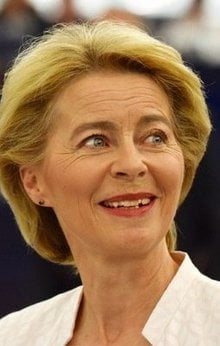
Ursula von der Leyen, the President of the European Commission and one of the EU’s most influential individuals, delivered a short, but hugely significant speech on Wednesday (April 29).
At the European Parliament in Strasbourg, she addressed the EU at large, setting out the bloc’s strategy for dealing with the fallout of the US-Israeli war on Iran, which has destabilised the world’s energy markets since the end of February.
During her speech, Von der Leyen laid out the impact the conflict has had on Europe so far. After just 60 days of conflict, the EU's bill for fossil fuel imports had risen by more than US$30bn.
Her speech followed on from a meeting of the informal European Council, where the continent’s energy predicament was discussed at length. During that session, the transition to renewables and the bloc’s energy security was a hot topic.
With the closure of the Strait of Hormuz representing the second major energy crisis in just four years, Von der Leyen and her European Commission colleagues suggest that recent events should settle any remaining debate about the EU’s reliance on imported fossil fuels.
Coordination, consumer protection and electrification
The Commission's response takes the form of what Von der Leyen calls a "toolbox" – a set of measures intended to be deployed differently across the EU’s member states, given that each has a distinct energy mix.
The first pillar is increased coordination at the European level. During the previous energy crisis, which followed on from Russia’s invasion of Ukraine in 2022, the bloc’s member states ended up competing with one another in the gas market, driving prices sky high. This time, the Commission is proposing stronger coordination not only on filling national gas storage but also on fuel reserves – particularly jet fuel and diesel, where markets are already tightening.
The second pillar is consumer and business protection, and here Von der Leyen was notably candid about past failures. During the last crisis, only a quarter of emergency support was targeted at vulnerable households and firms, with more than US$390bn spent on untargeted measures, which is something that she was explicit about not repeating.
The third pillar is demand reduction through modernisation, centred on energy efficiency and electrification. In her speech, Von der Leyen pointed to the meaningful progress the EU has made on that front since 2022, when gas determined electricity prices 70% of the time (a figure now down to 30%) as evidence that the structural shift is underway, if not yet complete.

Using Sweden as a model
One of the most attention-grabbing moments of Von der Leyen’s speech came as she used Sweden as an example for what a low-carbon energy mix can achieve in practice.
In Sweden, a €1 per MWh increase in the gas price translates to just a €0.04 per MWh rise in the electricity bill, owing to the country's reliance on renewables and nuclear.
The implication for the rest of Europe was clear – diversification into low-carbon sources is not just an environmental preference but a hard economic buffer against precisely the kind of market shock the bloc is currently absorbing.
Electrification as strategic priority
Perhaps the most forward-looking part of the speech was the call for a wholesale electrification of the European economy.
Electricity currently represents less than a quarter of final energy consumption in the EU – significantly below levels in the US or China.
The Commission is expected to publish an Electrification Action Plan before the end of the summer, and Von der Leyen indicated this would come with an ambitious electrification target.
She also referenced the Grids Package, proposed in December, designed to bring energy infrastructure up to speed for what she called the "electrification age". The European Parliament and Council agreed in Cyprus to accelerate negotiations on the package.
On funding, she noted that the current EU budget has allocated nearly US$333bn for energy, with some US$105bn still available.
The question of budget
The speech moved into more politically-sensitive territory when Von der Leyen addressed the next Multiannual Financial Framework (MFF), the EU's long-term budget from 2028.
With repayments for the NextGenerationEU pandemic recovery fund due to begin that year and new spending commitments mounting across defence, competitiveness and cohesion, she argued that new own resources – effectively new revenue streams for the EU – are indispensable.
The alternative, she said, is higher national contributions or lower spending capacity.
It was a rare moment of budget realpolitik in what was ostensibly an energy speech, and it underscored how intertwined the EU's energy ambitions are with the broader question of how to pay for them.
The bigger picture
Von der Leyen briefly addressed the diplomatic context, noting that a ceasefire in Iran and Lebanon was holding and reiterating the EU's goal of restoring freedom of navigation in the Strait of Hormuz.
She also touched on the ongoing war in Ukraine, confirming that the EU would disburse the first tranche of a US$100bn loan with US$53bn to be released in the current quarter, two-thirds of which is earmarked for Ukraine's defence, including a US$6.7bn drone package.
The speech was, in many ways, a statement of intent rather than a set of firm commitments.
Going forward, aligning 27 Member States on gas storage coordination, agreeing on new EU budget revenues and hitting electrification targets that currently lag behind global peers will be the challenge to overcome.
Company portals

Executives
Ursula von der Leyen
President