'Freedom from Blackmail': Baltics Unplug From Russian Energy
The Baltic states of Estonia, Latvia, and Lithuania have successfully synchronised their electricity grids with the Continental Europe Synchronous Area (CESA), permanently disconnecting from the Russian and Belarusian power systems.
The transition, which took place on 9 February 2025 at 14:05 EET, marks a significant milestone in Europe's efforts to bolster regional energy security and reduce dependence on Moscow.
This move follows years of planning and infrastructure upgrades in the Baltics and Poland, with critical technical support from the European Union and ENTSO-E, the association of European electricity transmission system operators.
The synchronisation allows the Baltic countries to manage their grids independently in cooperation with other European nations, ensuring greater stability and control.
Years of preparation and European cooperation
“It is great to see that Lithuania, Latvia and Estonia are now fully independent and disconnected from the grids of Russia and Belarus," said Dan Jørgensen, European Commissioner for Energy and Housing.
"The full integration of the Baltics in the EU internal energy market and the synchronisation of their electricity networks with Continental Europe – ahead of schedule – is a landmark event for the entire EU."
'Ahead of schedule' is the key phrase here: this moment has been in the pipeline for many years and was scheduled for completion in 2026.

The shift to CESA required meticulous planning and coordination among the Baltic transmission system operators — Estonia's Elering, Latvia's AST and Lithuania's Litgrid — along with key partners in Europe.
Poland’s PSE also played a key role in managing the project as the direct physical link connecting the Baltics to the European grid.
The European Union invested more than US$1.24bn under the Connecting Europe Facility to facilitate the synchronisation.
Technical guidance, legal expertise, and extensive cooperation from ENTSO-E ensured the smooth transition of the Baltic grids.
Today, history is made. This is freedom; freedom from threats; freedom from blackmail.
A shift away from Russian influence
Until now, the Baltic states had relied on Russia and Belarus for frequency control, making them vulnerable to potential disruptions or political leverage.
This latest move severs the last energy link between the Baltic region and Russia, further reducing Moscow’s ability to exert influence over the region.
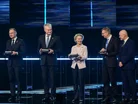
European Commission President Ursula von der Leyen described the synchronisation as a momentous achievement.
“Today, history is made. This is freedom; freedom from threats; freedom from blackmail,” she said, during the ceremony which announced the occasion.
Von der Leyen's comments speak to the geopolitical significance of this decision. Lithuania’s Energy Minister Zygimantas Vaiciunas echoed this sentiment.
“The Baltic energy system is finally in our hands, we are in full control,” he said.
Strengthening Europe’s energy security
The synchronisation strengthens not only the Baltic states but also the wider European energy network. ENTSO-E President Zbyněk Boldiš spoke to the importance of the achievement.
“The synchronisation of the Baltic states with the Continental Europe Synchronous Area is an important step towards strengthening the energy independence and security of Estonia, Latvia, and Lithuania," he said.
"It also underlines the power of European solidarity and cooperation in building a resilient and interconnected energy future.”
By joining the European grid, the Baltic states become part of a network serving more than 400 million customers, reducing reliance on external energy sources. This move also aligns with the EU’s broader strategy of developing a more resilient and interconnected energy market that can adapt to fluctuations and external pressures.
The knock-on effects of this moment
The Baltic synchronisation is being closely watched by other nations seeking to distance themselves from Russian energy.
Ukraine’s Prime Minister Volodymyr Zelenskyy expressed his support and solidarity, for Latvia, Lithuania and Estonia during a virtual briefing.
“Moscow will no longer be able to use energy as a weapon against the Baltic states,” he said.
The move signals a potential model for other countries in the region that are seeking greater energy independence.
Looking ahead, the synchronisation lays the groundwork for further renewable energy development in the Baltic region. With stronger ties to the European grid, Estonia, Latvia and Lithuania will be better positioned to integrate more wind and solar power, reducing their reliance on fossil fuels and supporting the EU’s climate goals.
This landmark event demonstrates Europe’s commitment to a secure, independent, and sustainable energy future. The successful transition of the Baltic states underscores the power of collective investment and cooperation in reshaping the continent’s energy landscape.
Explore the latest edition of Energy Digital Magazine and be part of the conversation at our global conference series, Sustainability LIVE.
Discover all our upcoming events and secure your tickets today.
Energy Digital is a BizClik brand