EU Competitiveness Compass: Impacts on the Energy Industry
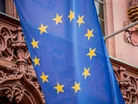
The European Commission says that over the past two decades, Europe has lagged behind other major economies, hindered by a continuous lack of productivity growth.
In response, the Commission has introduced the Competitiveness Compass, a strategic instrument designed to reverse this trend by focusing on three key areas: innovation, decarbonisation and security.
President of the European Commission Ursula von der Leyen says: “Europe has everything it needs to succeed in the race to the top. But, at the same time, we must fix our weaknesses to regain competitiveness.
“The Competitiveness Compass transforms the excellent recommendations of the Draghi report into a roadmap. So now we have a plan. We have the political will.
“What matters is speed and unity. The world is not waiting for us. All member states agree on this. So, let's turn this consensus into action.”
The foundation of the Competitiveness Compass
The Competitiveness Compass has been crafted as a direct outcome of the insights provided by the Draghi Report - named after its author, former European Central Bank President Mario Draghi.
This report underpins the new framework, highlighting the urgent need for Europe to boost its productivity amidst a static population growth.
“The EU is entering the first period in its recent history in which growth will not be supported by rising populations,” the report says.
“If Europe cannot become more productive, we will be forced to choose. We will not be able to become, at once, a leader in new technologies, a beacon of climate responsibility and an independent player on the world stage.”

Pillars of the Competitiveness Compass
The Competitiveness Compass' three core pillars are supported by five key enablers:
- Simplification by reducing the regulatory and administrative burden
- Lowering barriers to the single market through a Horizontal Single Market Strategy
- Financing competitiveness via a European Savings and Investments Union
- Promoting skills and quality jobs through a Union of Skills
- Improving coordination of policies at EU and national levels with tools like the Competitiveness Coordination Tool and a new Competitiveness Fund.
“With the Compass, the Commission presents its economic doctrine for the next five years,” explains Stéphane Séjourné, Executive Vice-President for Prosperity and Industrial Strategy at the European Commission.
“This doctrine is simple and can be summed up in one key word: competitiveness. Competitiveness in every euro that we will spend and in every initiative we will propose.
“From this ambition comes a threefold work programme: simplify, invest and accelerate on our economic priorities.
“The compass must signal a change of mindset for Europe and Europeans. It makes Europe more predictable, while maintaining the course of our European model – decarbonised, social and respectful of our values."
Impact on sustainability and the energy sector
A core aspect of the Competitiveness Compass is its focus on decarbonisation.
This initiative not only supports Europe's goal of achieving a 90% reduction in emissions by 2040 but also aligns with the objectives for full decarbonisation by 2050.
The interlinkage of industrial, economic and trade policies under this framework aims to strengthen Europe's competitiveness while advancing climate goals.
Christina Deligianni, EU Climate Pact Ambassador for the European Commission and Green Investments Expert at CINEA, says: “It is great to see the first flagship initiative of the new European Commission building on the Draghi Report and giving clear framework for the way forward on many fields of its work.
“The EU remains committed to achieving a 90% reduction in emissions by 2040, with full decarbonisation by 2050.
“A well-integrated approach linking industrial, economic and trade policies will ensure that climate action strengthens competitiveness.”
“The Compass confirms the EU's planned competitiveness-driven approach to decarbonisation which will be laid out in the upcoming Clean Industrial Deal,” Andreas Rasche, Professor and Associate Dean at Copenhagen Business School, wrote on social media.
“The Compass contains promising ideas on the demand side (e.g. encourage and incentivise demand for low-carbon products) and the supply side (e.g. support state aid for clean technologies).”
Gwenaelle Avice Huet, Executive Vice President of Europe Operations and Member of the Executive Committee at Schneider Electric, says: “The way forward is clear: to keep driving momentum, we need to accelerate innovation and digitalisation.
“Now is the time to come together with united policy and simplified processes to clear the barriers to green growth.”
Explore the latest edition of Energy Digital Magazine and be part of the conversation at our global conference series, Sustainability LIVE.
Discover all our upcoming events and secure your tickets today.
Energy Digital is a BizClik brand