Renewables & Fuel Duty: This Week's Top Five Energy Stories
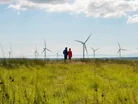
1. How Wind & Solar Generation Overtook Gas For the First Time
New data from Ember reveals electricity generated by wind and solar projects surpassed the amount from gas worldwide for the first time in April 2026
Global electricity markets reached a notable inflection point in April 2026, as generation from wind and solar exceeded gas-fired power for the first time, according to new data from Ember.
Together, wind and solar delivered 22% of global electricity output, overtaking gas at 20%, based on Ember’s latest analysis.
In absolute terms, renewable generation outpaced gas by 54TWh during the month.
The figures arrive against a backdrop of volatile gas supply and pricing, reinforcing the shifting economics of power generation and casting doubt on the long-term reliance on imported fossil fuels. They also suggest that any short-term return to coal during the energy crisis has been relatively contained.
“Countries around the world have been turning to wind and solar because they are cheap, homegrown and secure sources of electricity,” says Kostantsa Rangelova, Global Electricity Analyst at Ember.
2. Q&A: How Will the US-Israel-Iran War Impact Climate Action?
Hitachi Energy's Global Head of Sustainability, Alicia Argüello, speaks with Energy Digital about how war in the Middle East will impact the energy sector
Since the US and Israel's military campaign on Iran began in February, the global energy sector has been reeling.
Almost immediately, Iran closed the Strait of Hormuz, a narrow waterway off the country's south coast through which almost all of the Middle East's waterborne oil and gas is ordinarily shipped.
Now, exactly three months after the conflict's start, the strait remains far from fully operational. This has left the world with a huge deficit of fuel – around 20% of normal supplies. As a result, prices have spiked and shortages have been keenly felt.
In times of crisis such as these, the typical reaction of businesses is to go into self-preservation mode – consolidating and reducing spending.
In the context of the energy transition, however, this would be a missed opportunity.
With the global hydrocarbon market experiencing its second major crisis in four years, many critics believe now is the time to invest wholeheartedly in electrification, renewables and climate technology.
This is the position of Alicia Argüello, the Global Head of Sustainability at Hitachi Energy.
For her, this kind of approach will help to reduce dependence on fossil fuels, thereby circumventing all the instability and price volatility of the market.
In this Q&A with Energy Digital, Alicia tells us all about how businesses should be adapting to the crisis.
3. New Data Centre Rules Can Open Green Energy Doors, AWS Says
New regulations requiring Irish data centres to source the majority of their electricity from renewables could prove a real catalyst for green developments
The inexorable rise of AI and the data centres has become something of a cause célèbre around the world.
While, in the past few years, AI has become one of the central pillars of the global economy, it is also under huge pressure to address its energy and water consumption.
Though the technology is still in its growth phase, governments and organisations have already begun imposing regulations in an effort to limit the environmental impacts of data centres.
The Irish Government is one such example.
Last year, the Commission for the Regulation of Utilities (Ireland's independent regulator for the energy sector) ruled that future data centres must meet 80% of their energy needs from additional Irish renewable power plants – a decision that has divided opinion across the energy and technology sectors.
For Niamh Gallagher, who is AWS' Country Lead for Ireland as well as its Infrastructure & Public Policy Lead for EMEA, the ruling is an opportunity rather than an obstacle.
Speaking at the Wind Energy Ireland conference in Dublin on Wednesday, she argued the regulation creates "structured long-term demand" for a new generation of renewable energy in Ireland.
4. Affordability vs. Electrification: The UK’s Fuel Duty Freeze
The UK Government has frozen fuel duty until 2027, but some critics wonder whether this decision is hampering the UK’s energy transition & energy security
The UK Government has extended its freeze on fuel duty until the end of 2026, reversing a plan to phase out a temporary 5p-per-litre cut that had been in place since Russia's invasion of Ukraine in 2022.
Sir Keir Starmer made the announcement at Prime Minister's Questions on 20 May, framing it as a direct response to rising petrol and diesel prices driven by the US-Israeli military campaign in Iran.
"We're backing drivers by extending the freeze in fuel duty for the rest of the year," the PM told the House of Commons.
The decision marks a significant U-turn for Chancellor Rachel Reeves, who had planned to allow the 5p cut to expire in September – a move that would have added around £120 (US$162) to the average driver's costs over two years.
5. Why Are Companies Changing & Dropping Their Climate Pledges?
Trellis’ 2026 State of the Sustainability Profession report shows corporate sustainability and CEOs are shifting from climate pledges to focus on savings
Trellis Group has published its State of the Sustainability Profession 2026 report, and its findings may come as grim reading for those invested in the energy transition.
The report, which is based on insights from more than 500 sustainability professionals working at companies generating at least US$1bn in revenue, shows that the way companies conceive of sustainability has changed considerably in the past two years.
Rather than presenting sustainability through the lens of climate change, Trellis’ study finds that companies are increasingly couching their ESG endeavours in terms of energy security, operational resilience and cost discipline.
And while this might suggest that sustainability has taken a backseat to the bottom line across boardrooms, the data is a little more nuanced.
The surveys show that 46% of organisations have expanded sustainability budgets and headcount over the past two years.
At the same time, sustainability is being embedded more deeply into energy systems, digital infrastructure, supply chains and industrial operations as businesses seek to align decarbonisation with financial performance.
Nevertheless, these positive developments do not tell the full story.