Top 5 Stories Explaining the Iran-US War's Impact on Energy
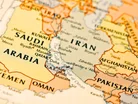
1. What Does the US-Iran War Mean for Oil Prices & Supplies?
Wood Mackenzie, Rystad, PVM and Citi analyse the fallout as US-Israel strikes on Iran shut the Strait of Hormuz, threatening 20% of global oil supply
In the early hours of Saturday 28 February, the US and Israel launched coordinated military strikes against the Iranian Government, with strikes targeting the country’s military and nuclear facilities.
By the time markets reopened on Monday, the world had changed.
Iran’s Supreme Leader, Ayatollah Ali Khamenei, was confirmed dead during the assault, alongside several senior members of the Iranian Defence Council.
Iran's retaliation was swift, with missile and drone strikes launched against Israel and US military bases across the Gulf, hitting targets in Qatar, the UAE, Bahrain, Jordan and Kuwait.

At least 555 people have been killed in Iran, according to the Iranian Red Crescent Society, while many more casualties have been reported across the wider region.
Iran has declared "total war" on Israel and the US, while President Trump has suggested that the assault could continue for weeks.
The conflict has already extended beyond the Gulf, with Israeli strikes killing at least 31 people in Beirut while Hezbollah has launched retaliatory missiles and drones towards Israel.
The International Atomic Energy Agency's Director General, Rafael Grossi, says that the situation is “very concerning” and warns that strikes on nuclear facilities could lead to a radiological release that may necessitate evacuations of huge areas of Iran.
2. How War in Iran Will Disrupt Global Supplies of Oil and Gas
Military conflict has closed the Strait of Hormuz, stalling 20% of global oil and disrupting 18% of air cargo, forcing major logistics shifts
The unfolding conflict between the US, Israel and Iran has thrown the global energy system into turmoil, as the effective closure of the Strait of Hormuz cuts off one of the world’s most vital arteries for crude and liquefied natural gas (LNG) shipments.
The Islamic Revolutionary Guard Corps has warned vessels to stay clear, trapping around 170 ships and suspending the movement of roughly 20% of global seaborne oil.
"The speed and scope of escalation in the Middle East will have taken many businesses by surprise and has highlighted just how unstable the region can become in as little as 48 hours," says Simon Geale, EVP at Proxima.
"What will concern companies is that we may just be at the start of a prolonged conflict and there may be much more to come in terms of the impact on global supply chains."
New analysis by Pole Star Global of 3,878 vessel zone events shows a dramatic collapse in regional maritime activity.
Tanker traffic surged briefly during the February 28 strikes before plummeting as military operations intensified. Iranian-flagged movements fell by over 95%, while major lines began emergency rerouting to avoid the Gulf.
The International Maritime Organization’s Secretary-General, Arsenio Dominguez, says: "No attack on innocent seafarers or civilian shipping is ever justified. These crews are simply doing their jobs and must be protected from the effects of wider geopolitical tensions."
3. Which Countries Consume, Export and Possess the Most Oil?
While US production leads, refinery mismatches and logistics keep Saudi Arabia as the top exporter, anchoring global supply chains amid geopolitical shifts
The US may be the world’s largest oil producer, contributing around 21% of global output, yet it is Saudi Arabia that remains the largest exporter.
The difference here is that the lion's share of America’s oil is consumed domestically, whereas Saudi Arabia consistently exports more that it uses, which speaks to the Kingdom's influence over the global energy market.
The latest Statistical Review of World Energy, a comprehensive annual assessment produced by the Energy Institute, KPMG and Kearney, suggests that international relations play a central role to oil exports.
"Geopolitical tensions further complicate the energy outlook," say the report's authors, Andy Brown, President of the Energy Institute, and Dr Nick Wayth, CEO of the Energy Institute.
"Energy security and affordability remain central concerns competing with the need for climate action. Amid this turbulence, energy remains indispensable to human activity and development."
The 74th edition of the report paints a picture of a sector contending with record energy demand at the same time as huge supply volatility, made only more unpredictable by the unfolding conflict in the Middle East.
In 2024, US oil production surpassed 20 million barrels per day for the very first time. To put that figure into perspective, that equates to roughly to the combined volumes of both Saudi Arabia and Russia.
But when it comes to exports, the Middle East dominates, accounting for 40% of global oil shipments.
Together, the top five exporters – Saudi Arabia, Russia, the US, the UAE and Canada – are now responsible for more than half the world’s traded crude oil.
4. Could the Iran-US War Expedite the Phase-Out of Oil & Gas?
The conflict between Iran, the US & Israel is rapidly turning the world’s most energy‑exposed region into a live stress test of the future of hydrocarbons
The unfolding conflict in the Middle East, which began with joint US-Israeli airstrikes on Iran on 28 February, has left the world’s energy market in disarray.
In just a matter of days, global oil and gas markets, shipping routes and price benchmarks have lost stability, forcing governments, companies and investors to confront whether continued dependence on hydrocarbons is compatible with energy security.
The war has already curtailed oil and gas exports across the Gulf and brought traffic through the Strait of Hormuz – which normally carries around 20% of the world’s seaborne oil and LNG – close to a standstill.
Attacks on key infrastructure in Iran, Saudi Arabia and Qatar have created a textbook supply shock, and those seismic waves are still working their way through markets.
Against this backdrop, analysts have warned that if the effective closure of shipping through the Persian Gulf persists, oil prices could reach prices of US$100 a barrel, with Norway’s Rystad Energy estimating a net loss of 8 to 10 million barrels per day of supply.
For Christophe Williams, CEO of Naked Energy, the crisis underlines how a dependence on gas is making people more vulnerable.
“Escalation involving Iran is yet another reminder that dependence on gas weakens our energy security,” he says.
UK wholesale gas prices have already surged by around 90% over the past week, a jump Christophe says “feeds straight through to businesses and households”.
For the UK specifically, he does not believe that drilling in the North Sea is a sufficient shield from price shocks.
5. The Role of Oil & Gas in the Iran-US Nuclear Negotiations
(Published 16 February, 2026)
In mid-February, investments in hydrocarbons looked as though they would play an important role in the US-Iran negotiations, which centred on the Middle Eastern nation’s nuclear programme
Negotiations between the US and Iran over a potential nuclear peace agreement first began almost a year ago.
Since the first round of bilateral talks ended in early June 2025, however, a great deal has changed.
The so-called 12-Day War between Israel and Iran began after the talks were adjourned. Then, in late December, vast protests began to take place across Iran, resulting in the deaths of thousands of Iranian citizens following the military response of the government.
Now, however, with tensions and stakes high both domestically and regionally, negotiations appear to be progressing.
Iran has placed joint energy investments at the heart of its second round of nuclear negotiations with the US, signalling a willingness to offer Washington direct economic stakes in Iranian oil and gas fields.
"For the sake of an agreement's durability, it is essential that the US also benefits in areas with high and quick economic returns," Hamid Ghanbari, Deputy Director for Economic Diplomacy at Iran's foreign ministry, told the Fars news agency on 15 February.
He listed potential areas of cooperation including "common interests in the oil and gas fields, joint fields, mining investments and even aircraft purchases".
The proposal marks a significant shift in Tehran's negotiating strategy as talks resume in Geneva on Tuesday, with Iranian Foreign Minister Abbas Araghchi meeting both US envoys and the Head of the International Atomic Energy Agency (IAEA).