How War in Iran Will Disrupt Global Supplies of Oil and Gas
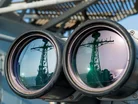
The unfolding conflict between the US, Israel and Iran has thrown the global energy system into turmoil, as the effective closure of the Strait of Hormuz cuts off one of the world’s most vital arteries for crude and liquefied natural gas (LNG) shipments.
The Islamic Revolutionary Guard Corps has warned vessels to stay clear, trapping around 170 ships and suspending the movement of roughly 20% of global seaborne oil.
"The speed and scope of escalation in the Middle East will have taken many businesses by surprise and has highlighted just how unstable the region can become in as little as 48 hours," says Simon Geale, EVP at Proxima.
"What will concern companies is that we may just be at the start of a prolonged conflict and there may be much more to come in terms of the impact on global supply chains."
Shifting seas and stranded tankers
New analysis by Pole Star Global of 3,878 vessel zone events shows a dramatic collapse in regional maritime activity.
Tanker traffic surged briefly during the February 28 strikes before plummeting as military operations intensified. Iranian-flagged movements fell by over 95%, while major lines began emergency rerouting to avoid the Gulf.
The International Maritime Organization’s Secretary-General, Arsenio Dominguez, says: "No attack on innocent seafarers or civilian shipping is ever justified. These crews are simply doing their jobs and must be protected from the effects of wider geopolitical tensions."
The organisation is urging operators to stay clear of the zone until security conditions stabilise.
Global carriers have rapidly adjusted. Maersk and Hapag-Lloyd have suspended all transits through Hormuz, while MSC has moved vessels to sheltered zones and is diverting services around the Cape of Good Hope, adding an estimated US$1m in extra fuel per voyage.
Dubai’s Jebel Ali Port – the region’s largest trade hub – was briefly closed when missile debris caused a fire, heightening safety fears across Gulf terminals.
Air corridors closed to cargo and fuel
With Gulf airspace partially closed, global air cargo capacity has dropped by 18% in a week, disrupting supplies of urgent spare parts, refinery equipment and shipments of energy technology.
Emirates SkyCargo, Qatar Airways and Etihad have temporarily grounded freighter services, while FedEx and Cathay Group suspended Middle East operations entirely.
"The safety and well-being of our team members is our highest priority," FedEx said in a statement.
For oilfield services and maintenance providers dependent on just-in-time air deliveries, these closures compound the logistical choke points already emerging at sea.

Refinery shutdowns signal deepening energy crisis
Saudi Aramco has halted operations at its Ras Tanura refinery after Iranian drone attacks on 2 March, a move that removes 550,000 barrels per day of capacity from global markets. The facility – a cornerstone of Saudi export infrastructure – is one of several energy sites targeted since hostilities began.
“Rising oil prices might grab the headlines but escalation across the Middle East will result in price hikes across all industry supply chains," says Sam Coyne, Currenxie's CEO for Europe.
"The crippling of key trade routes will prolong uncertainty and continue to drive up supply costs, squeezing merchant margins ever further and ultimately leading to a spike in the cost of consumer goods and surging inflation.
“Recent research from the Chartered Institute of Procurement and Supply (CIPS) recently warned that due to rising costs of transport, energy and raw materials, consumer goods prices could soar during 2026. The events over the weekend are likely to make such forecasts inevitable.”
Elsewhere, Rafael Grossi, the Director General of the IAEA, has warned that the US and Israeli military's focus on Iran's nuclear infrastructure could have dire consequences.
"We cannot rule out a possible radiological release with serious consequences, including the necessity to evacuate areas as large or larger than major cities," he says.
"We therefore urge utmost restraint in all military operations."
Industries brace for energy aftershocks
Disruption at Hormuz is already throttling energy-dependent sectors.
Chemicals and pharma: soaring air freight costs – up 400% in two days – have crippled flows of Indian Active Pharmaceutical Ingredients that rely on Gulf transits.
Technology: microchip and EV battery shipments are stranded, exaggerating power storage supply pressures. Cloud providers including Microsoft Azure and AWS report latency issues in Middle Eastern data hubs.
Agriculture: halted nitrogen fertiliser exports threaten planting schedules across South Asia.
Energy: Qatar’s suspension of LNG exports could cause storage overflow within weeks, potentially forcing production cuts and threatening power generation security across Asia and Europe.
Construction: fire damage and port closures have delayed energy infrastructure materials for mega-projects like NEOM’s The Line.
Tiemen Meester, COO at DP World, said: "The Middle East is a vital trade route... our focus is on providing superior infrastructure and security to ensure the global supply chain can thrive even in a volatile environment."
The uncertain path ahead for energy markets
Maritime authorities have warned vessels to maintain distance from US naval units in the Gulf as tensions persist. UK Maritime Trade Operations has called for heightened vigilance across the region.
Simon Geale notes that the geopolitical picture remains fluid: "Just what does happen next now depends on the intentions and actions of several actors and the composition of the next Iranian regime. But for businesses, there is a need to enact contingency plans immediately and begin working through the implications of this conflict lasting weeks or months, rather than days."
As the crisis unfolds, energy markets face a test of resilience not seen since 1979.
With crude benchmarks soaring, LNG cargoes delayed and refinery output curtailed, governments and industry leaders are now racing to secure alternative routes and restore some measure of stability to a region that remains the beating heart of global energy supply.




Executives
Arsenio Dominguez
Secretary General

Rafael Grossi
Director General
Simon Geale
Tiemen Meester
Group COO Ports & Terminals