
What Does the US-Iran War Mean for Oil Prices & Supplies?
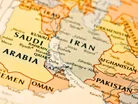
In the early hours of Saturday 28 February, the US and Israel launched coordinated military strikes against the Iranian Government, with strikes targeting the country’s military and nuclear facilities.
By the time markets reopened on Monday, the world had changed.
Iran’s Supreme Leader, Ayatollah Ali Khamenei, was confirmed dead during the assault, alongside several senior members of the Iranian Defence Council.
Iran's retaliation was swift, with missile and drone strikes launched against Israel and US military bases across the Gulf, hitting targets in Qatar, the UAE, Bahrain, Jordan and Kuwait.
At least 555 people have been killed in Iran, according to the Iranian Red Crescent Society, while many more casualties have been reported across the wider region.
Iran has declared "total war" on Israel and the US, while President Trump has suggested that the assault could continue for weeks.
The conflict has already extended beyond the Gulf, with Israeli strikes killing at least 31 people in Beirut while Hezbollah has launched retaliatory missiles and drones towards Israel.
The International Atomic Energy Agency's Director General, Rafael Grossi, says that the situation is “very concerning” and warns that strikes on nuclear facilities could lead to a radiological release that may necessitate evacuations of huge areas of Iran.
What this means for the global energy landscape
For the global energy industry, the most consequential development is the disruption of shipping in the Strait of Hormuz – one of the main arteries of global trade.
The narrow waterway between Iran and the UAE is the global energy market’s single most important chokepoint, with around 15 million barrels per day of crude, condensate, jet fuel and diesel flowing through it in normal times. Analysts say that this equates to around 20% of global oil output.
As a result of the unfolding conflict, trade in the Strait of Hormuz is grinding to a halt.
After Iran warned shipping not to traverse the strait, insurers withdrew war risk coverage, sending tankers to anchor outside the waterway.
Dimitris Ampatzidis, who is a Senior Risk & Compliance Analyst at Kpler, reported that traffic was down 75% by Saturday.
On Sunday, Windward reported more than 1,100 vessels affected by AIS jamming events, with ships falsely positioned at airports and over nuclear facilities in Iran, the UAE and Oman.
Multiple tankers have already been hit by aerial attacks. Four crew members aboard the 11,000-dwt Skylight were injured in the first incident, with all 20 aboard later evacuated.
Elsewhere, the MKD Vyom was struck off the coast of Oman, sparking a fire and claiming the first maritime fatality of the conflict. A third vessel, as yet unidentified, was also reportedly attacked.
The world prepares for an oil shock
The markets have already reacted. Global oil prices surged as much as 13% on Monday morning, settling up around 9% as of early trading.
Analysts from Wood Mackenzie have warned that prices could push well above US$100 per barrel if flows through the strait are not quickly restored, drawing a parallel to the Russia-Ukraine conflict in 2022, when the threat of losing three million barrels per day of Russian exports drove Brent from roughly US$80 to over US$125 per barrel.
Wood Mackenzie were blunt in their assessment: the nearest historical comparison is the 1970s oil embargo, when prices jumped 300% to around US$12 per barrel, which is equivalent to roughly US$90 in today's terms.
With far larger volumes now at stake, the firm expects this to be a worse crisis.
"With the very significant volumes of supply at risk this time around we'd expect to see that level eclipsed," the Wood Mackenzie team wrote, adding that it would take oil prices well above US$200 per barrel to deliver a comparable shock to today's less oil-intensive global economy.
Tamas Varga, an Analyst at PVM Oil Associates, has been similarly stark in his framing. "When the potential supply of more than 20 million barrels per day of oil is at risk, Sunday's OPEC+ decision to increase output by 206,000 barrels per day in a month amounts to little more than a drop in the Arabian Sea,” he says.
The effects on LNG
The disruptions are not limited to oil – supplies of liquefied natural gas (LNG) are also set for a squeeze.
Around 81 million tonnes of LNG, which is nearly 20% of global supply, moved through the Strait of Hormuz in 2025, primarily from Qatar.
Wood Mackenzie warns that the impact of halting those flows would be comparable in scale to the curtailment of Russian gas to Europe in 2022.
The blow would fall hardest on Asian importers.
Analysts from Rystad Energy have warned that Pakistan, India and Bangladesh face a stark choice: "Those countries face a choice between attracting LNG cargoes from other producers and reducing gas demand either by fuel switching or outright demand curtailment."
European markets will also be exposed, with storage levels already around 10% below the same point last year following a cold January spell.
Adding to the pressure, Israel's Leviathan and Karish gas fields have been shut as a precaution, removing a key source of supply to Egypt.
Iran's pipeline gas exports to Turkey, which were more than seven billion cubic metres in 2025, are also at risk.

Asia scrambles for alternatives
Asia currently sources 60% of its oil from Middle Eastern producers and is already feeling the strain.
Analysts from Citi note that “Iran has not officially shut the Strait of Hormuz but risk aversion from shippers is a real phenomenon”.
“Transit volumes have already declined with vessels parking outside the Strait,” they continue.
Japan's Chief Cabinet Secretary Minoru Kihara has confirmed that some crude tankers bound for Japan are waiting in the Persian Gulf, unwilling to risk the journey right now.
Japanese trading house Itochu said it is experiencing "some impact" on shipments and will source supplies from outside the Middle East.
Japan's biggest refiner, Eneos, said it is monitoring the situation and will assess its crude procurement options.
Elsewhere, India is considering turning to Russian oil if the crisis extends beyond 10 to 15 days, according to sources at two Indian refining companies.
Indonesia's state-owned Pertamina said it is optimising refinery operations to manage the disruption.
What next?
The partial closure of the Saudi Aramco Ras Tanura refinery – one of the Middle East's largest with a capacity of 550,000 barrels per day – following a drone attack on Monday adds another layer of uncertainty to an already precarious supply picture.
Saudi Arabia could partially offset the disruption in the Strait of Hormuz by routing exports through its East-West pipeline to the Red Sea, which holds 1 to 2 million barrels per day of spare capacity.
It is thought that the 32 member countries of the International Energy Agency could release some of their petroleum reserves to combat disruption, but Wood Mackenzie suggests that this will not be sufficient to absorb the shock.
The road ahead remains deeply uncertain.
“The war against Iran [is] the most consequential development in the region for decades, with an unpredictable outcome,” explains Tamas.
For the energy industry, the question is not whether prices will continue to rise in the short term, it is how the geopolitical aftershocks will shape the energy landscape for the years ahead, as the global economy prepares for a shock it has not experienced in half a century.
Company portals









Executives

Rafael Grossi
Director General

Tamas Varga
Analyst