
Which Countries Consume, Export and Possess the Most Oil?
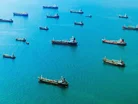
The US may be the world’s largest oil producer, contributing around 21% of global output, yet it is Saudi Arabia that remains the largest exporter.
The difference here is that the lion's share of America’s oil is consumed domestically, whereas Saudi Arabia consistently exports more that it uses, which speaks to the Kingdom's influence over the global energy market.
The latest Statistical Review of World Energy, a comprehensive annual assessment produced by the Energy Institute, KPMG and Kearney, suggests that international relations play a central role to oil exports.
"Geopolitical tensions further complicate the energy outlook," say the report's authors, Andy Brown, President of the Energy Institute, and Dr Nick Wayth, CEO of the Energy Institute.
"Energy security and affordability remain central concerns competing with the need for climate action. Amid this turbulence, energy remains indispensable to human activity and development."
The 74th edition of the report paints a picture of a sector contending with record energy demand at the same time as huge supply volatility, made only more unpredictable by the unfolding conflict in the Middle East.
A tale of production vs. export power
In 2024, US oil production surpassed 20 million barrels per day for the very first time. To put that figure into perspective, that equates to roughly to the combined volumes of both Saudi Arabia and Russia.
But when it comes to exports, the Middle East dominates, accounting for 40% of global oil shipments.
Together, the top five exporters – Saudi Arabia, Russia, the US, the UAE and Canada – are now responsible for more than half the world’s traded crude oil.

The US's problem with refining
The paradox of US energy is that, while it produces more oil than any other country, it continues to import significant volumes. This, in short, is due to a deep structural mismatch between the type of crude available and the US's capacity to refine it.
US shale output, which is derived largely from the Permian Basin in Texas and the Bakken formation in North Dakota, is light and low in sulphur, while about 70% of American refineries are optimised for heavy, sour crude oil.
These facilities were initially developed during the 1970s and 80s when lighter crudes were less abundant. As such, this infrastructure struggles with the demands of today.
Adapting refineries for lighter blends would require some substantial investments, with predictions suggesting that costs could be anywhere between US$100m and US$1bn per site.
Meanwhile, the lack of efficient transport links between inland fields and coastal facilities further compounds the challenge.
Take California for instance. Despite being one of the country’s top five producers, imports roughly 75% of its crude because of limited domestic pipeline connectivity.
The Jones Act of 1920 adds further complexity to the situation, mandating that shipments between US ports use American-built, American-crewed vessels.
These typically cost nearly three times more to operate than foreign tankers, meaning it can be cheaper to import oil from Saudi Arabia than to move it internally from Texas to the East Coast.
Refining, regulation and a changing market
Refiners such as Phillips 66 and Valero have often highlighted their Gulf Coast specialisation in heavy crude processing as a competitive strength. Yet this advantage is being tested as energy policy, market dynamics and environmental regulation evolve.
Phillips 66 closed its Los Angeles Refinery in late 2024, with CEO Mark Lashier citing "long-term sustainability" concerns within California’s tightening regulatory landscape.
New refinery construction remains economically and politically challenging amid high permitting requirements and forecasts of softer long-term oil demand. The US Energy Information Administration (EIA) predicts that plant closures coupled with rising consumption could push national petroleum inventories to their lowest since 2000 by the end of 2026.
The current state of oil exports
Uncertainty across key shipping routes continues to heighten energy market risks. The Strait of Hormuz – handling roughly a quarter of all global seaborne oil – faces near-total disruption following escalating regional conflict.
Brent crude has spiked to US$80 per barrel amid joint US–Israeli airstrikes, with analysts suggesting that resilient North American output remains one of the few buffers preventing wider energy shocks.
Meanwhile, how the situation in Venezuela will play out remains to be seen, with US President Donald Trump suggesting that the US would take control of the country's hydrocarbons sector after the US military deposed President Nicolás Maduro.
"We're going to have our very large United States oil companies, the biggest anywhere in the world, go in, spend billions of dollars, fix the badly broken infrastructure, the oil infrastructure, and start making money for the country," Trump said in January.
Company portals



Executives

Andy Brown
President

Mark Lashier
Chairman and CEO

Nick Wayth
CEO