ABB: Could Floating Solar Farms be The Future For Renewables
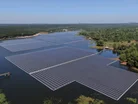
They sit on the water like a fleet of futuristic aircraft carriers, but instead of aircraft they generate electricity.
Floating solar power arrays, or ‘floatovoltaics’, are becoming a key part of global clean energy strategies.
Estimates suggest this floating solar market could reach US$43bn by 2030, underlining its expanding role in renewable electricity generation.
The solar landscape
Indonesia’s Cirata floating solar array is one such project drawing international attention.
Built on the Cirata Reservoir in West Java, around 100km from the capital Jakarta, this 250-hectare plant is the result of a collaboration between the Indonesian government and Abu Dhabi-based renewable energy firm Masdar.
Cirata’s 192MW output makes it the third-largest floating solar installation globally.
It supplies enough clean electricity to power 50,000 homes and could help avoid 214,000 tons of carbon dioxide emissions annually.
“We are proud to be part of this project, which is not only strategically important for Indonesia but also sets an example for other global economies that are looking to bolster their decarbonisation plans with floating solar technology,” says Ken Yap, Commercial Vice President of ABB Electrification Indonesia.
Floating photovoltaics and the evolving energy mix
Floating photovoltaics (FPVs) are increasingly popular in energy planning.
ABB, which supported engineering works at Cirata, highlights why this growth is accelerating.
FPVs present a series of practical advantages that land-based solar installations cannot offer.
By installing panels on bodies of water, the technology avoids land acquisition costs.
In places where available land is scarce or needed for food production or housing, this becomes critical.
They also allow better synergy with existing hydroelectric infrastructure.
Many floating arrays are sited on reservoir dams, combining hydropower and solar generation in a single location to diversify and stabilise the electricity supply.

In addition, water has a cooling effect on solar panels.
This can improve operational efficiency compared to land-based systems, where high temperatures may reduce performance.
Another benefit is water conservation, as the presence of panels can reduce evaporation rates on the water surface, a useful side effect in drought-prone regions.
According to the journal Nature, covering just 10% of global hydropower reservoir surfaces with floating solar panels could generate an amount of electricity equal to the output of all the world’s fossil fuel plants combined.
As ABB puts it, "solar power generation is well established," with installation costs falling by 90% over the last 10 years.
While floating solar remains more expensive to deploy than traditional land-based systems, the company expects that broader uptake will drive those costs down as well.
Energy innovation in Indonesia
Indonesia, the seventh-largest economy in the world by gross domestic product and the biggest in south-east Asia, is pursuing floating solar as part of its long-term renewable energy goals.
The country aims for 23% of its electricity to come from renewables by 2025, rising to 31% by 2050.
With more than 100 reservoirs and over 500 lakes, Indonesia is geographically well suited for floating solar.
Beyond Cirata, 60 additional floating photovoltaic projects are currently in planning stages.
These projects are intended to scale up clean electricity production without competing for agricultural or residential land.
Cirata stands as a model for this strategy.
The facility includes 340,000 individual solar panels and cost around US$100m to build.
ABB was involved in phase one of the project, supporting installation, testing and commissioning of the medium-voltage electrical systems.
The company supplied 17 units of medium-voltage primary air-insulated switchgear (UniGear ZS1), as well as Relion protection relays to safeguard and manage the electrical infrastructure.
These systems control and isolate electrical equipment, enabling reliable energy transmission and improving safety.
ABB also provided Relion REF 615 feeder protection and control relays, which can be operated remotely for enhanced control and risk mitigation.
Global implications and next steps
As energy grids diversify and shift towards low-carbon sources, the role of FPV is expanding.
Cirata may serve as a working reference for other countries aiming to integrate floating solar into their energy strategies.
Ken puts it in clear terms: “We are proud to be part of this project, which is not only strategically important for Indonesia but also sets an example for other global economies that are looking to bolster their decarbonisation plans with floating solar technology.”
Explore the latest edition of Energy Digital Magazine and be part of the conversation at our global conference series, Sustainability LIVE.
Discover all our upcoming events and secure your tickets today.
Energy Digital is a BizClik brand