
Baker Hughes & Kodiak's Multi-Year, 1.8GW Gas Turbine Deal
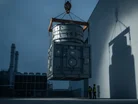
Baker Hughes and Kodiak Gas Services have signed a multi-year strategic agreement centred on gas turbine technology that could eventually support up to 1.8GW of new power generation capacity for US data centres.
The agreement begins with an initial equipment award designed to deliver around 1GW of generating capacity by 2030, establishing what both companies describe as a framework for longer-term deployment as demand for digital infrastructure continues to grow.
Rather than depending solely on electricity supplied through the transmission network, the turbines are intended for behind-the-meter installations.
Behind-the-meter generation refers to power produced directly at or close to a customer's site instead of being drawn from the public grid.
For data centres, this approach can reduce dependence on increasingly congested electricity networks while allowing new computing capacity to come online more quickly.
Gas turbines take centre stage
The initial order includes Baker Hughes' NovaLT16 gas turbines, larger Frame 5 gas turbines and BRUSH generators, combining equipment intended to provide continuous electricity for large-scale computing facilities and other energy infrastructure projects.
Gas turbines generate electricity by burning natural gas to drive rotating turbines connected to generators.
Although they remain fossil fuel technologies, modern gas turbines offer relatively high efficiency and can be deployed much faster than many large centralised power stations, making them an increasingly attractive option for developers facing lengthy grid connection queues.
The companies said the equipment will be deployed in key US markets where rising electricity demand and network constraints are increasing interest in flexible, rapidly deployable generation.

Responding to AI-driven growth
The announcement reflects a wider trend across the energy sector as technology companies search for new ways to secure electricity supplies for increasingly power-hungry data centres.
Artificial intelligence applications in particular require vast computing resources, driving demand for facilities capable of operating around the clock with dependable power supplies.
Kodiak President and CEO Mickey McKee said the agreement would strengthen the company's ability to meet those requirements.
"We are excited to embark on our relationship with Baker Hughes through this strategic agreement," he explains.
"Our customers require dependable, efficient and rapidly deployable power solutions, and access to Baker Hughes' industry-leading technology, training and support enhances our ability to meet that demand at scale.
"This framework supports our long-term strategy of expanding Kodiak's energy infrastructure capabilities while delivering exceptional reliability and value to our customers."
Meanwhile, Baker Hughes' Chairman and CEO, Lorenzo Simonelli, says that the pace of data centre development is changing expectations around how quickly new generation assets must be delivered.
"As demand for power continues to accelerate, driven by the rapid expansion of digital infrastructure and data centres, the ability to deliver reliable, efficient and scalable power solutions quickly is critical," he argues.
"This agreement reflects the growing need for flexible power generation technologies. Together, our gas turbines and generator technologies will help customers bring new capacity online faster to support the continued buildout of critical digital and energy infrastructure."
Looking beyond equipment supply
The agreement extends beyond a straightforward equipment purchase.
It establishes a rolling commercial framework that allows turbine orders to be aligned with evolving data centre construction schedules rather than committing all capacity upfront.
The partnership also includes commitments covering technical training, spare parts support and an intention to develop a long-term service arrangement for the equipment.
For the energy sector, the announcement underlines how the explosive growth of digital infrastructure is creating fresh demand for dispatchable generation that can be installed rapidly.
While renewable energy continues to expand, agreements such as this highlight the increasingly prominent role that gas-fired generation is expected to play in bridging the gap between rising electricity demand and the slower pace of grid expansion.
Company portals


Executives

Lorenzo Simonelli

Mickey McKee
President and CEO