
Behind Iberdrola's Community Approach to Solar in Portugal
While Iberdrola is very much a global energy company these days, much of the Spanish firm's most cutting-edge work still takes place on the Iberian Peninsula.
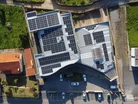
One of Iberdrola's latest initiatives sees the company providing households and businesses in Portugal with access to renewable energy, not through generation alone, but by building a series of what it calls "solar communities".
These small networks of photovoltaic panels, located in villages or towns, allow participants to share clean electricity without actually owning a single panel themselves.
The company currently has eight solar communities under development across Portugal, as well as two that already fully operational, bringing the total to ten projects spread across the country.
Together, they are projected to share around 1.7 million kilowatt hours of renewable energy and avoid more than 250,000 kg of CO₂ emissions.
All in, this new swathe of projects is expected to see the total number of participants in Iberdrola's scheme swell to more than 2,000.
How the model works
So, how exactly does this communal approach to renewable energy work for Iberdrola and the consumers? The mechanics are relatively straightforward.
Businesses and energy producers share surplus electricity from their solar arrays with consumers located within a four-kilometre radius, making use of energy that would otherwise go to waste.
For producers, the arrangement offers them a solar installation without upfront investment, reductions in energy bills and improved ESG credentials.
For consumers, the appeal is simpler still: average savings of around 30% compared to the standard tariff, with no fees required to get involved.
The model is designed to serve those who want access to renewable energy but cannot install their own generation facilities, whether due to cost, planning constraints or the nature of their property.
The case for decentralised generation
The expansion reflects a broader shift in how energy companies are thinking about distribution and access to clean energy, moving away from a model where renewables are something large utilities generate and sell, towards one where it is produced and consumed within the same community.
Pedro Torres, who is Director of Smart Solutions at Iberdrola Clientes Portugal, describes the initiative as a paradigm shifter.
"Solar communities are transforming the way energy reaches people, making it more accessible and collaborative," he says.
"Through this initiative, Iberdrola aims to accelerate that transformation by promoting innovative solutions that bring generation closer to consumption, strengthen sustainability and deliver tangible benefits to local communities and the energy system as a whole."

Iberdrola's footprint in Portugal
The solar community project sits within Iberdrola's wider operations across Portugal.
Iberdrola has been active in the country since 2004 and operates what it describes as Portugal's largest renewable energy project, the Sistema Eletroprodutor do Tâmega, a hydroelectric complex comprising the Alto Tâmega, Gouvães and Daivões power plants.
The scheme represents an investment of more than US$1.85bn and promises to deliver 1,158MW of installed capacity, including 880MW of pumped storage.
Iberdrola also secured seven photovoltaic projects in Portugal's 2019 solar capacity auction, all of which are now operational with a combined installed capacity of approximately 186.3 MW.
In 2024, the company received the highest rating from Fitch Sustainable following its prevention of 26.7 million tonnes of CO₂ emissions the previous year.
Whether the solar community model scales beyond Portugal remains to be seen, but the structure is replicable and the demand signals appear favourable.
For now, Pedro's focus is on extending the reach of the ten projects already in motion and demonstrating that decentralised energy sharing can deliver measurable value to the communities it serves.
Company portals

Executives

Pedro Torres
Director of Smart Solutions at Iberdrola Clientes Portugal