Could Netherlands' Green Energy Boom Overload Power Grids?
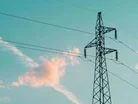
The transition to renewable energy is compelling governments and energy corporations to modernise national grid infrastructure.
In the Netherlands, firms like Eneco and grid operator TenneT are facing the consequences of renewables overwhelming the power network, an issue that could be costing the Dutch economy up to US$38bn annually.
The Netherlands is a leader in environmental performance, ranked 11th globally for sustainability by the Environmental Performance Index.
Over 55% of its electricity is from low-carbon sources, and it leads Europe in solar installations per capita.
This sustainable success has, however, created some pressing infrastructural challenges.
The price of progress
The rapid expansion has revealed a critical mismatch between modern power generation and the grid's original design, threatening economic growth and new housing projects.
The central issue is grid capacity failing to keep pace with supply.
"Grid congestion is like a traffic jam on the power grid," explains Kees-Jan Rameau, CEO of Eneco. The problem is rooted in the grid's historical architecture.
"The grid was designed in the days when we had just a few very large, mainly gas-fired power plants," Kees-Jan adds.
This meant large power lines were near central plants, with smaller lines extending to households.
The move to renewables has reversed this traditional power flow, with electricity now being injected from many dispersed locations into smaller distribution lines not equipped to manage the volume.
Damien Ernst, Professor of Electrical Engineering at Belgium's Liège University, gives a direct assessment.
"They have a grid crisis because they haven't invested enough in their distribution networks [...] it will take years and billions of dollars to solve this.
This infrastructure bottleneck is creating a notable economic drag. A 2024 Boston Consulting Group report states that grid congestion is costing the Dutch economy up to US$38bn annually.
TenneT, the state-owned grid operator, reports that 8,000 companies are waiting to feed electricity into the network, while another 12,000 are awaiting permission to increase their consumption.
The problem affects everyone. Consumers often cannot get the larger power connection needed for a heat pump or electric vehicle, and businesses are unable to get extra capacity to expand.
"It has got to the point where even new housing construction in the Netherlands is becoming increasingly difficult, because there's just no capacity to connect those new neighbourhoods to the grid," explains Kees-Jan.

Immediate measures
The proposed solution is substantial in both cost and time. TenneT has outlined a plan to invest US$235bn in reinforcing the grid, which includes laying 100,000km of new cables by 2050.
Eugène Baijings, Head of Utilise Smarter at TenneT, explains the task involves doubling, tripling, or sometimes increasing capacity tenfold.
The timeline is a sober reality, with projects taking an average of 10 years, eight of which are spent on legislation and securing land rights.
The Dutch energy ministry acknowledged the situation, stating, "the speed at which our electricity consumption has grown might have been collectively underestimated."
While long-term upgrades are planned, the government has initiated a public campaign requesting citizens to reduce electricity consumption during peak hours.
In response, Eneco has developed a "virtual power plant" system to remotely manage supply by turning off wind turbines or solar panels when generation threatens to overload the grid.


Executives
Eugène Baijings
Head Utilise Smarter - Decentral Flex
Kees-Jan Rameau
COO Integrated Energy