ECIU: How Major Economies are Balancing Growth with CO₂ Cuts
According to the Energy and Climate Intelligence Unit (ECIU), 92% of global GDP now comes from countries that have decoupled economic expansion from emissions, marking a major shift in the global energy transition.
Decoupling, which is the process of separating economic growth from emissions, lies at the heart of the clean energy transition.
The ECIU’s newly released report, 10 Years Post-Paris: How Emissions Decoupling has Progressed Globally, highlights how economies are adapting their energy systems to support growth while adopting low-carbon solutions.
Drawing on Global Carbon Budget data from 113 countries, representing over 97% of global GDP and 93% of emissions, the study examines how nations are advancing towards more efficient and less carbon-intensive energy use.

Understanding 'decoupling' in the context of energy
The report identifies two predominant modes of decoupling:
Absolute decoupling, where emissions decline even as the economy grows.
Relative decoupling, where emissions still rise but at a slower rate than economic output.
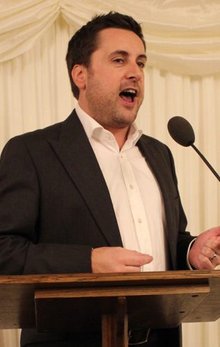
John Lang, one of the report’s authors and Net Zero Tracker Lead at ECIU, says: “We’re sometimes told the world can’t cut emissions without cutting growth. The opposite is happening.
“Decoupling is now the norm, not the exception – and the share of the global economy that is decoupling emissions in an absolute sense is steadily increasing.”
How energy systems are driving transformation
The report shows that 92% of global GDP and 89% of global emissions are in countries that have decoupled, either relatively or absolutely — a major leap from 77% a decade ago.
Between 2015 and 2023, economies representing 46% of the world’s GDP achieved absolute decoupling, compared with only 38% before the Paris Agreement. This progress is underpinned by shifts in energy mix, rapid renewables deployment, improved grid efficiency and investment in low-carbon technologies.
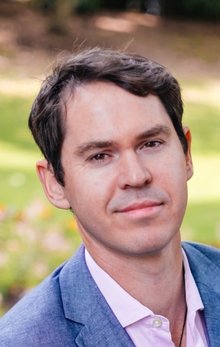
“The momentum built by the Paris Agreement is unstoppable – the economic realities make it so," explains Gareth Redmond-King, Head of International at ECIU.
“Net zero remains the only solution to halting ever more costly and dangerous impacts from climate change," he adds.
“That it also offers better health, growth and jobs and food security can only continue to build the momentum achieved during the first decade of the Paris Agreement.”
What decoupling means for energy companies
As the report emphasises, decoupling does not just reflect environmental progress – it marks a structural shift in global energy markets. Many nations now generate more output per unit of energy consumed, evidencing the growing efficiency of their power sectors.
For energy companies and industrial users, these findings reinforce that sustainability strategies are not separate from business growth but are core to maintaining competitiveness in a net zero global economy. The tenth anniversary of the Paris Agreement serves as a reminder that aligning energy investment with the 1.5°C pathway remains as vital as ever.
Tanya Steele CBE, CEO of WWF UK, said on LinkedIn: “In a world of rising temperatures and declining nature, it’s all too easy to be pessimistic.
“But the Paris Agreement reminds us that the world can come together to envisage – and set out on the path to – a better future.
“So the Paris message is simple – global co-operation works. But we now need to redouble our efforts – and alongside countries working together, they must show individual leadership too.
“The UK can do that by committing funding to the Tropical Forest Forever Facility; making a relatively small investment to help secure the future of the world’s greatest forests, whose survival and restoration is absolutely vital to the fight against climate change.”
The future of the energy transition
The ECIU concludes that achieving net zero requires a structural and sustained decline in emissions – an outcome that depends on accelerating clean energy deployment and scaling financial mechanisms to support it.
Mafalda Duarte, Executive Director of the Green Climate Fund (GCF), said on LinkedIn: “This anniversary is a moment of reflection and a call to finish the job Paris began.
“As the world’s climate fund for developing countries, mandated to serve the Paris Agreement, GCF has grown into the largest multilateral provider of adaptation finance and a leading mobiliser of public and private capital for climate solutions.
“But the next decade must deliver more: more determination in taking bold decisions; more focus on implementation and delivery of impact at the scale needed; backed by much greater ambition to provide finance at the right terms and conditions.”



Executives
Gareth Redmond-King
International lead
John Lang
Net Zero Tracker Lead
Mafalda Duarte
Executive Director
Tanya Steele CBE
CEO, UK