
How Microsoft Is Building Sustainable AI Data Centres
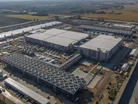
Microsoft is investing over US$7bn to develop two hyperscale AI data centres in Wisconsin, focusing on sustainability and powering frontier AI models.
The first US$3.3bn facility, in Mount Pleasant, is in its final construction phase.
It is scheduled to open in early 2026, with hiring for full-time staff already in progress. A further US$4bn is planned for a second, similar-sized data centre in the state.
The Mount Pleasant facility is engineered to train advanced AI models, using hundreds of thousands of NVIDIA graphics processing units (GPUs).
These processors accelerate AI model training by executing large-scale calculations in parallel.
Microsoft says the volume of fibre optic cable connecting these GPU clusters is enough to circle the planet four times.
Microsoft suggests the data centre will provide 10 times the performance of the fastest supercomputers currently available.
Advanced cooling and water conservation
Sustainability is a central pillar of the project’s design. A closed-loop liquid cooling system serves over 90% of the facility.
This system is filled once during construction and continuously recirculates the liquid, ensuring zero water waste.
“Our data centres use advanced closed-loop liquid cooling systems,” says Noelle Walsh, President for Cloud Operations + Innovation at Microsoft. This breakthrough “enables higher rack density and supports the most demanding AI workloads while dramatically reducing environmental impact."
The remaining areas of the site use outside air for cooling, switching to water only during periods of peak heat.
This design means the expected annual water usage is modest, equivalent to the amount used by an 18-hole golf course in one summer week.
Renewable energy and grid management
Microsoft commits to covering its energy needs without impacting local energy prices.
The company is pre-paying for the energy and infrastructure it will use, which is intended to keep prices stable for residents.

Microsoft also pledges to match every kilowatt-hour of fossil fuel energy consumed with carbon-free energy supplied back to the grid.
To support this, a new 250MW solar project is under construction in Portage County.
Microsoft is also collaborating with WE Energies to manage grid reliability.
Alongside these energy initiatives, Microsoft is funding ecological restoration projects with the Root-Pike Watershed Initiative Network.
Fostering local innovation and skills
The project extends beyond infrastructure to include substantial investment in the local community.
At its construction peak, more than 3,000 workers are on-site across various trades.
Once fully operational, the first data centre is set to employ around 500 full-time staff. This number is set to rise to 800 when the second site is finished.
Microsoft also establishes Wisconsin’s first ‘Datacenter Academy’ through a partnership with Gateway Technical College. The goal is to train over 1,000 students for data centre roles within five years.
A blueprint for the future
For Microsoft Vice Chair and President Brad Smith, who grew up in the area, the project has personal and professional significance.
He believes Wisconsin is not just defined by its industrial history but is also playing a role in shaping the future of US innovation.
“As someone who spent almost five years as a kid going to school and delivering the morning newspaper by bicycle in Mount Pleasant, this moment means more than just personal nostalgia,” he says.
Smith states the project shows that Wisconsin is helping define the future of American innovation.
“Mount Pleasant isn’t just becoming a hub for AI – it’s becoming a blueprint for how innovation can serve everyone. We’re not just investing in an AI data centre; we are investing in a community.”

