
How Deutsche Telekom's Network Became So Energy Efficient

For years, telecoms has been chasing faster, smarter networks. Now, the focus for telcos is often doing more with less energy.
As one of the world's largest telecoms firms, Deutsche Telekom is naturally a part of this movement. The German firm, which owns the T-Mobile brand, recently made a breakthrough which shows that efficiency and performance don’t have to be at loggerheads.
Working with Lenovo, HPE, AMD, EPYC and Mavenir, the company has reworked its massive mobile network to deliver energy savings of up to 65%. Behind that impressive number is what the company calls its “Zero Bits, Zero Watts” principle.
This, in essence, means that when data isn't flowing through the network, its energy use drops close to zero.
“In initial live tests, we achieved up to a 65% reduction in energy consumption within the core network,” says Abdu Mudesir, Board Member Product & Technology at Deutsche Telekom.
“Efficiency is no longer driven solely by new hardware but also by intelligent, software-based management.”
Powering progress through partnership
The results are a testament to the power of collaboration, with all of Deutsche Telekom's partners on this project pulling their weight.
Firstly, Lenovo helped to fine-tune the servers to squeeze maximum performance out of every watt of energy. Meanwhile, HPE contributed some important hardware for the network that helped to keep its energy consumption low.
Elsewhere, AMD’s high-tech EPYC processors have helped Deutsche Telekom to save energy without sacrificing capability. Lastly, Mavenir’s new 5G software features have been rolled out for the first time in this project, and have made a marked difference to energy efficiency.
Together, the group have built a model where every component counts. After promising test results, Deutsche Telekom is now expanding the rollout.
Future updates will use artificial intelligence to predict data traffic, turning components on and off as needed.
A holistic view of energy
At the centre of it all is Deutsche Telekom's "Full Stack Energy Efficiency" approach – an idea that energy shouldn’t be a by-product of technology but an integral measure of it.
Instead of optimising each piece of equipment in isolation, engineers examined how hardware, cloud infrastructure and software interact.
By mapping the entire 5G core, from processors to the operating system, the company can see exactly where power is being used and where it isn’t needed.
“In the 5G core network, we continuously monitor utilisation, detect patterns in data traffic and dynamically allocate computing and network resources as required,” Abdu explains.
“Components no longer operate continuously but only when needed. This lays the foundation for a new approach to energy management, where every single service and component is optimised to save energy.”
Open clouds and cleaner connections
Helping to anchor this transformation is Deutsche Telekom’s Horizontal Telco Cloud – a unified platform built to replace old, fragmented systems. Created with Amdocs, HPE, Mavenir and Nokia, it provides a flexible base where new energy-saving technologies can be tested, scaled and automated.
Built on open standards and open-source tools, this architecture enables networks that adapt their power use in real time, matching energy demand to data traffic.
“Automation and AI are not add-ons for us, but an integral part of our infrastructure,” Abdu says.
“The Horizontal Telco Cloud, developed in-house by our teams, has been expanded into a highly automated and scalable core network with the support of our partners. By consistently leveraging open standards and open-source components, we are establishing a blueprint for the industry.”

Energy at the heart of net zero telecoms
These advances in core efficiency will take centre stage at the Sustainability LIVE: Net Zero Summit in London on 4 and 5 March, where leading operators will share how they’re tackling the twin challenges of performance and emissions.
The Net Zero Telco Strategies panel features experts from BT Group and Nokia discussing how telecoms can reach net zero by combining renewable energy, circular design and network-level energy savings.
- Tiffany Chow, Head of Responsible Business - Strategy and Governance, BT Group
- Clare McCarthy, Senior Principal Sustainability Solutions, Nokia
Panellists include Tiffany Chow, Head of Responsible Business - Strategy and Governance at BT Group, and Clare McCarthy, Senior Principal Sustainability Solutions at Nokia.
Together they’ll explore how energy-smart networks like Deutsche Telekom’s offer a clearer route to low-carbon connectivity – one where innovation and efficiency power the same mission.
Company portals

Executives
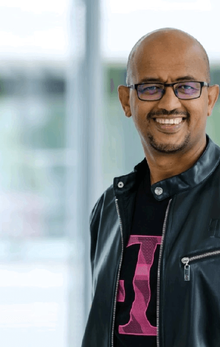
Abdu Mudesir
Board Member for Product and Technology