How Important is Tesla's Lithium to US Energy Independence?
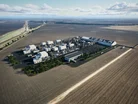
Tesla’s US$1bn lithium refinery in Texas has become fully operational, marking a turning point in North America’s energy supply chain.
Using an acid-free refining process, the facility secures battery-grade lithium for roughly one million electric vehicles each year – a development Tesla describes as “the beginning of energy independence for North America.”
CEO Elon Musk called it “the largest lithium refinery in the Americas” and regards the facility as central to Tesla’s long-term strategy to control its supply of critical minerals for both vehicle and energy storage applications.
Energy engineering at scale
Built across 480 hectares (about 1,200 acres) with more than US$1bn invested, the Texas facility is as much an energy prototype as it is a chemical plant.
It replaces the conventional, acid-intensive “roasting” methods used by most lithium producers with a proprietary alkaline leach process that is entirely acid-free.
This method eliminates the creation of harmful by-products such as sodium sulphate and instead yields a sand-like, inert material called Analcime (anhydrite).
The by-product is being reused as an additive in construction materials, particularly concrete, turning what would have been industrial waste into a sustainable secondary resource.

Local energy transition and regional growth
The project’s contribution extends beyond clean processing technology. Since construction began in 2023, it has supported around 1,000 temporary jobs and created over 250 permanent positions for engineers, technicians and operators.
Tesla has also invested in developing local expertise through educational partnerships in the Coastal Bend area, including apprenticeships at Del Mar Community College and internships at Texas A&M University–Corpus Christi.
By building workforce capability around modern energy production, Tesla is strengthening regional economic resilience while helping shape the skills base for the clean energy transition.

Reshaping the lithium supply chain
At full capacity, the refinery produces battery-grade lithium hydroxide – a key input for high-performance batteries used in both mobility and large-scale energy storage systems.
By refining spodumene concentrate directly in the US rather than exporting to Asia for processing, Tesla is localising a traditionally global supply chain.
This move shortens material travel by nearly 20,000 miles, slashing associated logistics emissions and enhancing supply security for North American energy storage producers.
With a capacity equivalent to around 50 GWh of batteries annually, the refinery becomes a cornerstone of Tesla’s ambition to accelerate the world’s shift to sustainable power.
Powering a new energy era
The project’s timing coincides with Tesla’s strategic pivot beyond cars toward broader electrification and automation technologies.
While legacy vehicle lines such as the Model S and Model X are being phased out, the Corpus Christi refinery ensures a stable domestic supply of the lithium essential for both current EV production and the company’s expanding energy ventures.
As Tesla diversifies its portfolio – from grid storage to robotics and self-driving systems – its Texas refinery positions the company not just as a vehicle manufacturer, but as a major player in North America’s energy independence movement.