How Tesla Will Power its Robotics & AI Expansion Using Solar
Tesla looks to be deepening its commitment to clean energy, with solar power forming a central part of the company's new US$20bn investment strategy.
This capital injection comes after Tesla recorded declining revenues for the second consecutive quarter, with incomings falling to US$94.8bn.
Nevertheless, CEO Elon Musk remains upbeat about the firm's prospects, despite a concerning 61% drop in Q4 profits.
Musk's cause for optimism stems from his belief in the car manufacturer's ability to diversify, incorporating AI, digital infrastructure and humanoid robots into its product portfolio.
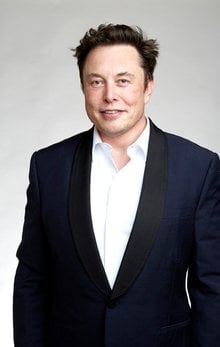
"We're making big investments for an epic future," he told Tesla's investors during a call on 28 January.
In pursuit of that future, Tesla has suspended production of its Model S and Model X to prioritise the development of humanoid robots, while Musk’s AI start-up, xAI, has received a US$2bn boost in funding.

The renewable spine of Tesla’s AI
While recent headlines have focused on Musk's interest in robots and chips, the story of Tesla's energy strategy has been just as interesting this quarter.
The world's richest man argued that the “solar opportunity is underestimated”, outlining his plans to massively expand solar power generation to feed the computing demands of AI and data centres.
“We think the best way to add significant capability to the grid – lets say it is powering AI data centres – is solar and batteries on earth and solar in space,” he said during Tesla's Q4 earnings call.

Musk also discussed the idea of solar satellites during his surprise appearance at the World Economic Forum's summit in Davos, Switzerland.
The CEO has said that he intends for Tesla to become a “significant manufacturer of solar cells”, integrating production across its supply chain.
The company is targeting 100GW a year of solar cell output, which would rank among the largest energy generation goals by any private firm.
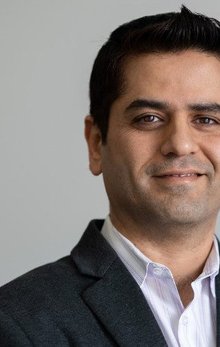
Vaibhav Taneja, Tesla’s Chief Financial Officer, confirmed the energy division’s 26.6% growth year-on-year, boosted by the upcoming Megapack 3 and Megablock systems.
Yet he warned of “margin compression” from cheaper competition, policy uncertainty and tariff impacts.
Building the infrastructure of abundance
Tesla’s vast CapEx plan for 2026 includes six major infrastructure projects, from a lithium iron phosphate (LFP) facility to an AI compute base.
“We’ll be paying for six factories, namely the refinery, LFP factory, cybercab, Semi, a new mega factory and the Optimus factory,” said Taneja.
Beyond hardware, Tesla aims to align its physical and digital energy networks, reinforcing solar and battery systems as the underpinning of its AI ambitions.
Chips, fabs and the sustainability bottleneck
Musk has described chip production as Tesla’s short-term constraint.
“Completing the AI5 chip design and having it be a great chip is arguably the number-one most critical thing to get done,” he says, confirming that work on AI6 is already in the pipeline.
The planned TeraFab plant, integrating logic, memory and packaging could reduce future supply risks, helping Tesla secure the energy-intensive chips required to support its expanding compute infrastructure.
Global competition in energy and robotics
Despite rising energy revenues, Tesla faces sharper global pressure.
China’s BYD has overtaken it in EV sales, and Musk admits the fiercest challenge in the humanoid market – and potentially energy tech – will “by far” come from China.
“China is incredibly good at scaling manufacturing. Actually, quite good at AI,” he said, adding that free AI model releases in China “keep getting better”.
With energy now central to both AI and manufacturing, Musk’s long-standing vision of abundance is slowly absorbing Tesla’s automotive DNA.
The company’s next phase may be less about cars than about controlling the clean power that enables intelligence itself.

Executives
Elon Musk
Tesla CEO
Vaibhav Taneja
Chief Financial Officer