Unpacking the Biggest Energy Stories from Davos 2026

Once again, the World Economic Forum’s Annual Meeting in Davos, Switzerland, has reaffirmed its status as one of the most influential events on the global calendar, bringing together collaboration and controversy in equal measure.
While climate change and the energy transition are perennial themes in Davos, this year’s meeting placed a particularly strong focus on energy-related discussions.
The week’s proceedings were this year marked by stark divisions over fossil fuels, renewed ambitions in relation to nuclear power and fierce debates about the future of the transition as a whole.
This was all set against a backdrop of geopolitical tension and economic uncertainty, with business leaders, policymakers and climate advocates looking to chart a safe course towards global energy security while the world’s leaders traded barbs.

How and why Trump dominated the headlines
US President Donald Trump's special address on 21 January was not only the most memorable moment of this year’s summit, but perhaps of any Davos conference ever held.
During his near-100-minute speech, President Trump advocated passionately for the expansion of fossil fuel production while lambasting renewable energy sources, including wind and solar.
But while Trump’s ire for renewable power was on full display, he did spend a great deal of time eulogising another clean energy source: nuclear. He revealed that nuclear power will be a key pillar of the US’s energy mix going forward.
Ultimately, President Trump’s speech marked a clear departure from the climate commitments of other countries – and indeed of previous US administrations – instead focusing on energy independence and economic growth through traditional energy sources.
Pushback against Trump at Davos
The speech triggered immediate responses from European leaders. EU Climate Commissioner Wopke Hoekstra pushed back, saying that the bloc takes a “fundamentally different view”.
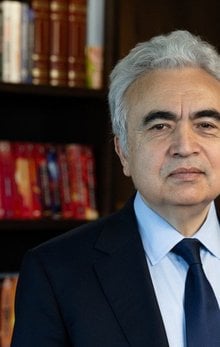
Meanwhile, the International Energy Agency's Fatih Birol stressed the importance of energy security while maintaining momentum on the transition to cleaner sources.
"A real energy transition programme, in my view, is not a rival of energy security. They can be [achieved] together," he said.
"To antagonise these two important objectives for the human beings today is in my opinion misleading. We can do both, we have done many things like that before in the world – and this is critical."
Nuclear energy's renaissance
It was not just Trump that endorsed nuclear power at Davos this year. In fact, the subject became a real area of consensus among the world’s leaders.
Delegates from India announced a set of ambitious nuclear expansion plans which garnered significant attention, emphasising the notion that Prime Minister Narendra Modi is also looking to position nuclear alongside renewables as critical to meeting the country's growing energy needs while reducing emissions.
This nuclear revival reflects broader recognition that achieving net-zero targets may require diverse energy solutions beyond wind and solar alone.
Several nations outlined their plans to extend existing reactor lifespans or develop new small modular reactor technologies, including the UK and the Czech Republic.
Insights from the business community
The business community showcased competing visions for energy's future at the WEF this year.
Andrew Forrest, Executive Chairman and Founder of Australian mining giant Fortescue, delivered one of the week's most impassioned defences of renewable energy, arguing that the transition represents an enormous economic opportunity.
"The trend of renewable energy is eating fossil fuels for lunch,” he said.
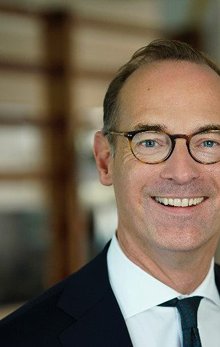
Elsewhere, Oliver Bäte, CEO of Allianz, echoed this sentiment, emphasising that sustainable investment strategies would prove essential for long-term competitiveness.
He also framed the energy transition as a matter of survival, saying that anyone with children “will have to worry” about the planet’s future.
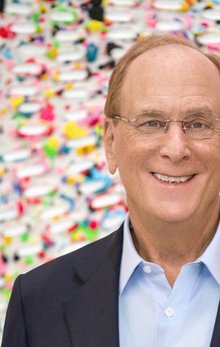
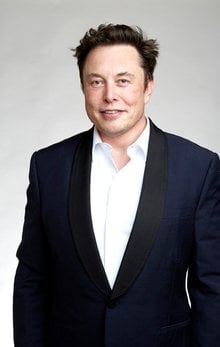
Towards the end of the week, Elon Musk, CEO of Tesla and SpaceX, made a surprise appearance at the conference, where he spoke on stage alongside BlackRock CEO Larry Fink.
During his interview, the world's richest man covered a huge range of subjects, including autonomous vehicles, AI and tariffs. He also discussed how solar satellites could be the future of energy generation.
"Within a few years, we want to be launching solar-powered AI satellites," he said. "There's so much room in space and it's enormous what you can scale to. I think, ultimately, you can have hundreds of terawatts in the air."
Sustainability beyond the headlines
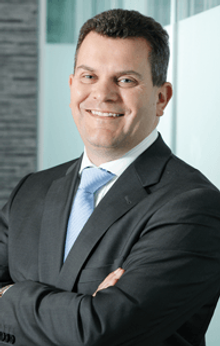
According to Colm Devine, Global Vice Chair for Sustainability at EY, the summit's significance extended far beyond headline-grabbing speeches.
"Davos will be remembered more for the geopolitics than anything else," he reflects. "But with issues of resilience, competitiveness, natural resources and collaboration fundamental to boardroom decision making, are CEOs hearing the environmental signals or just the noise?"
For Colm, the discussions around sustainability appear to have evolved substantially this year, particularly with regards to the private sector.
"At Davos, sustainability was a conversation not about compliance, but for growth, resilience and long-term enterprise value," he says.
Critical issues around manufacturing localisation, supply chain resilience, resource access and skills development demonstrated how environmental considerations now permeate every aspect of corporate strategy.
"CEOs and CFOs increasingly recognise that the cost of inaction is rising fast," he explains, pointing to research showing that 61% of business leaders surveyed by the World Business Council for Sustainable Development expect rising climate-related disruptions will create costs to their business this year.
Perhaps most significantly, Colm points to the emergence of "coalitions of the willing" as a new model for progress. Rather than waiting on global accords to be struck, Colm believes that industry groups and regional partnerships are starting to speed up change across entire value chains.
He concludes: "What stands out from Davos is a growing momentum toward targeted collective action moving faster than global intentions."
Company portals







Executives
Colm Devine
Global Vice Chair, Sustainability
Elon Musk
Tesla CEO
Fatih Birol
Executive Director
Larry Fink
Chairman and Chief Executive Officer
Oliver Bäte
Chairman of the Board of Management - CEO