Trump at the WEF: What Did He Say About Energy at Davos?
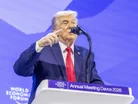
When US President Donald Trump addressed the World Economic Forum (WEF) in Davos this week, his remarks on energy policy sparked immediate controversy among the global elite gathered in the Swiss Alps.
The President's forceful critique of renewable energy initiatives, as well as his departure from the climate consensus that has dominated recent forums, marked a significant shift in transatlantic energy discourse.
When addressing the WEF on 21 January, President Trump wasted no time in outlining his administration's approach to American energy infrastructure.
His announcement that the US would be opening fossil fuel energy plants rather than closing them down represents a challenge to the decarbonisation strategies pursued by many of the world's nations.

Trump framed this move as a matter of economic pragmatism, positioning traditional energy sources as essential to American competitiveness and affordability going forward.
The administration's plans extend beyond merely maintaining existing infrastructure.
The President revealed that his government would be actively removing wind turbines rather than constructing new ones, describing what he termed the "Green New Scam" as a misguided consensus that has led countries astray.
This characterisation of renewable energy policy as fundamentally flawed economic thinking set the tone for his broader critique of European energy strategies and aligns with much of his recent criticism of the bloc as a whole.
Trump's criticism of Europe's energy strategy
Trump reserved particular criticism for Germany's energy policies, claiming that electricity prices in Europe's largest economy have risen by 64% since 2017.
Whether these figures fully account for the complexity of European energy markets or the impact of recent geopolitical events remains debatable.
However, the President's message was clear: the pursuit of renewable energy has come at an unacceptable economic cost to consumers and industry alike.
His assessment of wind energy infrastructure across Europe was especially caustic.
Describing windmills as "losers", Trump argued that countries with higher concentrations of wind turbines consistently underperform economically.
"One thing I've noticed is that the more windmills a country has, the more money that country loses and the worse that country is doing," he said.
The EU's Climate Commissioner, Wopke Hoekstra, responded to these comments shortly after Trump's speech.
“That is unfortunately not completely new and we take indeed a fundamentally different view here,” he told CNBC.
Trump's perspective on nuclear energy
While the US President's stance on wind and solar energy remains unequivocal, his position on nuclear power suggests he is not wholly opposed to the generation of low-carbon power.
At Davos, Trump made clear his support for nuclear energy, a shift that aligns him with an emerging consensus amongst energy analysts who view advanced nuclear technology as essential to achieving reliable, carbon-free baseload power.
This embrace of nuclear power could prove significant for the global energy industry.
As an energy sector tone-setter, support from the US with regards to nuclear energy could help to accelerate investment in small modular reactors and next-generation technologies.
“We do feel that climate change has huge economic ramifications. At the same time, there is a clear opportunity in batteries, in solar, by the way also in nuclear, which is where I agree [with Trump],” Wopke explains.
What are the implications for the global energy market?
While much of President Trump's address was spent criticising the energy policies and strategies of other countries, he closed his remarks with a message of togetherness.
"We're in a position to do things that nobody else has ever even thought of before," he said.
"Many of the people in this room are the ones that are doing it and I want to congratulate you. I'm with you all the way – you can do things that nobody else can even think about."
Despite these concluding statements, Trump's speech appears to set the US at odds with many of the world's countries, raising questions about the future of international climate cooperation and the economic consequences of pursuing different energy pathways.