
Could Trump's Tariffs Trump's Spark an Energy Trade War?
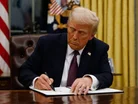
US President Donald Trump's recent imposition of sweeping tariffs on China has ignited fears of a global economic conflict, with potentially significant consequences for the renewable energy, EV and climate technology sectors.
President Trump's 10% tariff on all Chinese imports was swiftly met with retaliatory measures from Beijing, including restrictions on US imports of oil, LNG, vehicles and farming equipment.
Meanwhile, the planned 25% tariffs on imports from Canada and Mexico were temporarily suspended following last-minute negotiations with Canadian Prime Minister Justin Trudeau and Mexican President Claudia Sheinbaum.
The suspension of tariffs on Canada and Mexico is closely tied to Trump's focus on border security.
Both countries agreed to Trump's terms, which called for increased efforts to combat illegal immigration and drug smuggling.
Europe remains on alert, as Trump has yet to impose tariffs on European goods.
However, business leaders and government officials are preparing for potential US restrictions, which Trump has hinted at since his election campaign.
In response to the tariffs, China promptly filed a complaint with the World Trade Organization (WTO), with the Chinese Ministry of Commerce describing the tariffs as "malicious" in nature.
Trump has made it clear that this is only the beginning, referring to his initial tariff spree as an "opening salvo" and warning that tariffs on China could become "very, very significant" if negotiations don't meet his expectations.
Tariffs and the sustainability sector
While Trump's tariffs don't explicitly target clean energy, they are expected to significantly impact climate technology.
Trade has been crucial in driving renewable energy's growth, with factors like subsidiaries, feed-in tariffs and international competition contributing to price reductions in solar technology.

Lazard's research shows that between 2009 and 2024, energy storage prices fell by 89%, while offshore wind project costs decreased by 65%.
However, trade barriers could hinder the renewable energy and climate technology sectors' growth.
“It probably slows down the energy transition because it drives up costs, especially the tariffs on China, and creates chaos in supply chains," says David Victor, Professor of Innovation and Public Policy at the University of California, San Diego.
A looming trade war?
Experts believe Trump's tariffs could spark a trade war.
China had already considered imposing restrictions on battery technologies and critical minerals.
The IEA reports that China manufactures and sells about three-quarters of the world's lithium-ion batteries, which are often used in climate technologies such as EVs and energy storage units.
In response to Trump's tariffs, China has imposed tariffs on 25 critical minerals.
Canada and Mexico, major players in steel, used for wind turbines, and EV production along with China, are significant contributors to energy grid technologies.
These tariffs could reduce product margins in the US, leading to higher costs for consumers.
As a major global economy, the US' actions could cause companies from Canada, Mexico and China to raise prices worldwide.
“It is highly disruptive to the global supply chain, and of course the clean energy one as well,” says Gernot Wagner, Climate Economist at the Columbia Business School.
Europe's response and CBAM
The EU hasn't been hit by Trump's tariffs yet, but concerns are growing.
German automakers such as BMW and Mercedes heavily rely on US sales, as do French manufacturers as they export a significant portion of their vehicles across the Atlantic.
Dr Aurélien Saussay, Assistant Professor at the Grantham Research Institute on Climate Change and the Environment, has warned that retaliatory tariffs from the EU could be disastrous for both sides.
“These tariffs will impact the American economy, not just Chinese and European sectors, so Donald Trump plowing ahead with these policies if elected would be awful for economies across the globe,” he says.
However, Aurélien advises against using the EU's newly introduced Carbon Border Adjustment Mechanism (CBAM) as a retaliatory tool.
“The EU should refrain from using its carbon border adjustment mechanism as a conduit for retaliatory measures as it would require an unrealistically high carbon price on the embodied emissions of US imports and could weaken the acceptability of the border carbon tax for the EU’s trade partners, “he explains.
What next?
With tariffs in effect and more economic restrictions looming, global trade relations are at a critical point.
Rising tensions could lead to increased costs, supply chain disruptions and reduced market access for climate tech businesses.
“Retaliatory measures by China or the EU would likely worsen economic outcomes for all parties involved, potentially sparking a damaging trade war,” Aurélien says.
As these major economies navigate these uncertainties, the clean energy transition could become collateral damage in an escalating economic conflict.
Explore the latest edition of Energy Digital Magazine and be part of the conversation at our global conference series, Sustainability LIVE.
Discover all our upcoming events and secure your tickets today.
Energy Digital is a BizClik brand